.webp&w=1920&q=82)
.webp&w=1920&q=82)
.webp&w=1920&q=82)
.webp&w=1920&q=82)
.webp&w=1920&q=82)
.webp&w=1920&q=82)
.webp&w=1920&q=82)
Alcântara
On the Bay of São Marcos, along Maranhão's northern coast, across from São Luís.
Ruins, stone slopes, and townhouses make Alcântara a passage through Maranhão's colonial memory. Its historic center unfolds between Praça da Matriz and the arrival by sea.
On Praça da Matriz, the ruins of São Matias leave arches and walls open to the sky, beside the pillory, the Casa de Câmara e Cadeia—the former town hall and jail—and the historic houses. Alcântara is not a stage-set town: traces of wealth from rice, sugar, and cotton, built through enslaved labor, coexist with homes, faith, and daily life. Visiting calls for attention to the voids, masonry, doorways, tiles, and terrain descending toward the bay.
🤔 Why does it matter?
Here, heritage is not concentrated in a single monument. As visitors walk an urban fabric where ruins and buildings from different periods endure, they grasp the scale of a former port town, while the Festa do Divino—the festival of the Holy Spirit—keeps the city alive with cultural movement.
📍 What to see
- Praça da Matriz, with the ruins of the Church of São Matias, the pillory, and the former Casa de Câmara e Cadeia.
- Rua da Amargura, recognizable by its old paving and downhill row of historic houses.
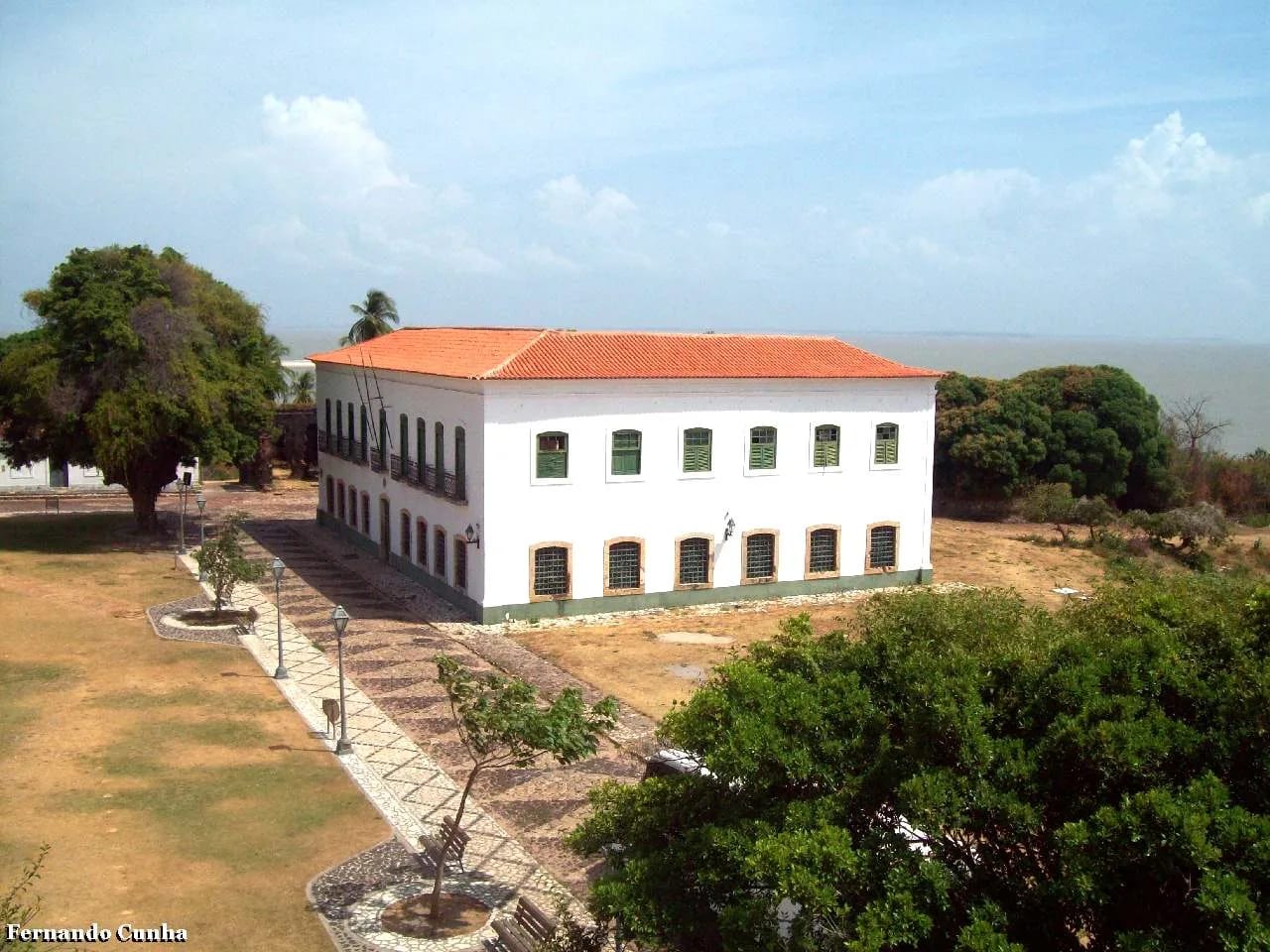
- The townhouse façades that make up Museu de Alcântara, beside the square.
- Doors, transoms, ironwork, and stretches of tilework scattered through the center.
- Porto do Jacaré, the arrival and departure point for the direct crossing.
🎒 Things to do
- Walk through the heritage district in shoes with grippy soles.
- Photograph openings, arches, and walls at the beginning or end of the day.
- Seek out a local guide to interpret the buildings, ruins, and preservation work.
- Follow the Festa do Divino once that year's program is confirmed.
- Try Maranhão cuisine at establishments in town.
✨ Recommended experiences
- Essential half-day: disembark, take a guided route through the central area, pause for lunch, and plan your return to the pier.
- A cultural day from São Luís: cross early, wander the historic houses without haste, and leave room for maritime operations.
- May itinerary: pair an exploration of the heritage with the Festa do Divino, booking transport and lodging only after the calendar is announced.
🍽️ Local cuisine
🎶 Soundtrack
- Maranhão, Meu Tesouro, Meu Torrão — Humberto de Maracanã
- Se Não Existisse o Sol — Bumba Meu Boi da Maioba
- Bela Mocidade — Boi de Axixá
🎭 Local culture
🌿 Nature nearby
🌎 Biomes
🏞️ Natural features
🐾 Wildlife you may spot
🌱 Plants you may see
📅 Best time to visit
From June to December, the ground usually favors walking and photography; at any time of year, check the forecast, the tide, and crossing operations.
- ✅ Best time:
- June through December
- 🟡 Shoulder season:
- May and June, especially for those intending to follow that year's Divino program.
- 🔴 Less recommended:
- January through April, when rain can make the paving more slippery.
- 📝 Notes:
- The Festa do Divino follows a variable calendar. Rain, wind, tides, and operating conditions can change the crossing's logistics in every month.
🧭 Getting there
🏙️ Base city: Alcântara
✈️ Airport: São Luís–Marechal Cunha Machado International Airport, in São Luís
- The most commonly used route departs from São Luís by passenger vessel between Rampa Campos Melo and Porto do Jacaré.
- Confirm the schedule, booking, fare, and tide conditions directly with the vessel operator the day before and on the day of travel.
- Arrival by road depends on the land and waterway logistics of the Baixada Maranhense; assess this alternative well in advance.
🚗 Local transportation
- The historic center is best explored on foot.
- For sites outside the urban core, arrange local transport or a guide before setting out.
- Keep your return-vessel confirmation on your device, including an offline copy.
ℹ️ Practical information
- 🏗️ Infrastructure:
- Basic, suitable for a cultural-tourism visit planned in advance.
- 🏨 Where to stay:
- The town has simple options; São Luís offers the widest range and can serve as a base for a day trip.
- 🍴 Food:
- Local restaurants and snack spots serve visitors, but hours and operations may vary outside busier periods.
- 🧭 Guides and agencies:
- A local guide is recommended; arrange availability and prices before the crossing.
- 📶 Internet and signal:
- Signal quality may vary. Download confirmations, contacts, and return information before boarding.
- 💰 Estimated cost:
- Variable. Budget for the crossing, food, a possible guide, and lodging; no single current, reliable fare for the direct crossing was found.
- 📝 Notes:
- The urban core has no single gate or ticket office. Institutional records note renovation and an updated exhibition at Museu de Alcântara; confirm its visitor status before including it in your itinerary.
♿ Accessibility
Level: consult local operators
No continuous public route was identified that ensures accessibility across the entire historic center. The paving, slopes, and elevation changes may limit movement for wheelchairs and strollers.
- Arrange a route suited to your needs in advance.
- Ask the sea transport operator about boarding, disembarkation, and available assistance.
- Consider bringing a companion for stretches of uneven stone or steep inclines.
⚠️ Safety
🚨 Real risks
- smooth stone, uneven steps, and slippery slopes after rain
- fragile historic masonry and areas that may be closed for conservation
- tide, wind, or operational changes on the sea crossing
✅ Recommended care
- Wear closed shoes with good grip and slow your pace when the ground is wet.
- Do not climb walls or rest equipment on unstable historic structures.
- Plan the itinerary around the return time, not departure alone.
⛔ When to avoid: Avoid traveling when weather or maritime conditions suspend the crossing, or when heritage areas are temporarily closed.
📝 Checklist — what to bring
- Closed shoes with grippy soles.
- Water in a reusable bottle.
- Hat, sunscreen, and sunglasses.
- Light rain jacket and protection for a camera or phone.
- Identification and an alternative payment method for the crossing.
- Portable charger and return confirmation saved on your device.
✈️ Travel tips
- Low light brings out the texture, depth, and openings of the ruins.
- Include a person in the frame if you want to convey the architecture's scale.
- Do not plan the outing around departure alone; leave room for the return by sea.
- Ask consent before photographing residents, interiors, or religious moments.
💡 Fun facts
- Museu de Alcântara occupies two adjoining townhouses built between the late 17th and early 18th centuries.
- The museum complex has 1,340 square meters (14,400 sq ft) of built area and incorporates townhouses numbered 7 and 15.
- Since 2022, the institution formerly known as Museu Casa Histórica has used the name Museu de Alcântara.
🤔 Did you know?
- Before it was called Alcântara, the place was known as Tapuitapera, an expression recorded by IBGE as land of the Indigenous people.
- The settlement was raised to the status of town on December 22, 1648, under the invocation of São Matias.
- Provincial Law No. 24 elevated Alcântara to city status on July 5, 1836.
📜 History and context
The area was known as Tapuitapera before Portuguese rule was consolidated. The settlement grew through sugar mills and agricultural export activities; its prosperity, also based on the enslavement of Africans, financed townhouses, churches, and convents. When the regional economy lost momentum, many properties were abandoned, leaving an urban landscape in which ruins are a constitutive part of the city.
🌍 Global importance
Alcântara makes it possible to understand, on a Brazilian scale, the connections among Luso-Atlantic colonization, agricultural trade, and the violence of the slave regime. Its value lies in the survival of a colonial urban ensemble that was never homogenized and remains bound to religious practices and the lives of its residents.
🗺️ Quick map (orientation)
📌 Main base: Alcântara Historic Center
🧭 Landmarks
📍 Nearby places
Small discoveries
- Pelourinho
- A stone or wooden monument used in the colonial period as a symbol of public authority and punitive power.
- Sobrado
- An urban building of two or more stories, common in Brazil's colonial centers.
- Azulejaria
- Decorative tilework strongly associated with Luso-Brazilian architecture.
- Caixeiras
- Women who sing and play drums in Holy Spirit celebrations in Maranhão.
- Ladainhas
- A devotional religious chant, generally sung in Catholic ceremonies.
- Tombamento
- Legal protection granted to a cultural asset for its historical, artistic, archaeological, or landscape value.
- Arroz de cuxá
- A Maranhão preparation of rice and vinagreira sauce, often enriched with sesame, dried shrimp, and seasonings.
- Juçara
- The name used in Maranhão for the pulp of the açaí palm, traditionally served without sugar or in local preparations.
- Toadas
- A traditional Bumba-meu-boi song sung by groups during their festive cycle.
- Bumba-meu-boi
- A complex of music, dance, theater, and popular devotion in Maranhão, recognized as cultural heritage.