.webp&w=1920&q=82)
.webp&w=1920&q=82)
.webp&w=1920&q=82)
.webp&w=1920&q=82)
.webp&w=1920&q=82)
.webp&w=1920&q=82)
.webp&w=1920&q=82)
.webp&w=1920&q=82)
.webp&w=1920&q=82)
Avenida Paulista
Along São Paulo’s central ridge, between the areas around Praça Oswaldo Cruz in Bela Vista and Rua da Consolação.
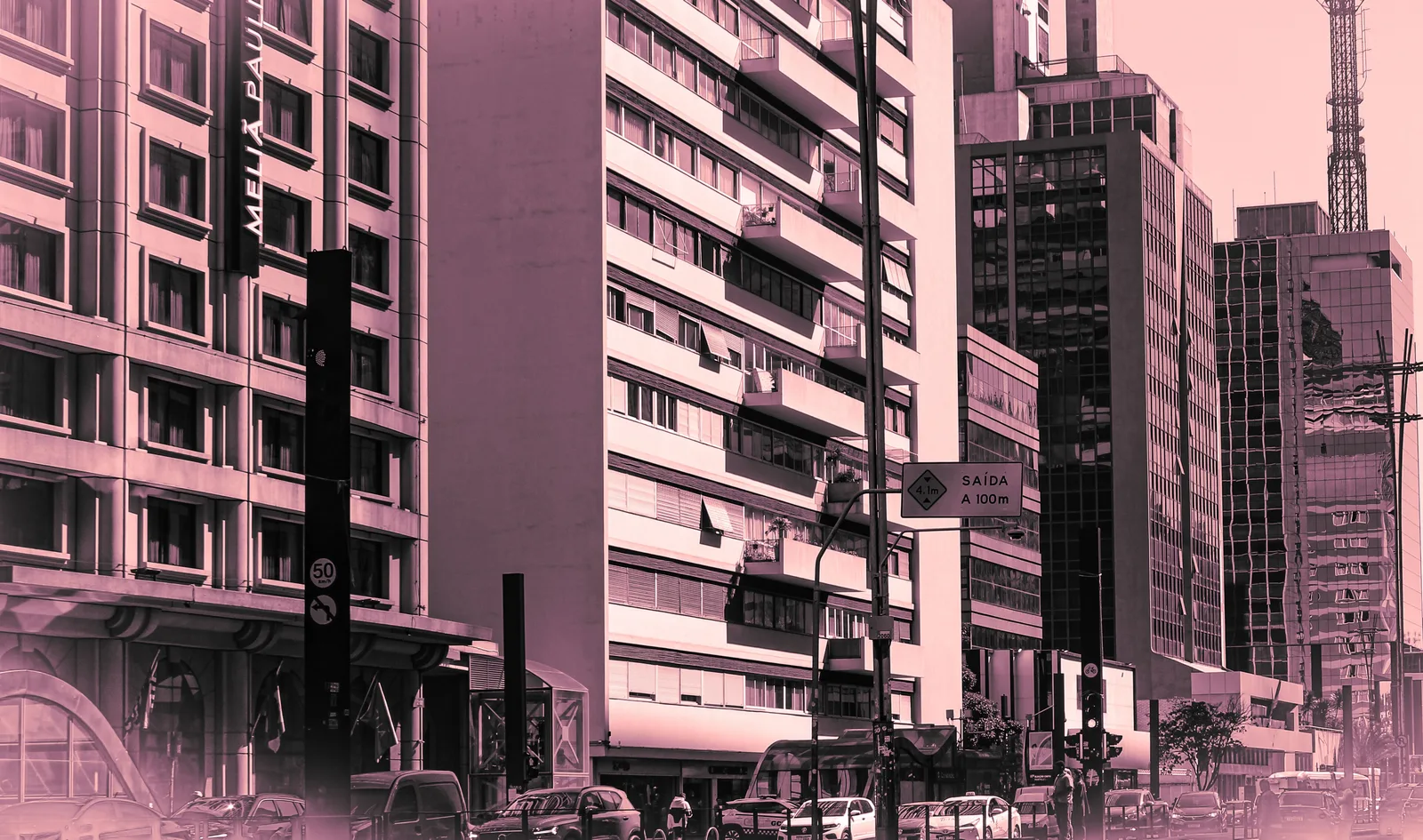
A symbol of contemporary Brazil, Avenida Paulista brings art, business, mobility, and public life together across 2.8 km (1.7 mi) in the heart of São Paulo.
Between high-rises, cultural centers, busy sidewalks, and tree-lined stretches, Avenida Paulista reveals the metropolis in all its layers. The route moves between architecture from different eras, exhibitions, cafés, bookstores, Parque Trianon, and the energy of the streets—especially when traffic gives way to pedestrians on Sundays and public holidays.
🤔 Why does it matter?
Few places capture São Paulo’s contradictions and vitality so completely. The avenue gathers art institutions, the memory of coffee-era mansions, corporate headquarters, and expressions of citizenship in a landscape that changes with every block.
📍 What to see
- MASP’s suspended building and open plaza beneath it
- The lookout point and exhibitions at Sesc Avenida Paulista
- The urban forest and sculptures of Parque Trianon
- Photography and film exhibitions, plus the library at IMS Paulista
- The architecture and literary program at Casa das Rosas
🎒 Things to do
- Walk while taking in the avenue’s facades, galleries, and landmarks
- Choose an exhibition and allow time to see it without rushing
- Cycle during the hours and along the stretches open to bicycles
- Pause at cafés, bakeries, bookstores, and cultural venues
- Follow the calendar of concerts, talks, and street interventions
✨ Recommended experiences
- Half-day route: alight at Trianon–MASP, visit the museum or park, walk to IMS Paulista, and finish at a café.
- Sunday in the street: travel Avenida Paulista when it is closed to cars from 9 a.m. to 4 p.m., combining a bike ride, street performers, and a cultural stop.
- Memory circuit: begin at Casa das Rosas, compare the eclectic mansion with modern buildings, then cross the avenue to MASP’s open plaza.
- Urban late afternoon: take in the city from the lookout at Sesc Avenida Paulista, then extend the evening with nearby cultural programming.
🍽️ Local cuisine
🎶 Soundtrack
- Triunfo — Emicida
- Desculpe o Auê — Rita Lee
- Augusta, Angélica e Consolação — Tom Zé
🎭 Local culture
🌿 Nature nearby
🌎 Biomes
🏞️ Natural features
🐾 Wildlife you may spot
🌱 Plants you may see
📅 Best time to visit
The avenue can be visited year-round; milder weather favors walks from April through June, while Sundays or public holidays with Ruas Abertas transform the experience of the route entirely.
- ✅ Best time:
- April through June and August through November, when conditions tend to be more comfortable for walking and cycling.
- 🟡 Shoulder season:
- January through March, with heat, humidity, and the possibility of late-afternoon rain.
- 🔴 Less recommended:
- December, if long outdoor walks are the priority; the year-end calendar and rain may increase crowds and demand flexibility.
- 📝 Notes:
- The city government lists the Ruas Abertas program on Sundays and public holidays from 9 a.m. to 4 p.m. Events and weather conditions may affect operations and local circulation.
🧭 Getting there
🏙️ Base city: São Paulo
✈️ Airport: Congonhas Airport, São Paulo
- Take subway Line 2–Green to Brigadeiro, Trianon–MASP, or Consolação stations, depending on the stretch you want to visit.
- On Line 4–Yellow, alight at Paulista and take the internal connection to Consolação to reach the avenue.
- From Congonhas Airport, combine a taxi, ride-hailing service, or urban bus with the subway, allowing for traffic at rush hour.
🚗 Local transportation
- Walk the main stretches, using marked crossings.
- Use the avenue when it is reserved for pedestrians on Sundays and public holidays, from 9 a.m. to 4 p.m., when confirmed by the city government.
- Check the Ciclofaixa de Lazer schedule before planning a bicycle outing.
ℹ️ Practical information
- 🏗️ Infrastructure:
- Very high
- 🏨 Where to stay:
- A wide range of hotels and accommodations for different preferences is available in the Bela Vista, Paraíso, Jardins, and Consolação neighborhoods.
- 🍴 Food:
- A broad variety of cafés, bakeries, restaurants, food courts, and markets lies in the immediate surroundings.
- 🧭 Guides and agencies:
- Private guided tours and cultural itineraries are available in the area; check language, duration, and cancellation policy directly with the operator.
- 📶 Internet and signal:
- Mobile coverage is generally widespread in this urban area, with wireless networks available at some venues and establishments.
- 💰 Estimated cost:
- Walking along the avenue is free. In August 2026, the single subway fare is R$ 5.40; municipal buses are free on Sundays. Spending on food, exhibitions, and lodging varies by choice.
- 📝 Notes:
- The public avenue has no admission charge or ticket office. Museums, lookout points, and other cultural venues operate with their own hours, free-admission policies, and prices.
♿ Accessibility
Level: Partial to good
Trianon–MASP station has elevators. Parque Trianon reports an access ramp, accessible circulation areas, and restrooms. On sidewalks, pavement quality, crowding, and temporary construction may vary by stretch.
- Confirm the features of each museum or cultural center in advance, as they are not run as a single complex.
- Prefer marked crossings and routes with less change in elevation.
- On event days, arrive early to avoid temporary barriers and heavy crowds.
⚠️ Safety
🚨 Real risks
- Opportunistic theft in crowds and while getting around
- Heavy traffic on days and at times when the avenue is not closed
- Slippery pavement during rain and periods of heavy pedestrian flow
✅ Recommended care
- Keep your phone, wallet, and documents in a closed, discreet place.
- Cross only at crosswalks and follow traffic signals.
- Use a lightweight rain jacket in summer and follow severe-weather alerts.
- Choose a meeting point in advance when visiting the area as a group.
⛔ When to avoid: Avoid staying in quieter stretches during severe weather or after events that reduce foot traffic; adapt your itinerary to guidance from authorities and local organizers.
📝 Checklist — what to bring
- Comfortable footwear for urban walking
- Reusable water bottle
- Sunscreen and sunglasses
- Rain jacket or compact umbrella for summer
- Portable phone charger
- Identification and transit card
✈️ Travel tips
- Spread the visit across two or more cultural venues instead of trying to see everything in a single day.
- Check individual museum hours before setting out, as they do not follow the avenue’s schedule.
- Arrive early on Sundays to find the avenue quieter and make the most of its closure to vehicles.
- Use the subway to reduce the impact of traffic and choose a station near the first stop on your itinerary.
💡 Fun facts
- Casa das Rosas, at the avenue’s eastern end, was designed in 1935 by the Ramos de Azevedo office and is one of the few remaining eclectic mansions along the corridor.
- The Centro-Paulista Circuit leisure bike lane operates on Sundays and public holidays, from 7 a.m. to 4 p.m.
- Alongside its woodland, Parque Trianon holds works such as O Fauno by Victor Brecheret and Aretusa by Francisco Leopoldo Silva.
🤔 Did you know?
- Before MASP was built there, the area in front of Parque Trianon held Belvedere Trianon, designed by Ramos de Azevedo in the early 20th century.
- Avenida Paulista was the starting point of the first São Silvestre International Road Race in 1924.
- Paulista station is on Line 4–Yellow and connects by passageway to Consolação station on Line 2–Green.
📜 History and context
Opened on December 8, 1891, on the site of the former Rua da Real Grandeza, Avenida Paulista emerged from São Paulo’s expansion and coffee wealth. Joaquim Eugênio de Lima, who developed the project, refused to have the avenue named after him. Throughout the 20th century, mansions gradually gave way to commercial, cultural, and residential buildings, without entirely erasing the traces of the avenue’s first occupation.
🌍 Global importance
Avenida Paulista is a key to understanding São Paulo beyond stereotypes: it concentrates financial capital, cultural production, informal commerce, political disputes, and expressions of diversity in the same public space. This complexity has led MASP to treat it as a subject for exhibitions and urban reflection, rather than merely the museum’s address.
🗺️ Quick map (orientation)
📌 Main base: Trianon–MASP, on the central stretch of Avenida Paulista
🧭 Landmarks
📍 Nearby places
Small discoveries
- Cidade de São Paulo
- Capital of São Paulo state and Brazil’s largest metropolis.
- São Paulo
- A state of Brazil.
- Mata Atlântica
- The original ecosystem of Brazil’s Southeast, with humid forest and high biodiversity.
- Domingão aberto
- Opening sections of the avenue to pedestrians and cyclists on Sundays and public holidays.
- Ciclovia
- A dedicated bicycle lane parallel to the roadway.
- Café especial
- Specialty beans with controlled roasting, generally from a single origin.
- Bauru
- Roast beef, cheese, and sauce sandwich; a São Paulo classic.
- Pingado
- A creamy blend of milk and espresso, also called média.
- Metrô
- High-capacity rail transit system.
- Trianon-MASP
- A Line 2–Green station with access to MASP and Parque Trianon.
- Consolação/Paulista
- A set of stations linked by a passageway, connecting Consolação on Line 2–Green with Paulista on Line 4–Yellow.
- Corredores de ônibus
- Corridors served by integrated municipal bus lines.
- Consolação
- The main intersection of Avenida Paulista, Rua da Consolação, and Avenida Rebouças.
- Brigadeiro
- A Line 2–Green station near Bela Vista, with a connection to Line 1–Blue at Paraíso station.
- Alameda Santos
- A street parallel to Avenida Paulista, with shops and services.
- Rua São Carlos do Pinhal
- A street parallel to Alameda Santos, with quick connections between blocks.
Keep discovering
Flavors
Beverages
Animals
Plants
Places
Culture