.webp&w=1920&q=82)
.webp&w=1920&q=82)
.webp&w=1920&q=82)
.webp&w=1920&q=82)
.webp&w=1920&q=82)
.webp&w=1920&q=82)
.webp&w=1920&q=82)
.webp&w=1920&q=82)
.webp&w=1920&q=82)
Cais do Valongo
Sítio Arqueológico Cais do Valongo
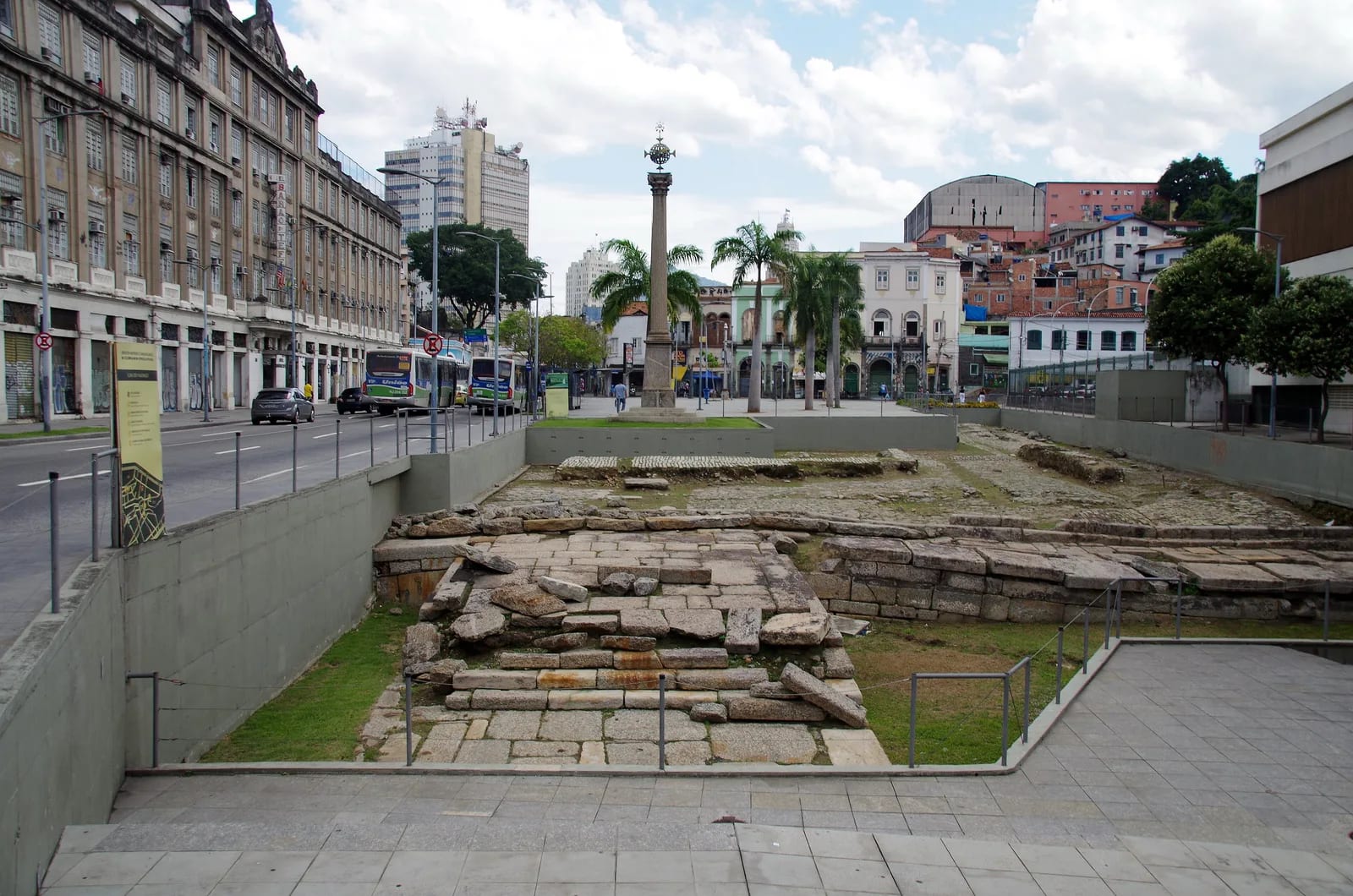
Praça Jornal do Comércio, Saúde, in Rio de Janeiro’s Port Region.
An open-air archaeological memorial preserving the foremost material trace of enslaved Africans’ forced disembarkation in the Americas. It is a visit for listening, reflection, and recognizing the African presence in Brazil’s formation.
In the heart of Rio’s port district, the old stones of Cais do Valongo — a historic wharf — emerge as a place of memory and awareness. Recognized by UNESCO in 2017, the site brings together archaeology, Black culture, and a city that reinvents itself without erasing where it came from.
🤔 Why does it matter?
Standing before the exposed structures turns a history of continental scale into a tangible experience. The route is most meaningful when approached with respect, attention to interpretive markers, and openness to the narratives of Pequena África, Rio’s historic Black district.
📍 What to see
- Historic stone paving from the former wharf
- Archaeological layers associated with Cais da Imperatriz
- Interpretive signage and the exhibition Valongo, Cais de Ancestralidades
- The territorial relationship of the site with the Port Region
🎒 Things to do
- Take time to read the interpretive panels and markers
- Follow the Circuito Histórico e Arqueológico da Celebração da Herança Africana
- Join an interpretive visit when one is scheduled or offered
- Document your visit without interfering with the archaeological structures
✨ Recommended experiences
- Half a day of memory: Cais do Valongo, Jardim Suspenso do Valongo, and Pedra do Sal, with pauses for reading and conversation.
- Educational itinerary: visit the site, then join a scheduled activity at the Laboratório Aberto de Arqueologia Urbana.
- Walk through Pequena África: combine the wharf with Cemitério dos Pretos Novos and Centro Cultural José Bonifácio.
🍽️ Local cuisine
🎶 Soundtrack
- Cais do Valongo — Allan Abbadia and Leandro Oliveira
- Canto das Três Raças — Clara Nunes
🎭 Local culture
🌿 Nature nearby
🌎 Biomes
🏞️ Natural features
📅 Best time to visit
From May to September, the weather tends to be milder and less rainy, favoring walks along the open-air circuit.
- ✅ Best time:
- May to September
- 🟡 Shoulder season:
- March, April, October and November
- 🔴 Less recommended:
- December to February, due to intense heat and greater occurrence of rain showers
- 📝 Notes:
- At any time of year, favor the early morning or late afternoon and keep an eye on the rain forecast.
🧭 Getting there
🏙️ Base city: Rio de Janeiro
✈️ Airport: Santos Dumont Airport
- Take VLT Carioca, Line 1, and get off at Parada dos Navios - Valongo; the wharf is about 110 meters (361 ft) away.
- By taxi or ride-hailing app, use Praça Jornal do Comércio and Avenida Barão de Tefé as reference points.
- From Praça Mauá, walk through the Port Region, following the circuit’s signage.
🚗 Local transportation
- At Parada dos Navios - Valongo, VLT offers ramps, level flooring, tactile paving, Braille signs, and audio announcements.
- The circuit is on foot; plan breaks for the sun, historic paving, and urban stretches.
ℹ️ Practical information
- 🏗️ Infrastructure:
- Basic at the site; good in the cultural surroundings
- 🏨 Where to stay:
- There are options downtown and in the Port Region; the Cais does not offer lodging.
- 🍴 Food:
- Cafés, bars, and restaurants are available downtown, around Praça Mauá, and in the port area.
- 🧭 Guides and agencies:
- Interpretive visits may be offered through cultural programs or independent operators; Laboratório Aberto de Arqueologia Urbana advertises free visits by appointment.
- 📶 Internet and signal:
- This is an urban area; check connectivity with your mobile provider, as the site offers no specific guarantee.
- 💰 Estimated cost:
- No permanent admission price was published on the institutional pages consulted; transportation, food, and private guided visits have their own terms.
- 📝 Notes:
- The site has signage and physical protection following the improvement works. No permanent general opening hours for the open site were found; check the program before leaving. Look for restrooms and other support services at nearby cultural facilities.
♿ Accessibility
Level: partial
The nearby VLT stop has accessibility features. The archaeological site itself has exposed historic stones and sidewalks with uneven sections.
- Plan the route according to your mobility needs.
- Prefer flatter side accesses when available.
- Confirm the accessibility of guided visits and complementary cultural facilities in advance.
⚠️ Safety
🚨 Real risks
- Uneven stone paving that becomes slippery after rain
- Strong sun, heat and dehydration
- Traffic and urban circulation in the Port Region
✅ Recommended care
- Wear closed shoes with good grip.
- Bring water, a hat, sunscreen and sunglasses.
- Remain alert to vehicle traffic and keep an eye on personal belongings.
⛔ When to avoid: Avoid walking on wet stones after heavy rain, and do not take the circuit alone when the area is quiet.
📝 Checklist — what to bring
- Sunscreen
- Hat and sunglasses
- Closed footwear with good grip
- Reusable water bottle
- Charged phone
- Notebook or guide for historical notes
✈️ Travel tips
- Take a few hours to absorb the site and its landmarks without rushing.
- Choose a qualified guide to deepen your understanding of this sensitive historical context.
- Check the cultural calendar before visiting; activities nearby can enrich the experience.
- Treat the Cais as a place of memory: do not climb on, touch, or rest objects on the preserved structures.
💡 Fun facts
- The UNESCO-listed area measures 0.3895 hectare (0.96 acres), with a 41.6981-hectare (103.0-acre) buffer zone.
- Successive landfills moved the site away from the waterline: Guanabara Bay now lies about 344 meters (1,129 ft) from the former wharf.
- The revitalization completed in 2023 added guardrails, architectural lighting, signage, and an art exhibition to the site.
🤔 Did you know?
- UNESCO estimates that up to 900,000 enslaved Africans reached the Americas through Valongo.
- The deepest archaeological layer preserves pé de moleque-style paving, attributed to the original wharf.
- MUHCAB describes the archaeological collection from the Cais excavations as containing 466,035 pieces associated with the African diaspora.
📜 History and context
Built in 1811 to move the disembarkation of enslaved Africans outside the central area, the wharf served that purpose until 1831. In 1843, it was covered over during the remaking of Cais da Imperatriz; it was ultimately buried in 1911 and reappeared during the Porto Maravilha excavations in 2011. It was preserved as a visitable site the following year.
🌍 Global importance
Inscribed on the World Heritage List in 2017 under cultural criterion (vi), the property is recognized by UNESCO as the most important physical trace associated with the forced arrival of enslaved Africans in the Americas. Its protection involves public institutions and civil-society organizations through a management committee coordinated by IPHAN.
🗺️ Quick map (orientation)
📌 Main base: Downtown Rio de Janeiro, in the Port Region
🧭 Landmarks
📍 Nearby places
Small discoveries
- Diáspora Africana
- A network of forced displacement of African peoples to the Americas between the 16th and 19th centuries.
- Rio de Janeiro
- State of Brazil where the capital of the same name is located.
- Patrimônio Mundial
- A title granted by UNESCO to sites of outstanding universal value.
- Lajes de pedra
- Stone surfaces remaining from the former 19th-century wharf.
- Pequena África
- A group of memory sites associated with Afro-Brazilian culture in the Port Region.
- Ilê Omolu Oxum
- A cultural and religious warehouse linked to the history of samba and Black culture.
- Parada dos Museus/Valongo
- Name used in the original form for the VLT stop near the site, with connection to the central region and Praça Mauá.
- Vatapá
- A dish of African origin made with dendê oil, shrimp, and peanuts.
- Acarajé
- A black-eyed pea fritter fried in dendê oil, served with pepper and shrimp.
- Pedra do Sal
- A staircase and square, a landmark of traditional samba and Rio’s Black culture in Pequena África.
- Lajes
- A group of historic stones exposed to the elements.
- VLT
- A light-rail vehicle connecting downtown, the bus terminal, and the Port Region.
- Circuito da Herança Africana
- Urban route that connects landmarks of Afro-Brazilian culture in the Port Region.
- Avenida Barão de Tefé
- An avenue that runs alongside warehouses and the restored wharf.
- Pesquisas arqueológicas
- Studies and excavations that investigate material remains of the past.
- Legado afro-brasileiro
- Processes of resistance, cultural creation, and citizenship among Brazil’s Black population.