.webp&w=1920&q=82)
.webp&w=1920&q=82)
.webp&w=1920&q=82)
.webp&w=1920&q=82)
.webp&w=1920&q=82)
.webp&w=1920&q=82)
.webp&w=1920&q=82)
.webp&w=1920&q=82)
.webp&w=1920&q=82)
Parque Nacional de Sete Cidades
Parque Nacional de Sete Cidades – PARNA Sete Cidades
In northern Piauí, between Brasileira and Piracuruca, in a landscape of sandstone, Cerrado, and patches of Caatinga.
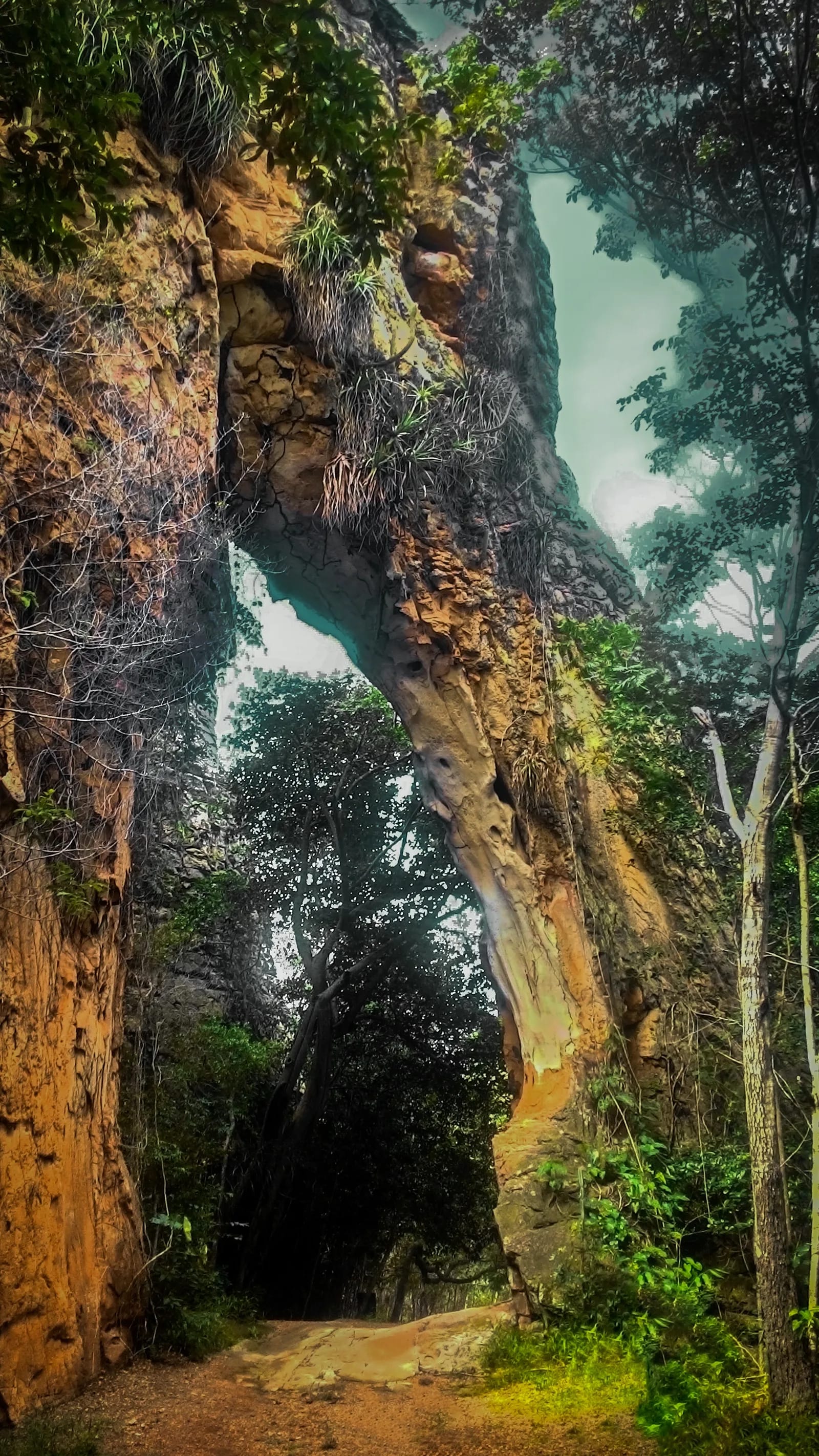
Seven stone formations turn the Piauí sertão into a city imagined by erosion. Among arches, natural figures, and ancient panels, the park brings geology into conversation with human memory.
Here, the Parnaíba Basin emerges in layers of Devonian sandstone, shaped by rain, wind, and time into ruins, animals, and stone gateways. The route crosses an ecotone between Cerrado — Brazil’s savanna — and Caatinga — Brazil’s dry thorn-scrub biome —, shelters springs, and reveals archaeological sites where iron-oxide pigments still trace hands, people, animals, and geometric motifs.
🤔 Why does it matter?
This is a rare journey for those who want to understand how nature can create architecture without an architect while preserving material traces of very ancient human occupation. The experience also reveals the environmental diversity of northern Piauí, well beyond a simplified view of the semi-arid region.
📍 What to see
- Pedra da Tartaruga, the signature landmark of Sexta Cidade
- Portal dos Desejos, also known as Arco do Triunfo
- Pedra dos Canhões and Piscina dos Milagres, in Primeira Cidade
- Pedra do Camelo, Furna do Índio, and Gruta do Catirina, in Quinta Cidade
- Rock-art panels, including those at Gruta do Pajé and the Mão com Seis Dedos site
- Mirante da Segunda Cidade, associated with a drop of about 50 meters (164 ft)
🎒 Things to do
- Follow the official circuits of the seven stone cities
- Interpret the ruiniform shapes without leaving areas open to visitors
- Watch birds in the transitions between open ground and gallery forests
- Visit archaeological sites with qualified accompaniment when the itinerary requires it
- Arrive early at Furo Solsticial during the winter-solstice period
✨ Recommended experiences
- Essential half-day: begin at Sexta Cidade, continue to Pedra da Tartaruga, and pair the route with Portal dos Desejos.
- Full day of geology and archaeology: divide the cities into two circuits, leaving time for the rock-art sites and the viewpoint.
- June itinerary: plan to reach Terceira Cidade before dawn to try to observe the solar alignment at Furo Solsticial, between June 21 and 23.
- For photographers: prioritize the hours of soft light, and choose a guided visit that connects the sandstone forms with the processes that carved them.
🍽️ Local cuisine
🎶 Soundtrack
- O Poeta e a Bala — Validuaté
- Cajuína — Caetano Veloso
🎭 Local culture
🌿 Nature nearby
🌎 Biomes
🏞️ Natural features
🐾 Possible animals in the area
🌱 Possible plants in the area
📅 Best time to visit
June through September combines firmer ground after the rains, a landscape still refreshed, and a better chance of open skies; the heat favors early starts.
- ✅ Best time:
- June to July, at the end of the rainy season, and August to September, with drier weather and good visibility.
- 🟡 Shoulder season:
- May and October, when visits remain possible but conditions range from lingering rain to rising heat.
- 🔴 Less recommended:
- January through April, because rain is more frequent and surfaces may be slippery; from October through December, plan walks only in the coolest hours.
- 📝 Notes:
- The management plan characterizes January through April as the rainy season and May through December as the dry season. Check local conditions before setting out.
🧭 Getting there
🏙️ Base city: Piracuruca
✈️ Airport: Parnaíba International Airport – Prefeito Dr. João Silva Filho, in Parnaíba
- From Teresina, follow BR-343 to Posto Petecas in Piripiri; then take BR-222 toward Fortaleza and turn into the park access road at km 64 (mile 40), as ICMBio directs.
- From Fortaleza, take BR-222 and enter the park on the right at km 64 (mile 40).
- The management plan places the administrative headquarters at Povoado Vamos Vendo, in rural Piracuruca.
🚗 Local transportation
- Visitor circuits are completed on foot, along official trails and structures.
- Visits may be self-guided or led by an ICMBio-accredited guide, depending on the itinerary and current rules.
- Use only roads, parking areas, and spaces released by park management.
ℹ️ Practical information
- 🏗️ Infraestrutura:
- Support infrastructure is still being consolidated.
- 🏨 Hospedagem:
- ICMBio reports an Abrigo-Hotel with 12 rooms inside the unit; the 2026 management plan records the hotel as being in the process of receiving a use permit. Confirm availability before traveling.
- 🍴 Diet:
- The management plan mentions a snack bar and souvenir shop in the visitation infrastructure. Bring water and snacks, as service operations may vary.
- 🧭 Guides and agencies:
- Visits with ICMBio-accredited guides are possible. An older official page states that the service is charged to the group but does not publish a price table.
- 📶 Internet and signal:
- No official consolidated data on signal coverage within the park.
- 💰 Estimated cost:
- Admission is free, according to ICMBio’s visitor page. Contact park management directly for current prices and availability of guiding, lodging, and services.
- 📝 Notes:
- No recent official publication was found with opening hours or a current guiding price. Check both before traveling.
♿ Acessibilidade
Level: consult local operators
The management plan records stairs, guardrails, handrails and walkways on the visiting trails, but does not present an official assessment of accessibility for people with reduced mobility.
- Confirm in advance which stretches can receive vehicle support or have less variation in level.
- Bear in mind that the circuits include rocky terrain and stairs.
- Request up-to-date guidance from park management before planning the visit.
⚠️ Safety
🚨 Real risks
- Heat and sun exposure during walks
- Uneven rocky ground and slippery stretches after rain
- Dehydration on routes without continuous shade
- Irreversible damage to archaeological heritage if protection areas are not respected
✅ Recommended care
- Bring enough water, a hat, sunscreen and closed shoes with good grip.
- Stay on authorized trails, walkways and viewpoints.
- Do not touch cave paintings or archaeological surfaces.
- Adapt the itinerary to weather conditions and park staff guidance.
⛔ When to avoid: Avoid starting walks in the hours of strongest sun, proceeding along flooded trails, or remaining in areas closed because of rain, management, or conservation.
📝 Checklist — what to bring
- Reusable water bottle
- Sunscreen and lip balm with UV filter
- Hat or cap and glasses with UV protection
- Sneakers or boots with grippy soles
- Light snack and a bag for collecting waste
- Dry bag for electronics and documents
- Rain jacket in the rainy season
✈️ Travel tips
- Set aside at least a full day if you want to take your time exploring the main ensembles.
- Arrange the archaeological itinerary in advance and confirm guiding rules for the chosen date.
- Plan a base in Piracuruca or Brasileira to reduce round-trip travel.
- Arrive early in the morning to walk in cooler temperatures and better light for photographs.
- Add Pedro II or the Parnaíba Delta coast only if there are extra days in the itinerary.
💡 Curiosidades
- The park’s name comes from the appearance of seven groups of rock, popularly called stone cities or petrified cities.
- Furo Solsticial aligns sunrise with a rocky opening in Terceira Cidade, an effect observed near the winter solstice.
- Pedra da Tartaruga has polygonal features associated with cracks, rain, weathering, and lichens.
- Arco do Triunfo is also known locally as Portal dos Desejos.
🤔 Did you know?
- The management plan records rock paintings about ten thousand years old, made with iron-oxide pigment.
- IPHAN has cataloged 17 archaeological sites in the park; the unit team’s survey identifies 116 sites.
- In 2024, the park reached a record 39,062 visitors.
- The park is recognized by ICMBio as the first national park in Piauí.
📜 History and context
Created by Federal Decree No. 50,744 on June 8, 1961, the park is a federal strict-protection unit. Its management plan links its creation to the preservation of geological monuments, water production, biodiversity, and rock art across territory shared by Brasileira and Piracuruca.
🌍 Global importance
No specific international designation was identified in the sources consulted, yet the park is nationally and regionally important for bringing together Devonian geological heritage, rock art, water resources, and an ecological transition between Cerrado and Caatinga. This overlap makes it valuable for research, environmental education, and low-impact tourism.
🗺️ Quick map (orientation)
📌 Main base: Piracuruca
🧭 Landmarks
📍 Nearby places
Pequenas descobertas
- PI
- Brasileira state: Piauí.
- Caatinga
- Brasileira semi-arid biome, with vegetation adapted to drought.
- Pinturas rupestres
- Prehistoric drawings and paintings made on rock walls.
- Carne de sol
- Salted, sun-dried beef.
- Paçoca
- Meat paçoca made with cassava flour.
- Capote
- Guinea fowl, known locally as capote.
- Cajuína
- Cajuína, a clarified nonalcoholic drink made from cashew juice and typical of Piauí.
- THE
- IATA code for Teresina Airport, Senador Petrônio Portella.
- BR-343
- Federal highway that connects Teresina to the north of Piauí and forms the Teresina-Piripiri axis.
- Aprox.
- Prices vary depending on group size and itinerary.
- Lip balm
- Lip balm with UV protection.
- Delta do Parnaíba
- Piauí coastal plain with beaches and mangroves.