.webp&w=1920&q=82)
.webp&w=1920&q=82)
.webp&w=1920&q=82)
.webp&w=1920&q=82)
.webp&w=1920&q=82)
.webp&w=1920&q=82)
.webp&w=1920&q=82)
.webp&w=1920&q=82)
.webp&w=1920&q=82)
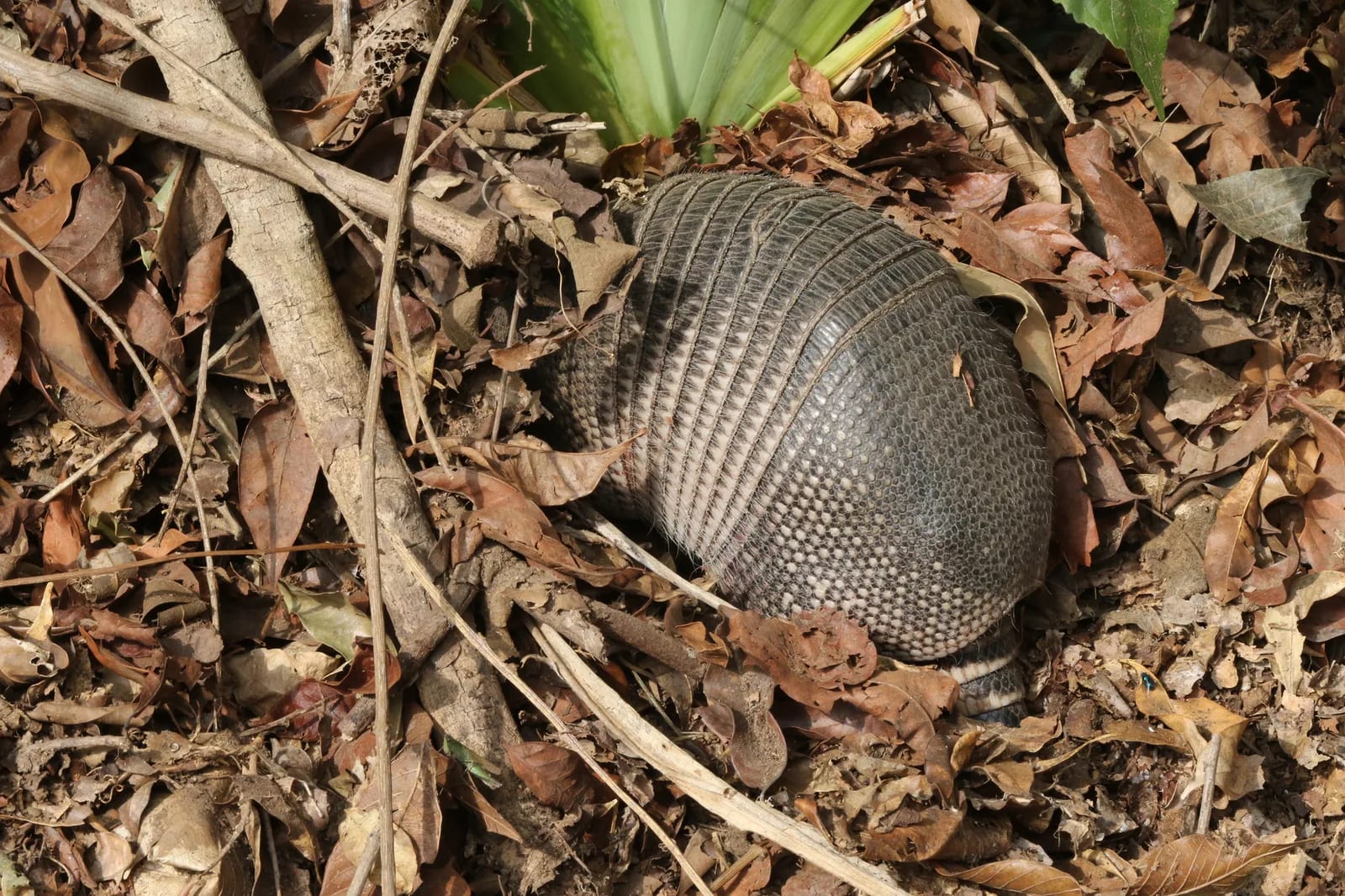
Nine-banded armadillo
Dasypus novemcinctus
Mammals — Cingulata (Dasypodidae)
The nine-banded armadillo is one of the most widely distributed mammals in the Americas and a notable example of ecological adaptation. In Brazil, it acts as a soil engineer, connecting underground processes to the dynamics of wildlife and vegetation.
Soil engineer and ecological sentinel
Nocturnal and a dedicated digger, the nine-banded armadillo reshapes the soil, influences water infiltration and creates shelters used by other species. Its presence is associated with the functioning of terrestrial ecosystems.
📍 Biomes it inhabits
It occurs in the Amazon, Cerrado — the Brazilian savanna —, Caatinga — Brazil's dry thorn-scrub biome —, the Atlantic Forest, the Pantanal and the Pampa. It is associated with forests, savannas, agricultural areas and peri-urban environments, demonstrating high tolerance of human disturbance.
🌍 Conservation status (IUCN)
LC · Least ConcernAccording to the IUCN, the species is classified as LC (Least Concern). Even so, it faces local pressure from roadkill, hunting and habitat loss.
🔬 Scientific classification
- Kingdom
- Animalia
- Phylum
- Chordata
- Class
- Mammalia
- Order
- Cingulata
- Family
- Dasypodidae
- Genus
- Dasypus
- Species
- Dasypus novemcinctus Linnaeus, 1758
⚙️ Specifications and metrics
- Body mass: 3–6 kg (6.6–13.2 lb).
- Body length: 60–75 cm (24–30 in) + a 30–45 cm (12–18 in) tail.
- Carapace: Made up of articulated bony plates, with movable bands.
- Claws: Robust forelimbs, adapted for intensive digging.
- Sense of smell: Highly developed, essential for locating subterranean prey.
- Generation length: ~4–5 years.
Diet: Opportunistic insectivore — ants, termites, larvae and other invertebrates; occasionally plant matter.
📅 Life cycle
- Gestation: ~120 days, with polyembryony.
- Litter: Usually 4 identical offspring.
- Parental care: Maternal.
- Lifespan: Up to 12–15 years in the wild.
🔗 Ecological ripple effect
The nine-banded armadillo's burrows increase soil heterogeneity, shelter reptiles, amphibians and small mammals, and influence nutrient cycling. Its removal affects multiple levels of the ecosystem.
🤔 Why it matters
- One of the world's most studied armadillo species.
- Able to occupy highly modified environments.
- An important ecological engineer of the soil.
- A biological model in medical and genetic research.
🧪 Did you know?
- It is the only mammal with a natural range to have expanded as far north as the southern United States.
- Polyembryony produces genetically identical offspring.
- It can cross bodies of water by inflating its stomach to float.
- Roadkill is one of the leading causes of mortality today.
Small discoveries
- Nocturnal
- A species that carries out most of its activities at night.
- IUCN
- International Union for Conservation of Nature — the global authority on extinction-risk assessment.
- Movable bands
- A variable number of movable bands; generally nine.
- Polyembryony
- A phenomenon in which a single egg gives rise to several genetically identical embryos.