.webp&w=1920&q=82)
.webp&w=1920&q=82)
.webp&w=1920&q=82)
.webp&w=1920&q=82)
.webp&w=1920&q=82)
.webp&w=1920&q=82)
.webp&w=1920&q=82)
Recluse spider
Loxosceles sp.
Arachnids — Araneae (Sicariidae)
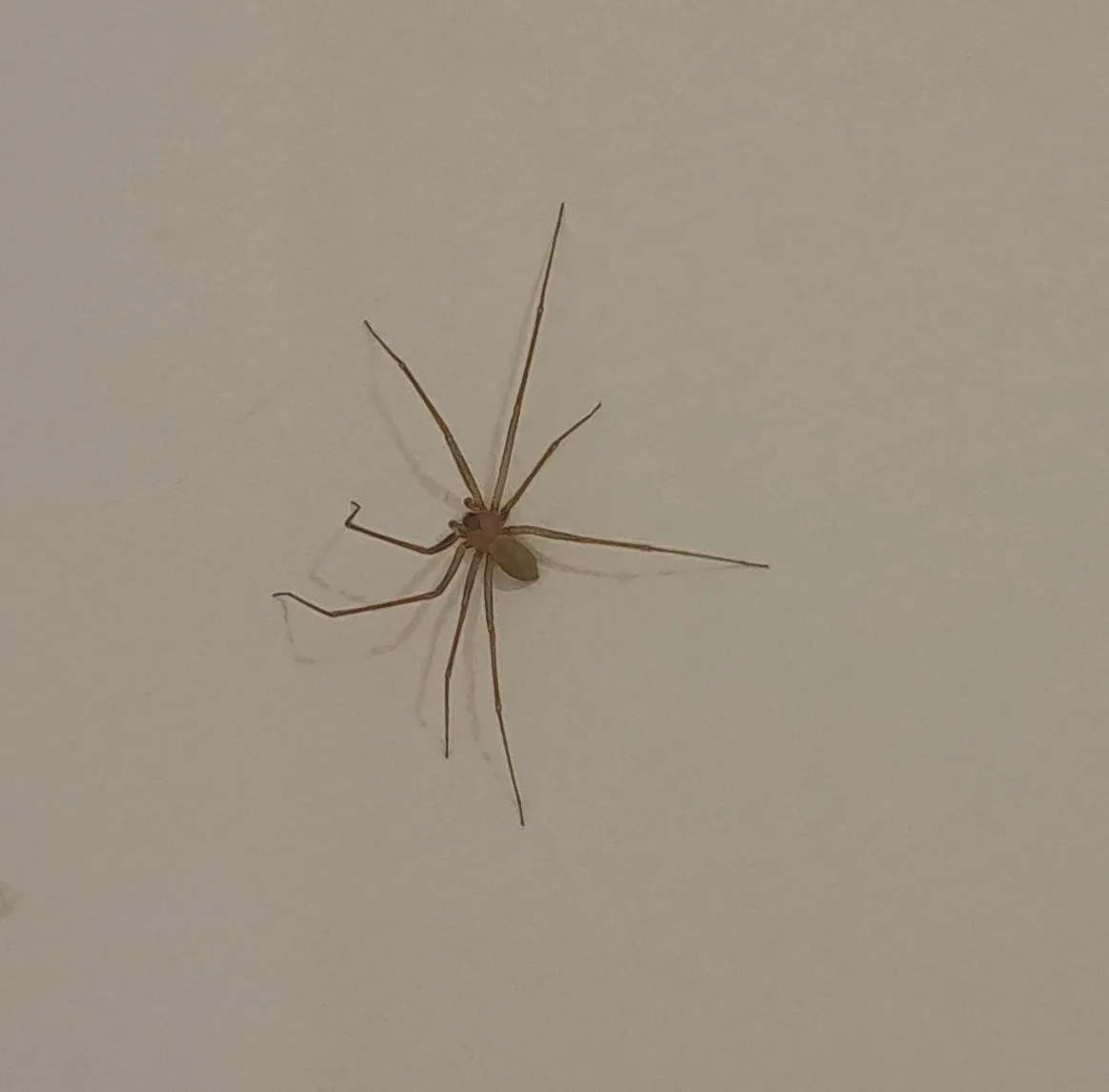
Discreet, silent, and potentially dangerous, the recluse spider is responsible for Brazil's most serious spider-related accidents in terms of tissue damage. Unlike large, conspicuous spiders, species in the genus Loxosceles are rarely noticed — and that very invisibility makes them a significant public-health concern.
Small, hidden, and clinically dangerous
Recluse spiders of the genus Loxosceles are reclusive and nonaggressive. They do not actively attack, but may bite when pressed against the human body — a common circumstance when putting on clothes or shoes, or while sleeping. Despite their small size, their venom has necrotizing effects and can cause serious clinical conditions without proper treatment.
📍 Range and habitat
Distribution: widespread in Brazil, with a higher incidence in the South, Southeast, and Central-West regions, as well as in other countries across the Americas.
Habitat: dry, undisturbed settings such as closets, storage rooms, behind furniture, wall cracks, and household clutter. It is rarely found outdoors.
⚠️ Relationship with humans
Conservation: genus with no specific formal IUCN assessment. Its species are relatively common in human settings.
Relationship: group of major medical importance. Its venom has dermonecrotic effects and may lead to extensive lesions, secondary infections, and, in rare cases, severe systemic complications. Any suspected bite requires immediate medical evaluation.
🔬 Scientific classification
- Kingdom
- Animalia
- Phylum
- Arthropoda
- Class
- Arachnida
- Order
- Araneae
- Family
- Sicariidae
- Genus
- Loxosceles
- Species
- Loxosceles sp. Heineken & Lowe, 1832
🔬 Morphology and adaptations
- Size: Small-bodied, usually measuring 6–12 mm (0.2–0.5 in).
- Coloring: Uniformly light to dark brown.
- Eyes: Only six eyes, arranged in three pairs — an arrangement used as a diagnostic criterion.
- Body markings: Some species have a violin-shaped marking on the back, though it is not always visible.
Diet: A predator of small insects and other arthropods; sedentary and nocturnal in habit.
🔄 Life cycle and behavior
📅 Development
- Type: growth through molts.
- Lifespan: may live for more than 5 years, unusual for small spiders.
🌙 Behavior
- Activity: predominantly nocturnal.
- Habits: sedentary and not very mobile.
- Defense: bites only when pressed against the skin.
🩺 Medical Importance
- Loxoscelism: a clinical condition marked by delayed pain, progressive necrosis, and slow healing.
- Progression: the lesion may worsen days after the bite, even without intense pain at first.
- Treatment: depends on early diagnosis, medical follow-up, and, in selected cases, specific antivenom.
🛑 Prevention and Coexistence
- Shake out clothing and shoes before use.
- Avoid accumulating clutter and objects stored for long periods.
- Keep spaces clean, well lit, and well ventilated.
- Do not handle unidentified spiders.
💫 Why does the recluse spider require attention?
Loxosceles is a paradox: neither aggressive nor large, yet responsible for the most complex accidents involving Brazilian spiders.
Knowing its habits is the best form of prevention — not fear, nor indiscriminate elimination.
Reflection: in nature, the greatest danger does not always come from what stands out, but from what goes unnoticed.
Small discoveries
- Tissue damage
- Localized destruction of body tissues.
- Necrotizing
- The capacity to cause progressive cellular destruction.
- Household clutter
- Infrequently moved objects that provide dark, dry shelter.
- IUCN
- The global list of threatened species; spiders of medical importance rarely receive individual assessments.
- Dermonecrotic
- Toxins that cause tissue destruction and systemic changes.
- Six eyes
- An eye arrangement unusual among spiders, used as a diagnostic criterion.