.webp&w=1920&q=82)
.webp&w=1920&q=82)
.webp&w=1920&q=82)
.webp&w=1920&q=82)
.webp&w=1920&q=82)
.webp&w=1920&q=82)
.webp&w=1920&q=82)
.webp&w=1920&q=82)
.webp&w=1920&q=82)
Humpback whale
Megaptera novaeangliae
Mammals — Cetaceans (Balaenopteridae)
The humpback whale is among the planet’s largest and most charismatic mammals, known for its acrobatic breaches and complex vocalizations. In Brazil, it has become a global emblem of population recovery since commercial whaling ended, linking marine conservation, science, and responsible tourism.
A migratory giant of the oceans
A highly migratory species, the humpback whale travels thousands of kilometers (thousands of miles) each year. Its breeding grounds in Brazil’s tropical waters are essential to the species’ life cycle in the South Atlantic.
📍 Biomes it inhabits
Cosmopolitan in distribution, it occurs in every ocean. In Brazil, it is found chiefly along the Northeast and Southeast coasts, especially at Banco dos Abrolhos, the principal breeding ground of the Western South Atlantic population.
🌍 Conservation status (IUCN)
LC · Least ConcernAccording to the IUCN, the species is classified as LC (Least Concern). Its population recovery is considered one of modern marine conservation’s greatest success stories.
🔬 Scientific classification
- Kingdom
- Animalia
- Phylum
- Chordata
- Class
- Mammalia
- Order
- Cetacea
- Family
- Balaenopteridae
- Genus
- Megaptera
- Species
- Megaptera novaeangliae (Borowski, 1781)
⚙️ Specifications and metrics
- Body mass: 25–40 metric tons (55,000–88,000 lb).
- Body length: 14–16 m (46–52 ft; females larger than males).
- Pectoral fins: Exceptionally long, reaching up to 1/3 of body length—the longest among cetaceans.
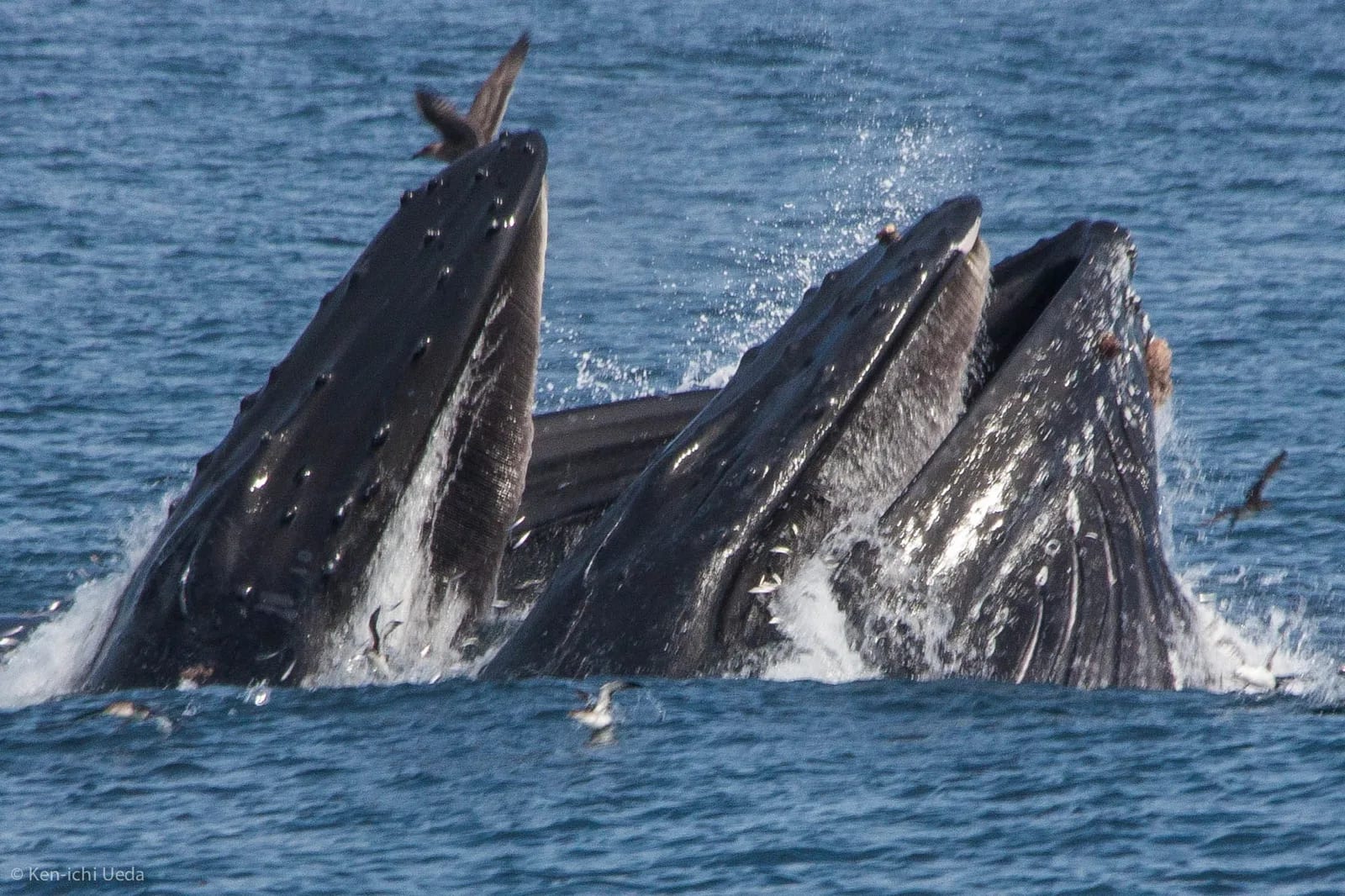
- Feeding: Filter feeder using baleen (whalebone plates).
- Communication: Complex vocalizations and songs associated with males in breeding areas.
- Generation length: ~21–22 years—slow population recovery.
Diet: Carnivorous—krill and small fish, consumed in high-latitude feeding grounds.
📅 Life cycle
- Gestation: ~11–12 months.
- Litters: Usually 1 calf.
- Parental care: Exclusively maternal.
- Lifespan: 50–80 years.
🔗 Ecological ripple effect
The humpback whale influences ocean food-web dynamics and nutrient cycling through the so-called “fertilizer effect.” Its presence supports local economies through responsible whale-watching ecotourism.
🤔 Why it matters
- Migrates thousands of kilometers (thousands of miles) each year.
- Breeds in warm tropical waters.
- Feeds in cold, productive waters.
- Returns to Brazil every year.
🧪 Did you know?
- Songs can last for hours and change over time.
- Breaches and flipper slaps may serve a communicative function.
- The specific epithet novaeangliae refers to New England, the region where the species was described.
- Brazil hosts one of the world’s best-monitored populations.
Small discoveries
- Highly migratory
- Undertakes seasonal movements between feeding and breeding areas.
- IUCN
- International Union for Conservation of Nature—the global authority on assessing extinction risk.
- The longest among cetaceans
- A unique feature among whales.
- Songs
- Long, structured, repetitive sound sequences.
- “fertilizer effect”
- Nutrient recycling through surface excretion.