.webp&w=1920&q=82)
.webp&w=1920&q=82)
.webp&w=1920&q=82)
.webp&w=1920&q=82)
.webp&w=1920&q=82)
.webp&w=1920&q=82)
.webp&w=1920&q=82)
.webp&w=1920&q=82)
.webp&w=1920&q=82)
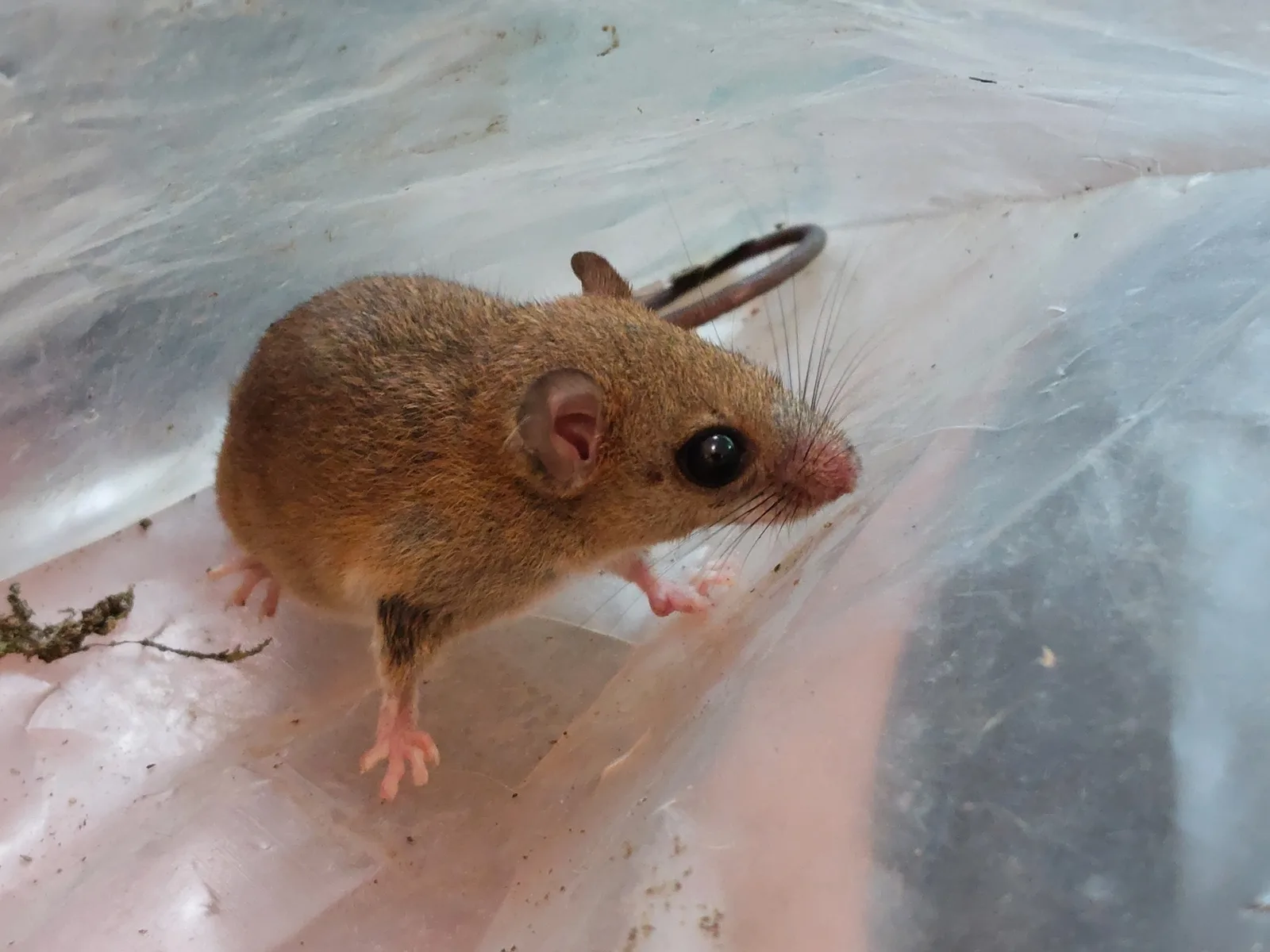
Bicolored arboreal rice rat
Oecomys bicolor
Mammals — Rodents (Cricetidae • Sigmodontinae)
The bicolored arboreal rice rat is a small, specialized rodent of the forest canopy, unobtrusive and seldom seen, yet ecologically significant. Its presence reflects forest structural integrity, especially in well-conserved tropical environments.
Arboreal rodent of tropical forests
Associated with the canopy and closed forests, the bicolored arboreal rice rat is primarily nocturnal and elusive. This specialization reduces competition with ground-dwelling rodents and deepens the forest’s ecological complexity.
📍 Biomes it inhabits
It occurs mainly in the Amazon and forested areas associated with humid environments. In Brazil, it is linked to upland forests and well-structured forests with abundant continuous tree cover.
🌍 Conservation status (IUCN)
LC · Least ConcernAccording to the IUCN, the species is classified as LC (Least Concern). Even so, it is sensitive to forest-cover loss and canopy fragmentation.
🔬 Scientific classification
- Kingdom
- Animalia
- Phylum
- Chordata
- Class
- Mammalia
- Order
- Rodentia
- Family
- Cricetidae
- Genus
- Oecomys
- Species
- Oecomys bicolor (Tomes, 1860)
⚙️ Specifications and metrics
- Body mass: 30–60 g (1.1–2.1 oz).
- Body length: 9–12 cm (3.5–4.7 in), plus a long tail measuring 11–15 cm (4.3–5.9 in).
- Tail: Long and semiprehensile, essential for movement through the canopy.
- Locomotion: Excellent climber, with feet adapted to an arboreal life.
- Activity: Primarily nocturnal.
- Generation length: ~1–2 years — rapid population dynamics.
Diet: Omnivorous — small fruits, seeds, insects, and other resources available in the canopy.
📅 Life cycle
- Gestation: ~23–25 days.
- Litters: Typically 2–4 young.
- Development: Rapid, with early independence.
- Lifespan: Short, typical of small rodents.
🔗 Ecological ripple effect
The bicolored arboreal rice rat acts as a secondary consumer and disperser of small seeds, and it is part of the prey base for birds of prey, snakes, and small carnivores. Its presence contributes to food-web connectivity in the canopy.
🤔 Why it matters
- Specialist in arboreal environments.
- Rarely detected in ground-based surveys.
- Indicator of structurally intact forests.
- An essential part of the canopy food chain.
🧪 Did you know?
- The genus Oecomys includes highly arboreal rodents.
- Its “bicolored” coloration helps it camouflage itself amid light and shadow.
- It is more often recorded by canopy traps than on the ground.
- Vertical forest fragmentation drastically reduces its occurrence.
Small discoveries
- Canopy
- The uppermost forest layer, formed by the crowns of trees.
- IUCN
- International Union for Conservation of Nature — the global authority on assessing extinction risk.
- Semiprehensile
- The ability to aid balance and arboreal locomotion.