.webp&w=1920&q=82)
.webp&w=1920&q=82)
.webp&w=1920&q=82)
.webp&w=1920&q=82)
.webp&w=1920&q=82)
.webp&w=1920&q=82)
.webp&w=1920&q=82)
Red paper wasp
Polistes canadensis
Insects — Hymenoptera (Vespidae)
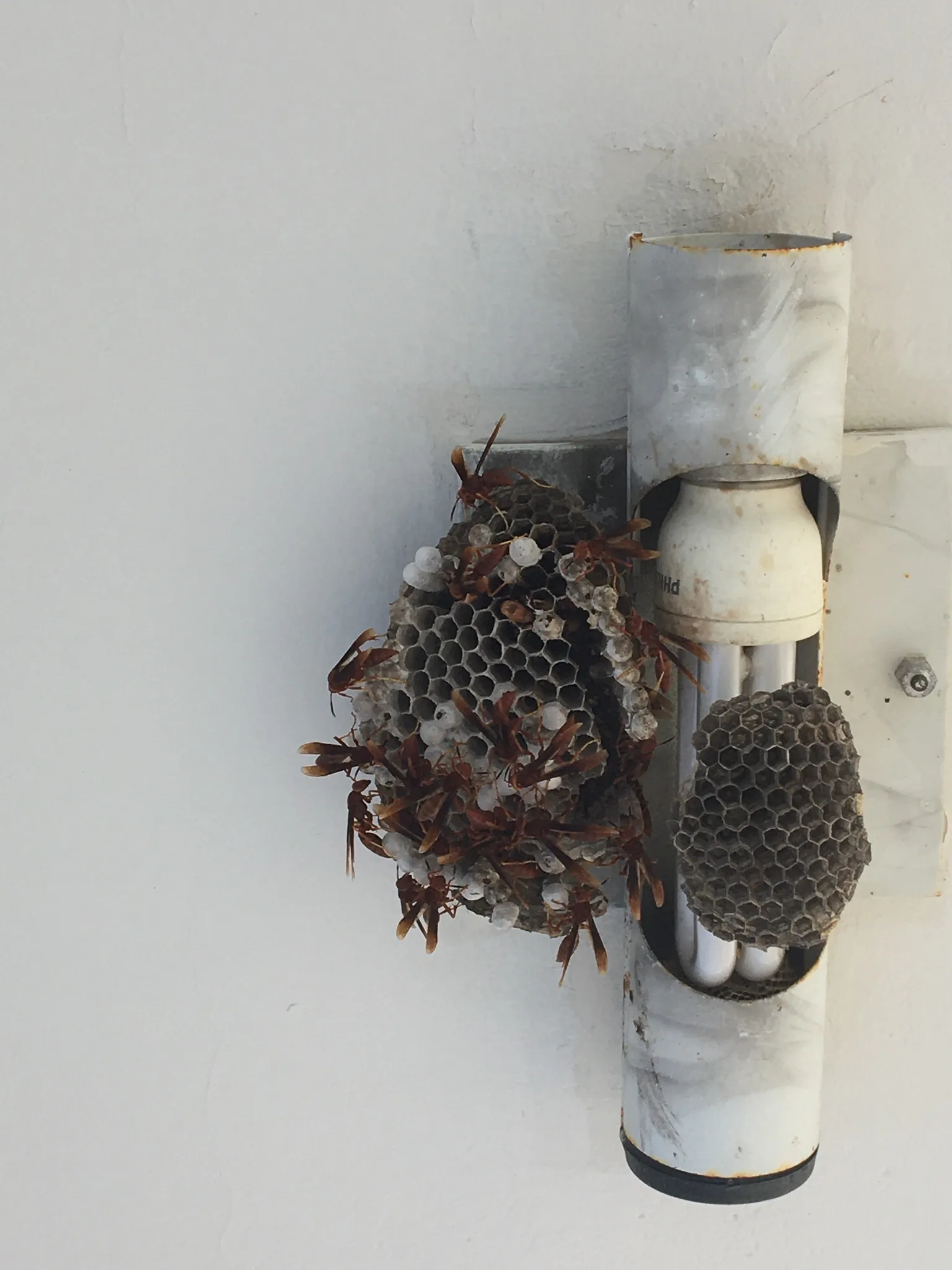
The red paper wasp is one of the best-known social wasps in the Americas. Visible, active, and highly organized, Polistes canadensis shows that complex societies are not exclusive to ants and bees — they also buzz, fly, and defend their nests with precision.
The aerial architect of open colonies
Unlike wasps that live hidden in cavities, Polistes canadensis builds open nests attached to branches, eaves, and human-made structures. That exposure is not a weakness: it is part of a social strategy built on constant vigilance, cooperation, and a swift response to threats.
📍 Range and habitat
Distribution: Central America, South America, and the Caribbean, with a broad distribution in Brazil.
Habitat: open forests, urban areas, forest edges, gardens, parks, and human-made structures. It is common in human-modified environments, provided shelter and food sources are available.
⚠️ Relationship with humans
Conservation: species without a specific formal assessment by the IUCN. Even so, it is widely recognized as common and highly adaptable, occurring across a vast geographic range in natural and urban environments.
Relationship: can cause sting injuries when its nest is disturbed, but it does not behave aggressively outside defensive situations. It also provides important ecological services as an insect predator.
🔬 Scientific classification
- Kingdom
- Animalia
- Phylum
- Arthropoda
- Class
- Insecta
- Order
- Hymenoptera
- Family
- Vespidae
- Genus
- Polistes
- Species
- Polistes canadensis (Linnaeus, 1758)
🔬 Morphology and adaptations
- Size: Medium-sized wasp with an elongated body and long legs.
- Coloring: Reddish-brown tones that serve as aposematic coloration.
- Wings: Folded lengthwise when at rest, a characteristic typical of wasps.
- Stinger: Present only in females and used solely to defend the colony.
Diet: Omnivorous — insects, nectar, and sugary substances.
🔄 Life cycle and behavior
📅 Development
- Type: complete metamorphosis.
- Founding: nests founded by one or more females, which later establish a reproductive hierarchy.
🌙 Behavior
- Sociality: primitively eusocial.
- Feeding: omnivorous — insects, nectar, and sugary substances.
- Defense: rapid collective response when the nest is threatened.
🌍 Role in the Ecosystem
- Biological control: a predator of caterpillars and other insects, helping regulate potentially pest populations.
- Occasional pollination: visits flowers while seeking nectar.
- Trophic balance: forms part of terrestrial and urban food webs.
💡 Why does it matter?
- Because not every wasp is a villain.
- Because complex societies take many forms.
- Because natural insect control depends on these predators.
- Because coexistence is different from conflict.
💫 Why does this wasp deserve attention?
Polistes canadensis lives among us, often ignored or feared. Yet its presence signals environments capable of sustaining complete ecological networks, including in urban areas.
When we observe an open nest, we see discipline, cooperation, and vigilance — an entire society suspended in the air.
Reflection: understanding wasps is an essential step toward replacing automatic fear with informed coexistence and ecological respect.
Small discoveries
- Open nests
- Visible nests without an outer covering, with exposed combs.
- Human-modified
- Places altered by human activity that remain functionally habitable.
- IUCN
- Global list of threatened species; most social wasps lack individual assessments.
- Aposematic coloration
- A visual warning signal aimed at potential predators.
- Complete metamorphosis
- A life cycle with distinct stages: egg → larva → pupa → adult.
- Primitive eusociality
- A cooperative social system that is less rigid than those of bees and ants.