.webp&w=1920&q=82)
.webp&w=1920&q=82)
.webp&w=1920&q=82)
.webp&w=1920&q=82)
.webp&w=1920&q=82)
.webp&w=1920&q=82)
.webp&w=1920&q=82)
.webp&w=1920&q=82)
.webp&w=1920&q=82)
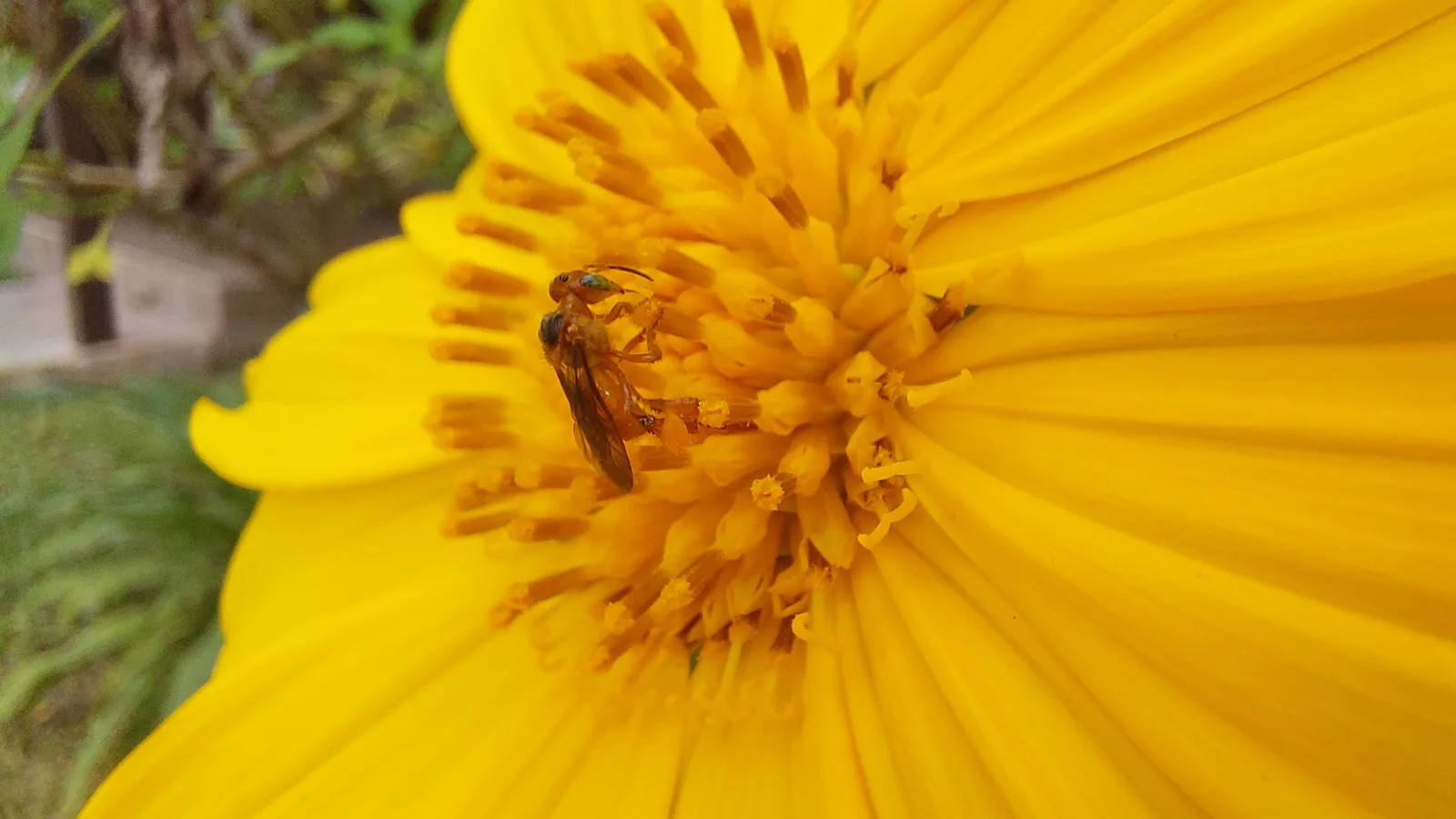
Jataí bee
Tetragonisca angustula
Insects — Hymenoptera (Apidae)
Small, gentle, and extremely efficient, the jataí—a stingless bee—is one of the most important pollinators in the Americas. Nearly invisible at first glance, Tetragonisca angustula sustains plants, fruits, and entire landscapes: clear proof that ecological impact is not a matter of size.
The quiet guardian of tropical pollination
The jataí belongs to the stingless bee group, highly diverse in tropical regions. Its sophisticated social organization, coupled with peaceful behavior, has made the species one of the most widely kept in meliponiculture. Where jataís occur, pollen flows, plants reproduce, and ecological stability takes hold.
📍 Range and habitat
Distribution: Central America, South America, and part of Mexico, with a wide distribution in Brazil.
Habitat: tropical and subtropical forests, wooded areas, gardens, parks, and human-modified environments. It nests in natural cavities, walls, trees, and artificial structures.
⚠️ Relationship with humans
Conservation: a species with no specific formal IUCN assessment. It is widely regarded as common and adaptable, though local populations may be affected by pesticides and habitat loss.
Relationship: exceptionally positive. A gentle, harmless species with no functional stinger, widely kept in meliponiculture and valued for its pollination and aromatic honey.
🔬 Scientific classification
- Kingdom
- Animalia
- Phylum
- Arthropoda
- Class
- Insecta
- Order
- Hymenoptera
- Family
- Apidae
- Genus
- Tetragonisca
- Species
- Tetragonisca angustula (Latreille, 1811)
🔬 Morphology and adaptations
- Size: A very small bee, about 4–5 mm (0.16–0.20 in).
- Coloring: A dark body with yellow bands on the face, making the species easy to recognize.
- Defense: No functional stinger; defense relies on social strategies.
- Nest: A tubular entrance made of propolis, used to control access and defend the nest.
Diet: A collector of nectar and pollen—it visits flowers of countless native and cultivated plants, acting as a pollinator.
🔄 Life cycle and behavior
📅 Development
- Type: complete metamorphosis: egg, larva, pupa, and adult.
- Colony: organized into queens, workers, and males, with a clear division of roles.
🌙 Behavior
- Sociality: eusocial.
- Activity: diurnal, foraging continuously throughout the day.
- Communication: based on chemical signals and direct contact, without elaborate dances like those of Apis.
🌍 Role in the Ecosystem
- Pollination: supports the reproduction of countless native and cultivated plants.
- Food security: contributes indirectly to fruit and seed production.
- Ecological resilience: maintains genetic flow among plant populations.
- Functional indicator: its presence suggests environments with enough floral diversity.
💡 Why does it matter?
- Because much of our food depends on unseen pollinators.
- Because stingless bees are a tropical biological heritage.
- Because coexistence with insects can be safe and beneficial.
- Because protecting bees means protecting entire ecosystems.
💫 Why is the jataí special?
Tetragonisca angustula shows that delicacy and efficiency can go hand in hand. Its unobtrusive flight connects flowers, trees, and people in an invisible web of mutual dependence.
In silence, it keeps forests productive, home gardens alive, and landscapes fertile—a continuous labor that rarely draws notice.
Reflection: when we care for the smallest bees, we are, in practice, caring for the foundation that supports life on land.
Small discoveries
- Stingless bees
- Social bees that lack a functional stinger for defense.
- Meliponiculture
- The managed keeping of native stingless bees.
- Human-modified environments
- Places altered by human activity that still offer flowers and nesting sites.
- IUCN
- Global list of threatened species; most native bees still lack an individual assessment.
- Pesticides
- Intensive use of agricultural chemicals that affect pollinating insects.
- Social strategies
- Collective behaviors such as guarding, closing the nest entrance, and biting.
- Propolis
- A mixture of plant resins, wax, and other compounds produced by bees.
- Complete metamorphosis
- A life cycle with distinct stages: egg → larva → pupa → adult.
- Eusocial
- A highly cooperative and stable social system.