.webp&w=1920&q=82)
.webp&w=1920&q=82)
.webp&w=1920&q=82)
.webp&w=1920&q=82)
.webp&w=1920&q=82)
.webp&w=1920&q=82)
.webp&w=1920&q=82)
.webp&w=1920&q=82)
.webp&w=1920&q=82)
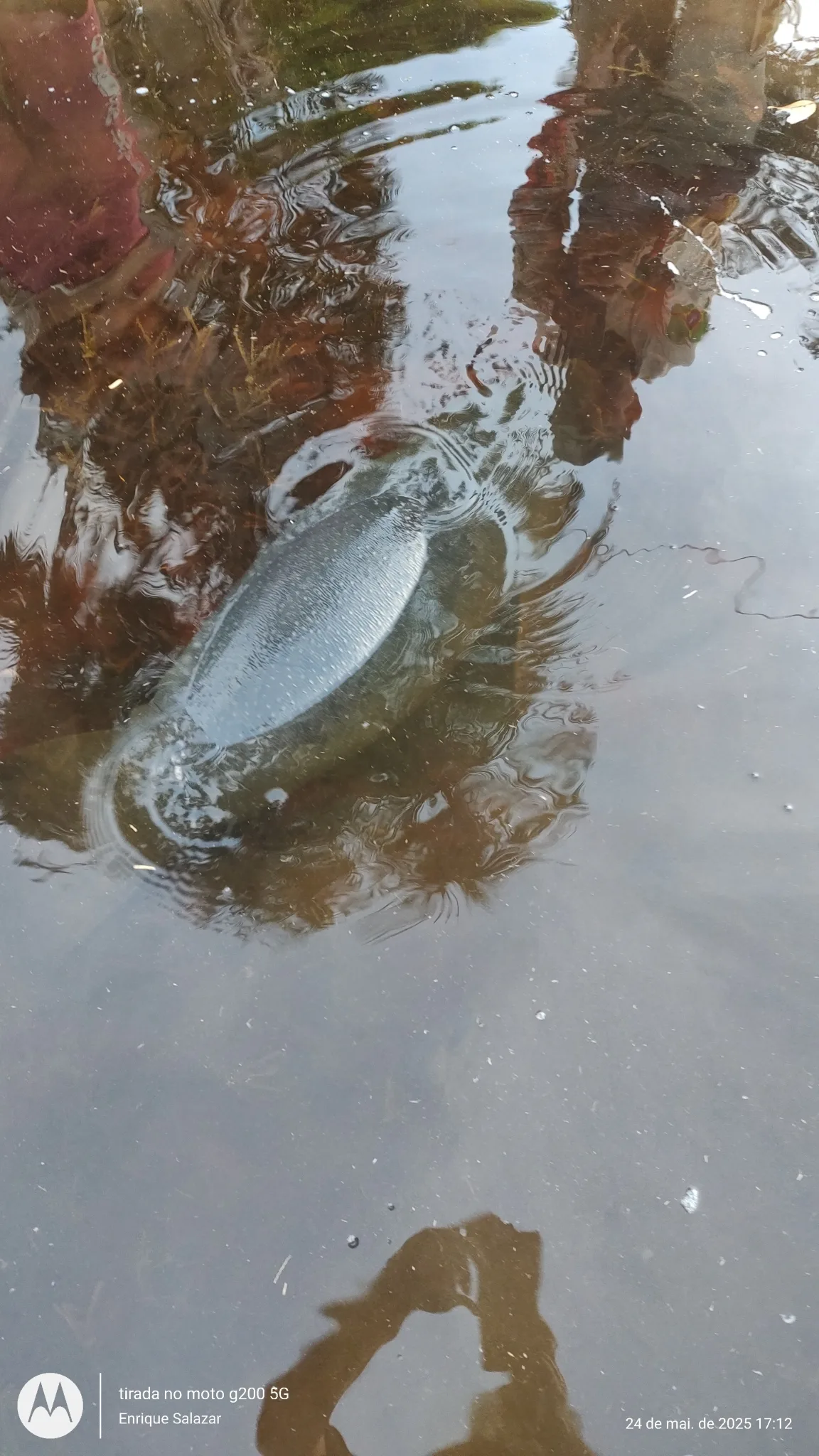
Amazonian manatee
Trichechus inunguis
Mammals — Sirenia (Trichechidae)
The Amazonian manatee is the world's only strictly freshwater sirenian and one of the most emblematic mammals of the Amazon Basin. Fully adapted to rivers, lakes, and floodable forests, it symbolizes the direct dependence between wildlife conservation and the integrity of tropical river systems.
Giant herbivore of Amazonian rivers
Strictly adapted to river environments, the Amazonian manatee has physiology, behavior, and a life cycle synchronized with the Amazon's annual flood pulse. Its movements follow the expansion and retreat of the waters, linking main rivers, lakes, and floodplain areas.
📍 Biomes it inhabits
A species endemic to the Amazon Basin, it occurs in Brazil, Peru, Colombia, and Ecuador. In Brazil, it is widely distributed across Amazonian rivers, lakes of the várzea — seasonally flooded Amazonian forest —, igarapés — narrow Amazonian creeks —, and seasonally flooded forests.
🌍 Conservation status (IUCN)
VU · VulnerableAccording to the IUCN, the species is classified as VU (Vulnerable). Historical hunting, river degradation, boat traffic, and population isolation are persistent threats.
🔬 Scientific classification
- Kingdom
- Animalia
- Phylum
- Chordata
- Class
- Mammalia
- Order
- Sirenia
- Family
- Trichechidae
- Genus
- Trichechus
- Species
- Trichechus inunguis (Natterer, 1883)
⚙️ Specifications and metrics
- Body mass: 300–500 kg (660–1,100 lb).
- Body length: 2.5–3.0 m (8.2–9.8 ft).
- Tail: Broad and rounded, adapted for propulsion in slow-moving waters.
- Dentition: Polyphyodont, suited to plant wear.
- Metabolism: Low, consistent with an aquatic herbivorous diet.
- Generation length: ~25–30 years — very slow population recovery.
Diet: Herbivorous — aquatic plants, floating macrophytes, grasses, and várzea vegetation.
📅 Life cycle
- Gestation: ~12–14 months.
- Litters: Generally 1 calf.
- Parental care: Prolonged, exclusively maternal.
- Lifespan: 40–60 years.
🔗 Ecological ripple effect
The Amazonian manatee regulates aquatic plant biomass, keeping channels navigable and influencing the structure of várzea vegetation. Its absence causes excessive macrophyte accumulation and alters the ecological dynamics of river systems.
🤔 Why it matters
- The only strictly freshwater manatee.
- Moves with the flood cycle.
- High longevity and a low reproductive rate.
- Extremely dependent on intact rivers.
🧪 Did you know?
- It has no nails on its pectoral flippers (a key distinction).
- It can consume up to 10% of its body weight in vegetation per day.
- It is often rescued as a calf after extreme floods.
- Rehabilitation and release projects have increased juvenile survival.
Small discoveries
- Sirenian
- An order of herbivorous aquatic mammals that includes manatees and the dugong.
- IUCN
- International Union for Conservation of Nature — the global authority on extinction-risk assessment.
- Polyphyodont
- Continuous tooth replacement throughout life.