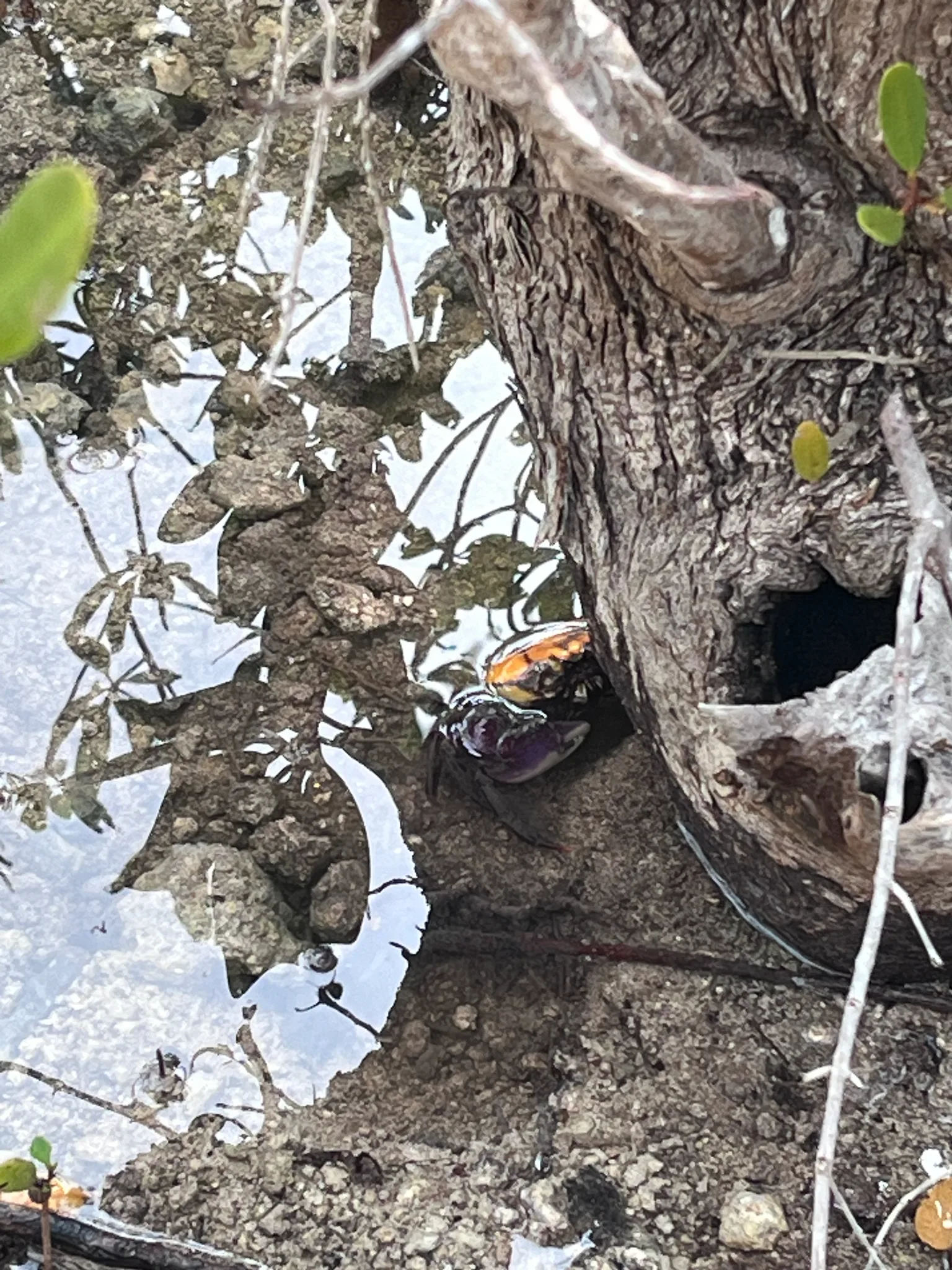
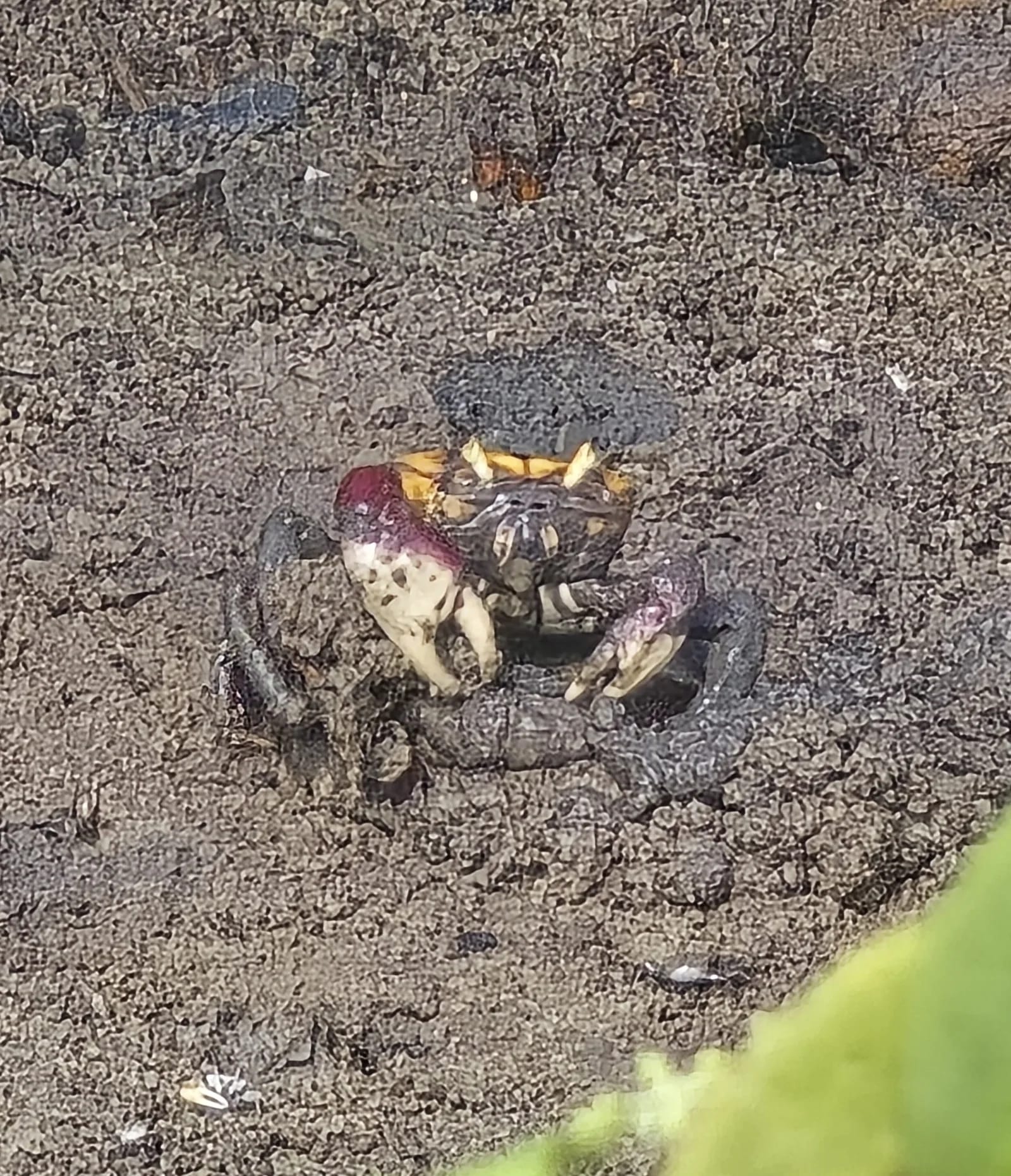
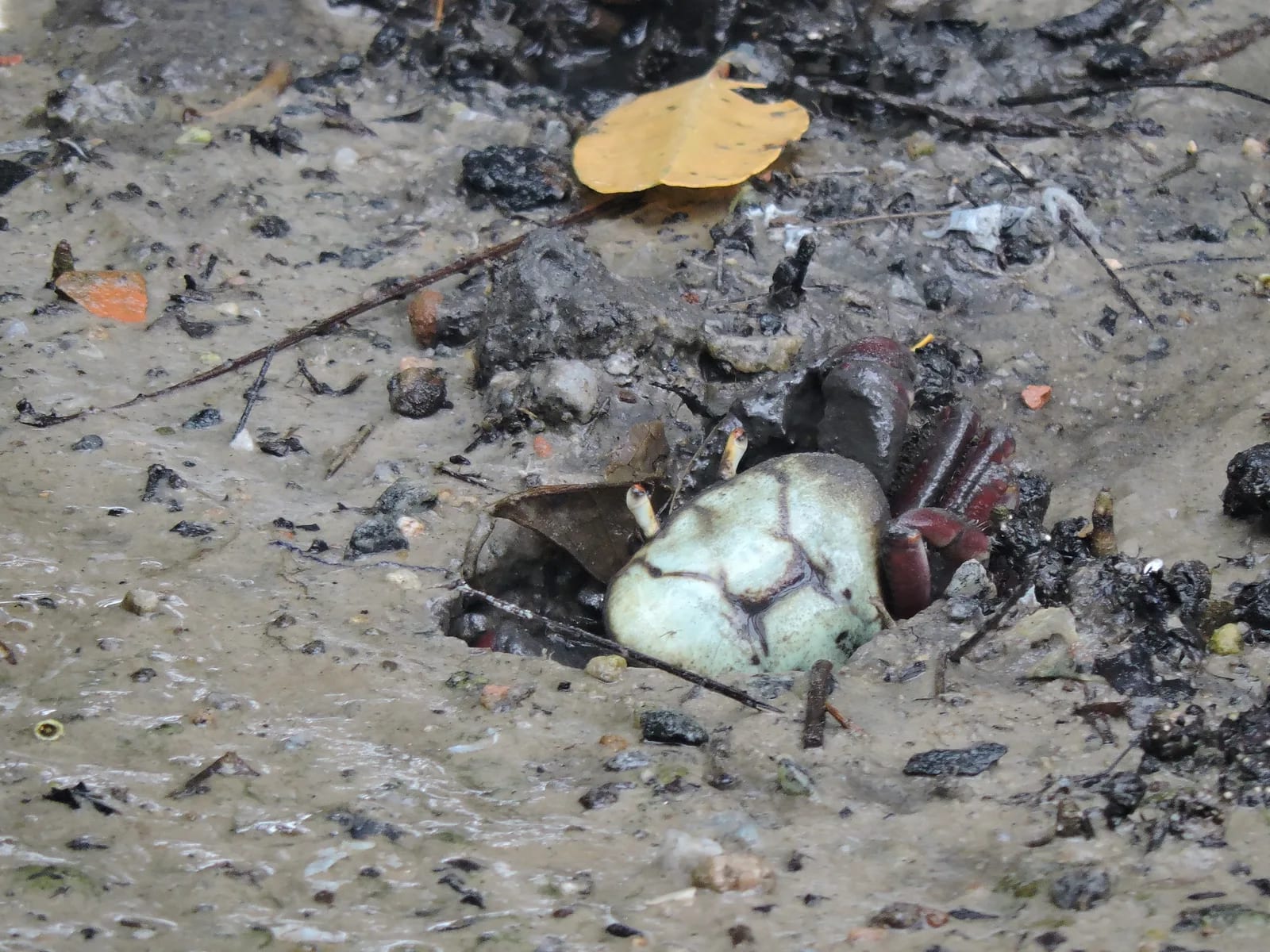
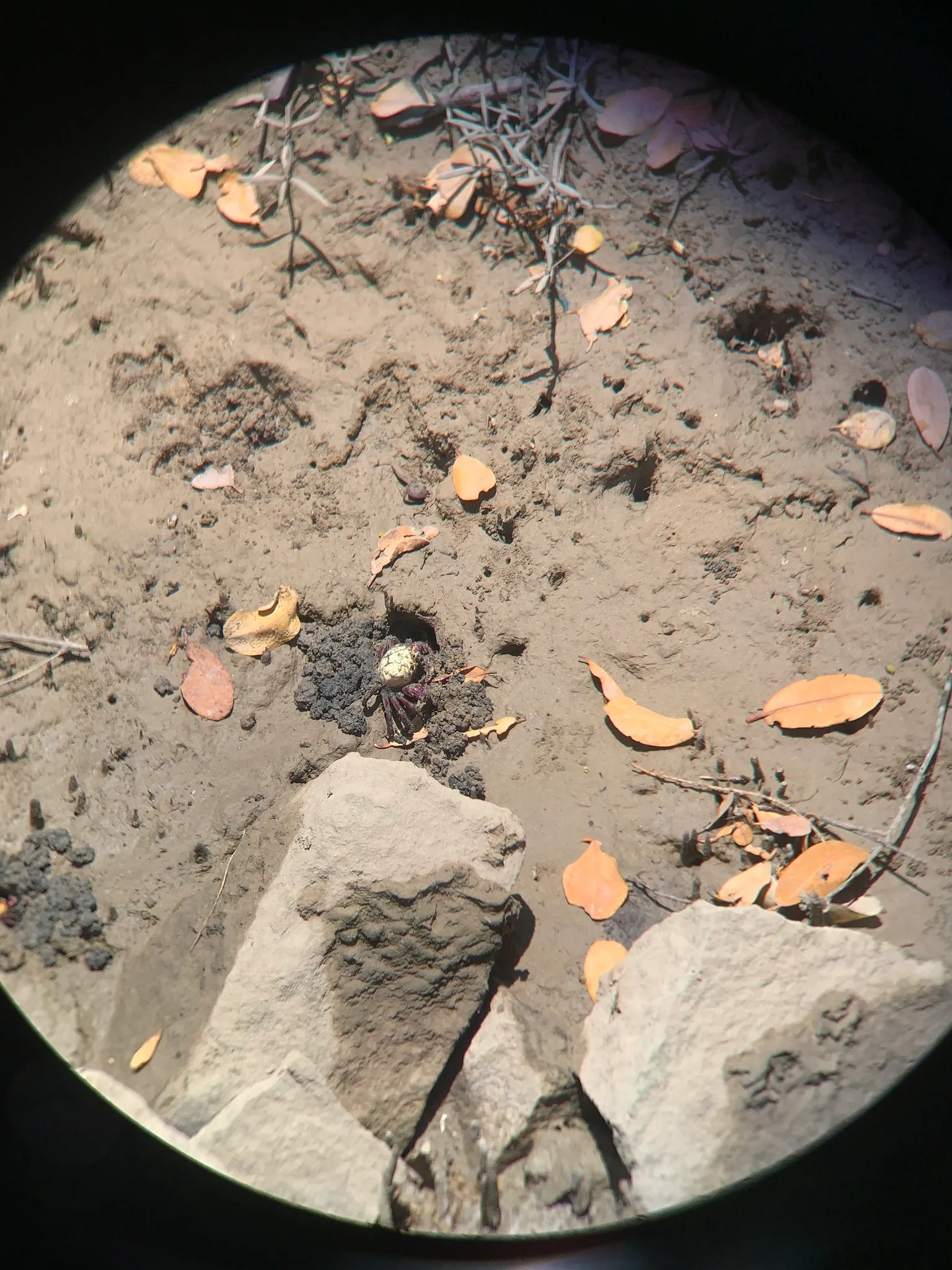
Mangrove crab
Ucides cordatus
Crustaceans — Decapoda (Ocypodidae)
A symbol of Brazil's mangrove forests, the mangrove crab is more than a large crab: it is an ecosystem engineer, excavating burrows, recycling organic matter, and helping keep the mangrove forest productive. Where mangroves are alive, Ucides cordatus is likely to be found.
The burrowing guardian of mangrove forests
Endemic to estuaries with mangrove forests, the mangrove crab lives between low and high tide and builds deep burrows in the sediment. It feeds mainly on mangrove leaves and propagules and takes a direct part in nutrient recycling.
📍 Range and habitat
Distribution: Western Atlantic — from Florida, United States, to southern Brazil; in Brazil, it occurs from Amapá to Santa Catarina, with its southern limit in Laguna, Santa Catarina.
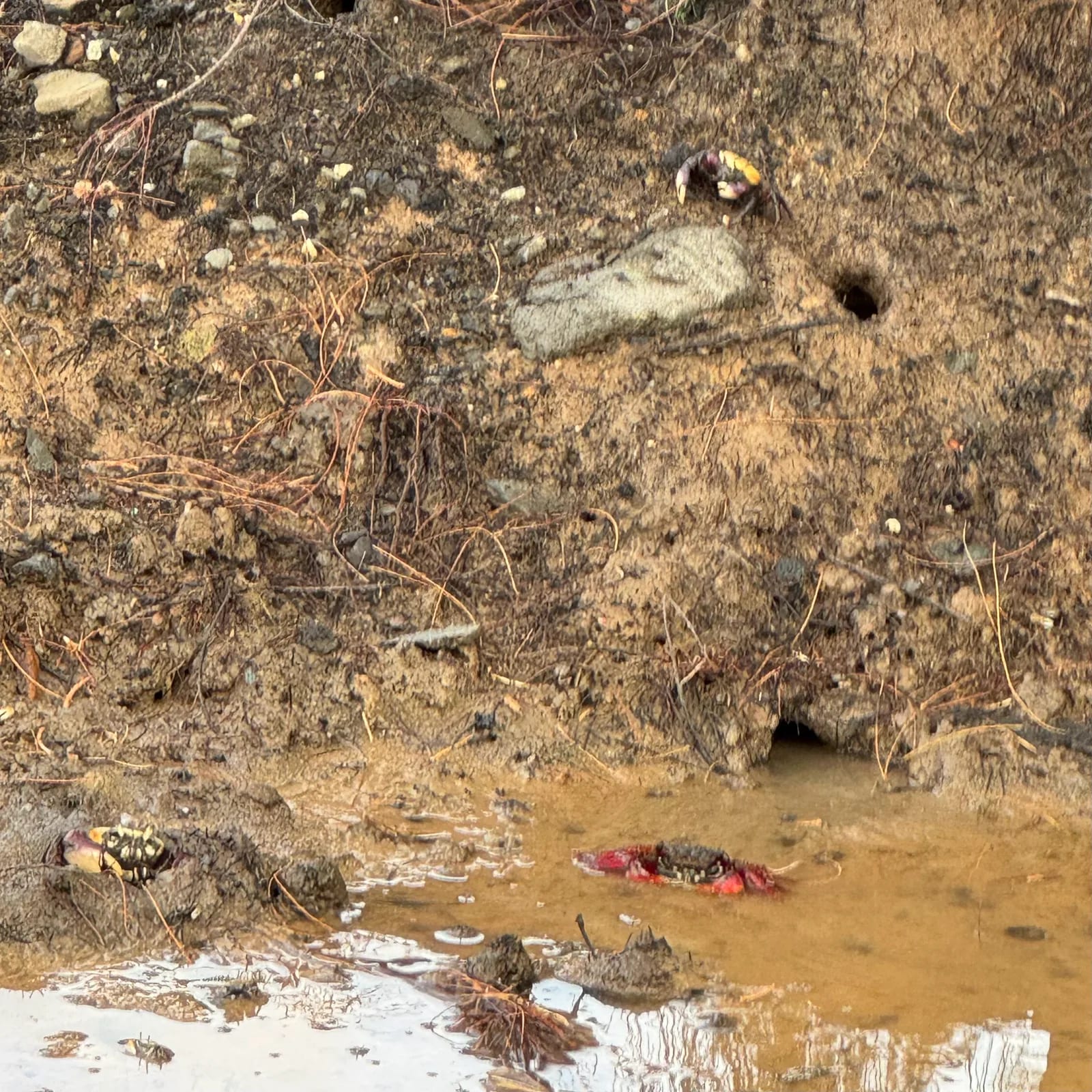
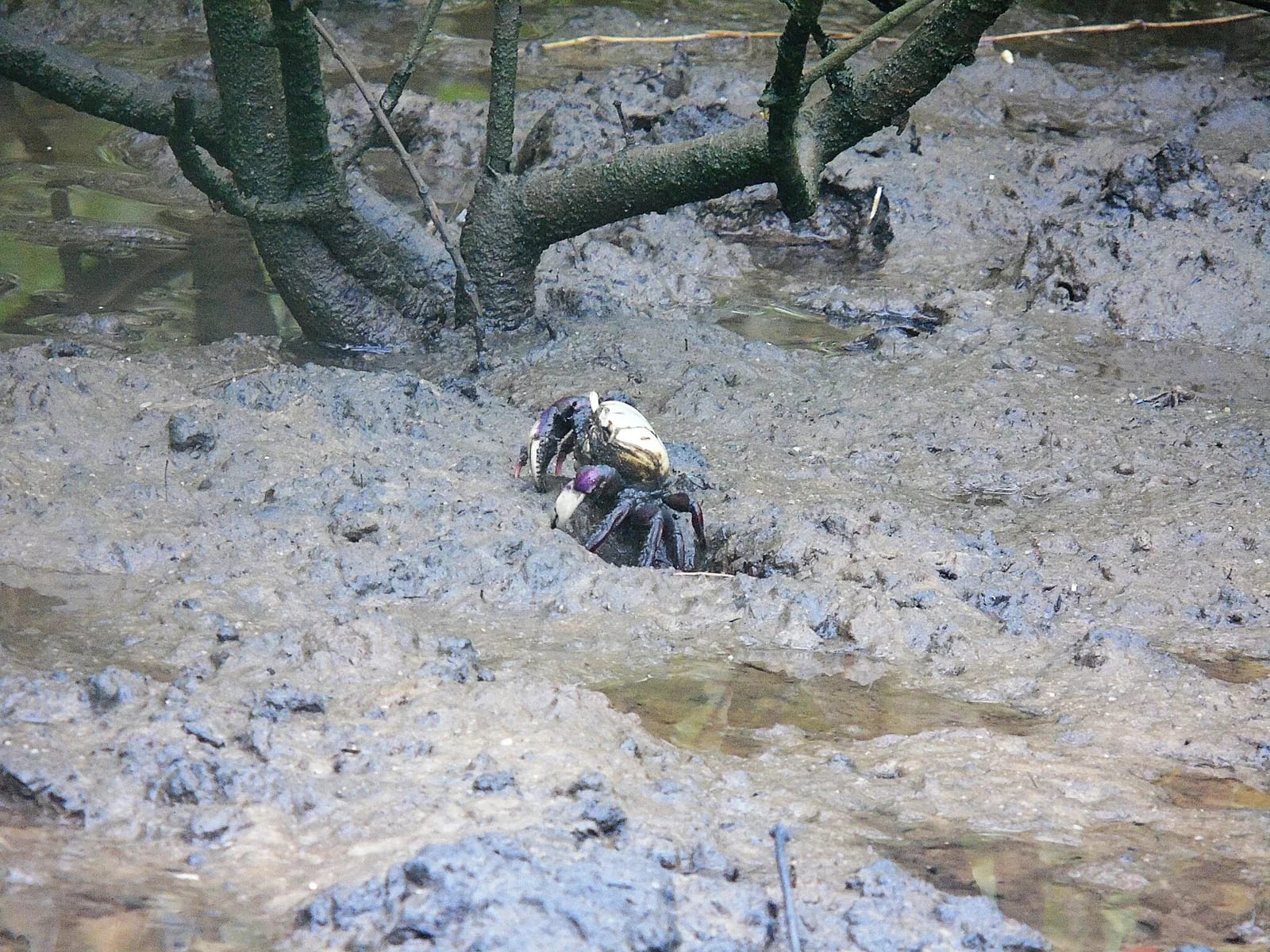
Habitat: Exclusively associated with mangrove forests in the intertidal zone. It excavates burrows that can reach about 2 m (6.6 ft) deep, using the underground as shelter and a thermal refuge.
⚠️ Relationship with humans
Conservation: In Brazil, classified as NT (Near Threatened) through the ICMBio/SBC process (Brazilian Red List of Crustaceans, 2010–2014). The global IUCN has no formal assessment (NE — Not Evaluated via GBIF).
Relationship: One of the most important traditional fisheries resources of mangrove forests, providing both income and food for coastal communities. Main risks: harvesting pressure, degradation, and loss of mangrove forests.
🔬 Scientific classification
- Kingdom
- Animalia
- Phylum
- Arthropoda
- Class
- Malacostraca
- Order
- Decapoda
- Family
- Ocypodidae
- Genus
- Ucides
- Species
- Ucides cordatus (Linnaeus, 1763)
🔬 Morphology and adaptations
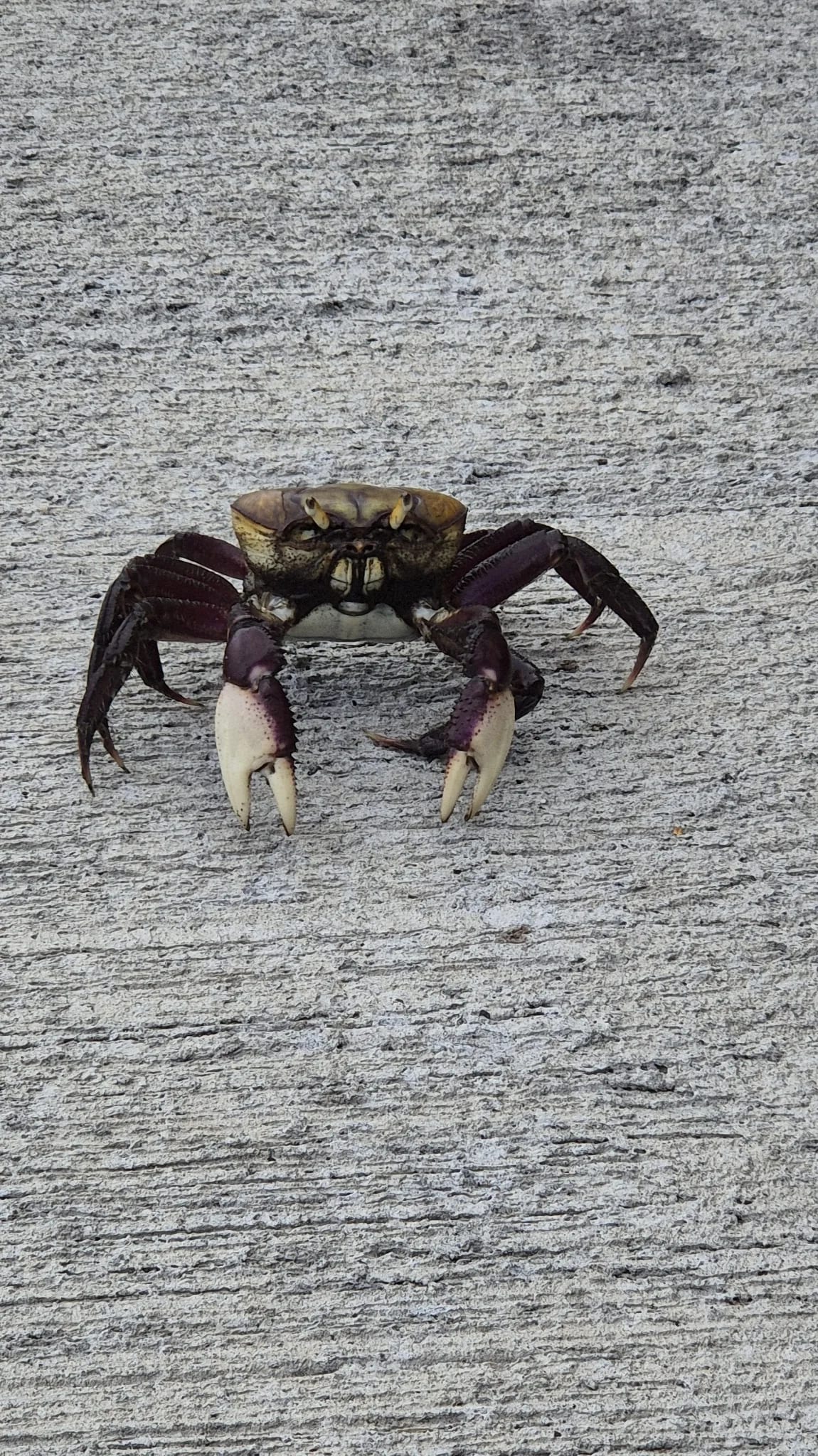
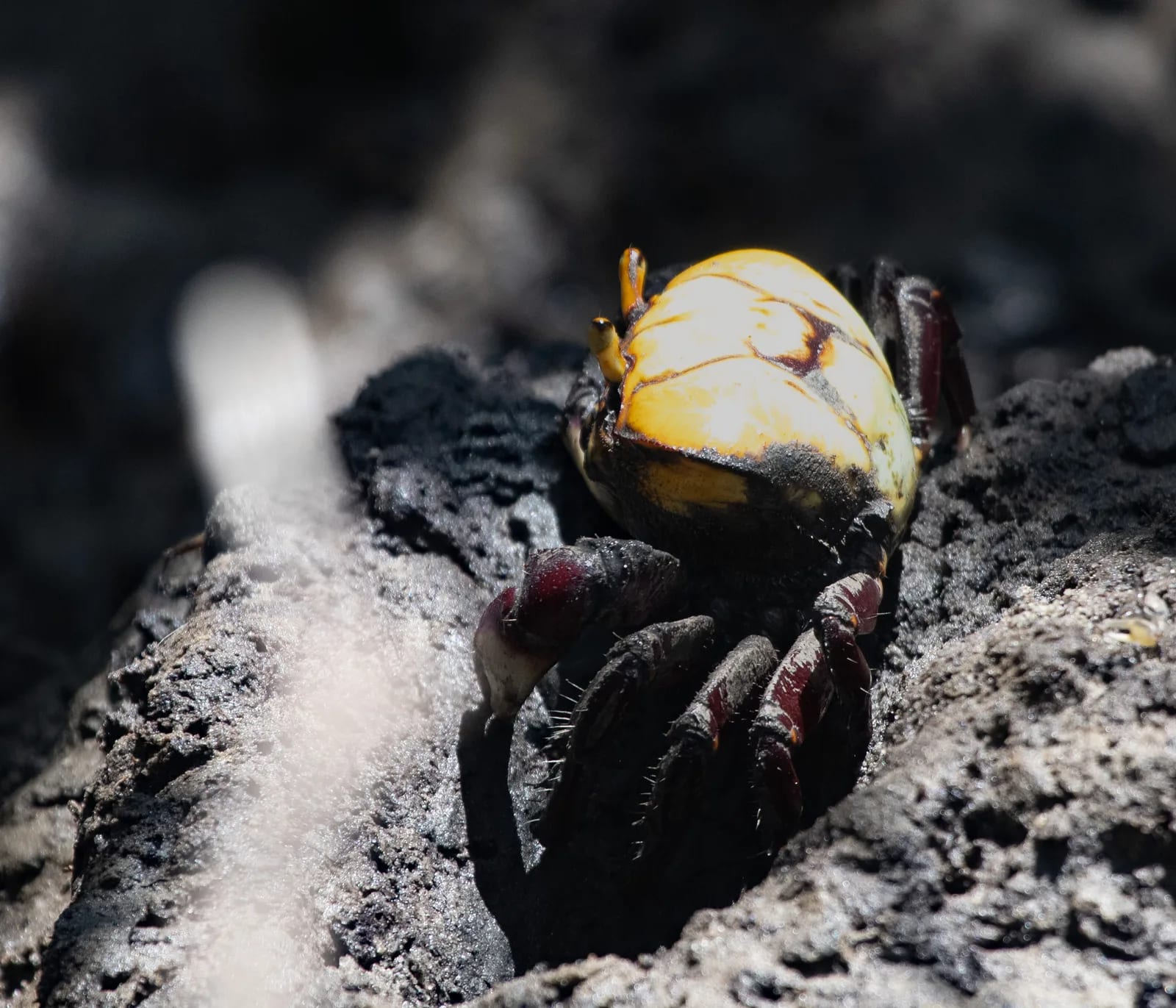
- Body: A robust semiterrestrial crab with strong claws for handling food and digging.
- Burrowing: Builds deep burrows, changing the structure of mangrove soil.
- Diet: Primarily mangrove leaves and propagules, processing plant matter within the ecosystem.
- Activity: Often nocturnal, reducing exposure and thermal stress.
Diet: Primarily mangrove leaves and propagules, processing plant matter within the ecosystem.
🔄 Life cycle and behavior
📅 Development
- Strategy: A life cycle linked to tides and estuarine dynamics.
- Reproduction: Synchronized with mangrove environmental conditions, favoring larval dispersal.
🌙 Behavior
- Preferred range: Less-flooded, higher areas of the mangrove forest, such as apicuns.
- Gallery function: Shelter and stable humidity and temperature.
🌍 Role in the ecosystem
- Recycling: removes and processes mangrove leaves, accelerating decomposition and returning nutrients to the system.
- Soil engineering: digging promotes bioturbation, influencing oxygenation and sediment dynamics.
- Keystone species: its abundance and functions directly affect mangrove productivity and structure.
💡 Why is it important to know?
- Because mangrove forests are the sea's nurseries, and the mangrove crab helps keep those nurseries functioning.
- Because species conservation also depends on conserving coastal habitats.
- Because it links biodiversity, food culture, and the traditional economy.
- Because understanding mangrove forests is understanding Brazil's coast.
💫 What does the mangrove crab represent?
Ucides cordatus is a mangrove gauge: when mangroves lose area, they lose quality, and the crab feels it first. Protecting the mangrove crab ultimately means protecting one of the planet's most productive ecosystems.
A reflection: how often does the coast seem empty simply because we forget to look at what sustains life between the tides?
Small discoveries
- Estuaries
- Coastal regions where rivers meet the sea; transitional environments shaped by tides.
- Mangrove forests
- Brackish coastal forests dominated by trees such as Rhizophora, Avicennia, and Laguncularia.
- Nutrient recycling
- The process of breaking down and recycling organic matter, returning nutrients to the ecosystem.
- Intertidal zone
- The area affected by the alternating tides, submerged and exposed over the course of the day.
- Burrows
- Tunnels in the sediment that serve as shelter, resting places, and protection from predators and heat.
- Apicuns
- Higher, less-flooded parts of the mangrove forest, important as nursery areas and zones of high density.
- Bioturbation
- The mixing and disturbance of sediment by organisms, altering oxygenation, drainage, and nutrient cycling.
- ICMBio
- Chico Mendes Institute for Biodiversity Conservation — the Brazilian federal agency responsible for protected areas and for assessing species' extinction risk.
📚 References
- GBIF — Ucides cordatus (usageKey 2221532)
- Livro Vermelho dos Crustáceos do Brasil: Avaliação 2010–2014 — capítulo Ucides cordatus (SBC/ICMBio)
- ICMBio CEPSUL — publicação Livro Vermelho dos Crustáceos do Brasil
- Monitoramento do caranguejo-uçá (Ucides cordatus) no Lagamar Paranaense — Biodiversidade Brasileira (ICMBio)
- IUCN Red List — busca por Ucides cordatus