Brazilian biomes · a documentary crossing
Pantanal (Pantanal)
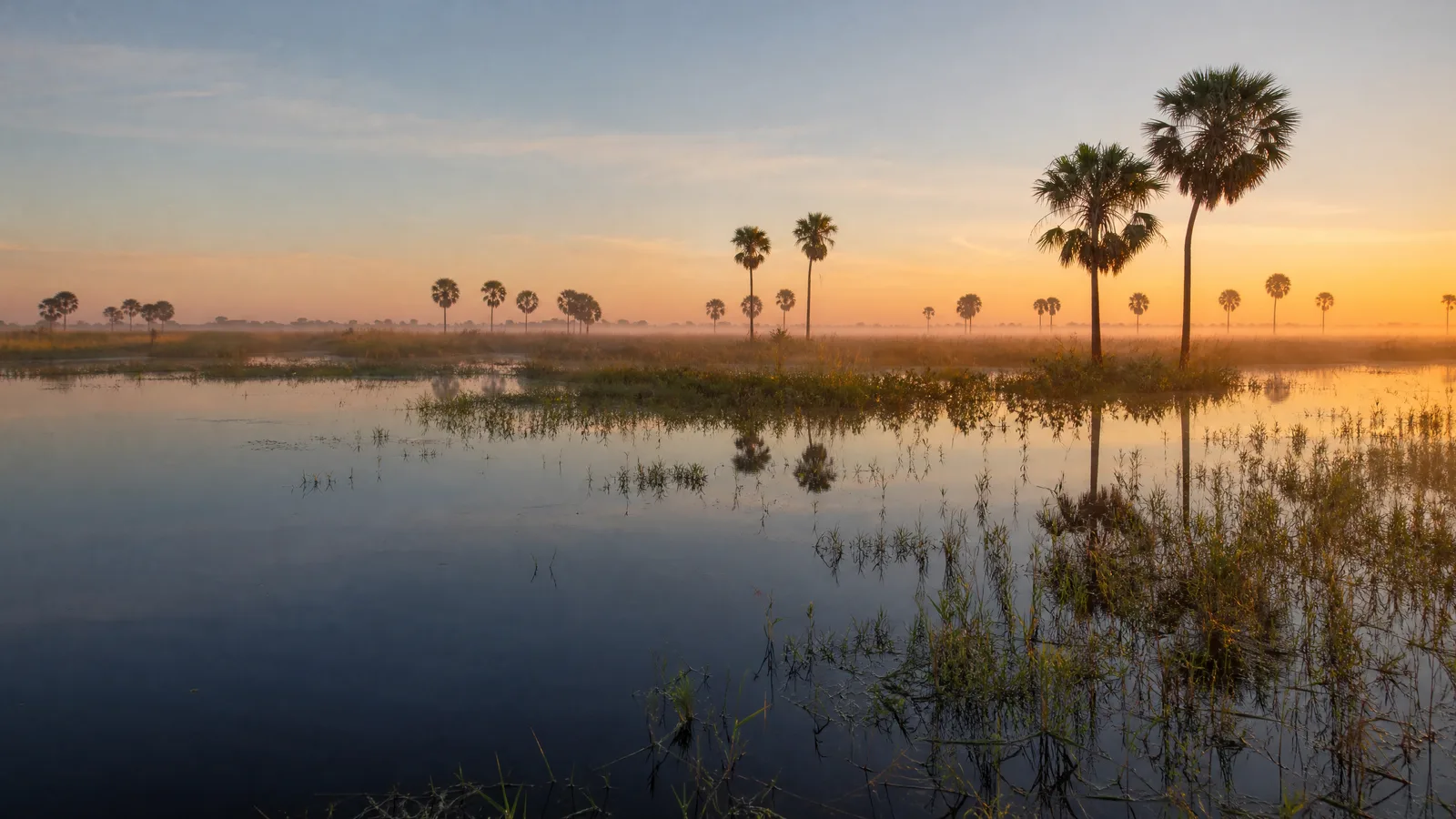
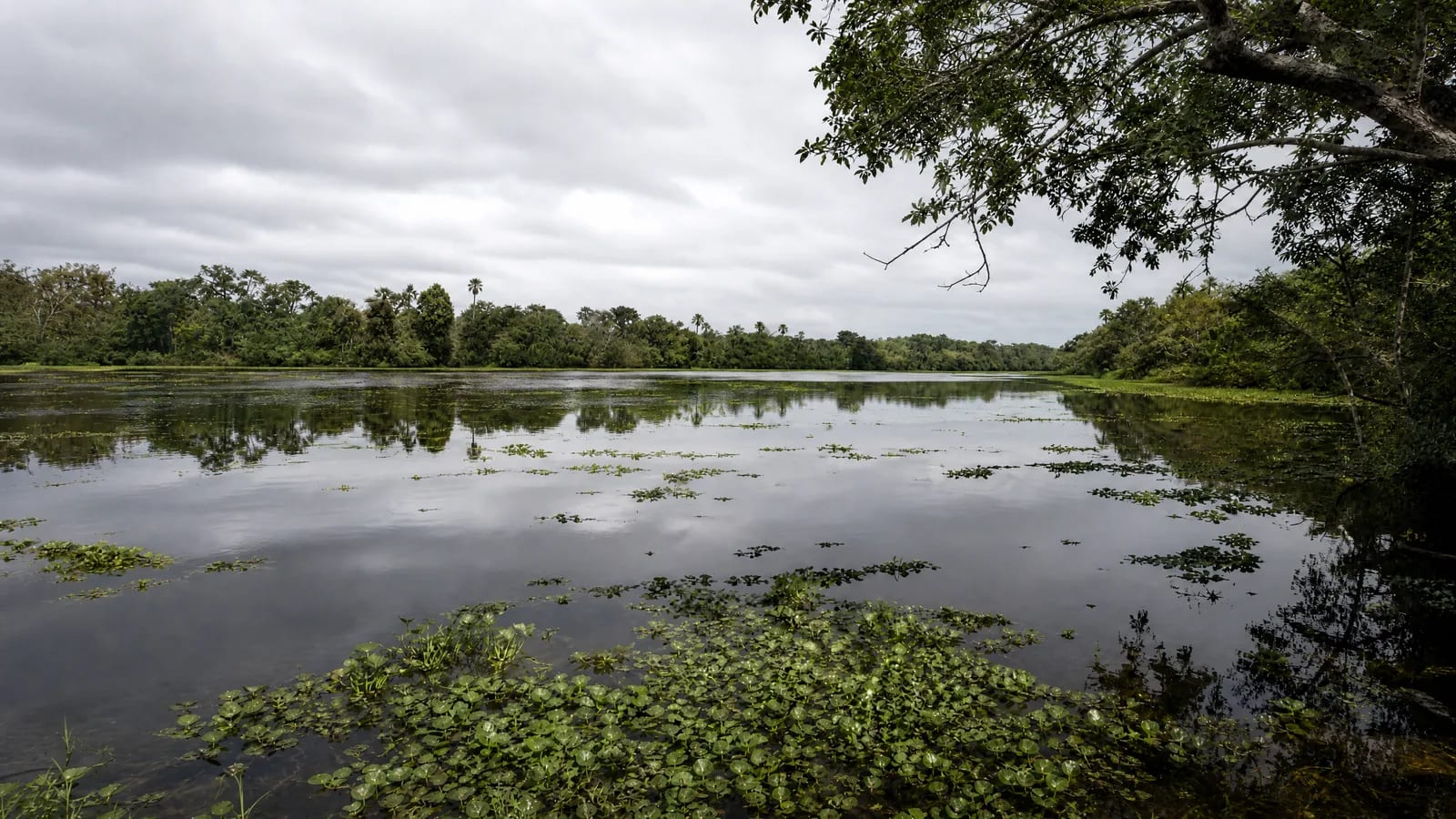
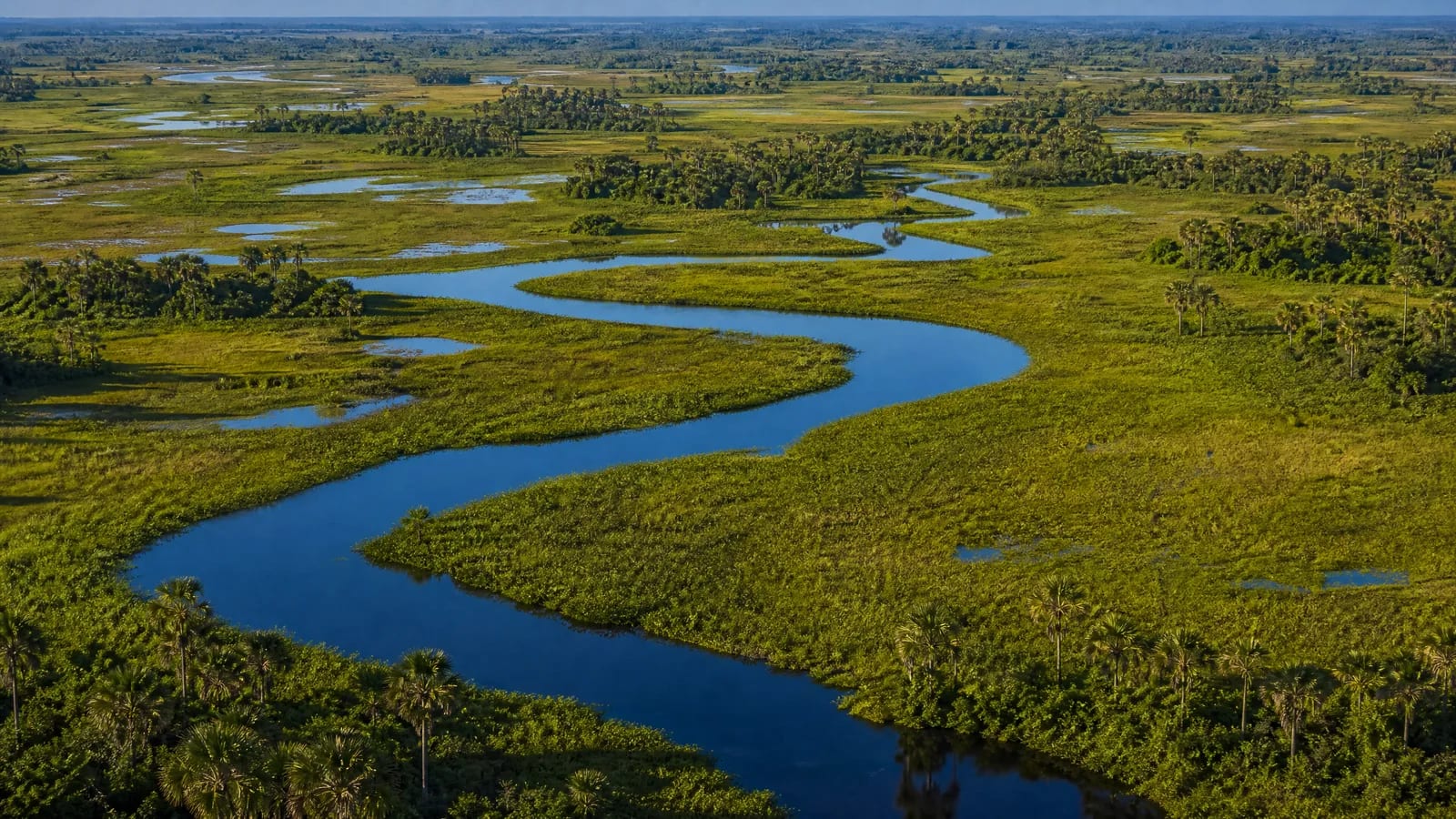
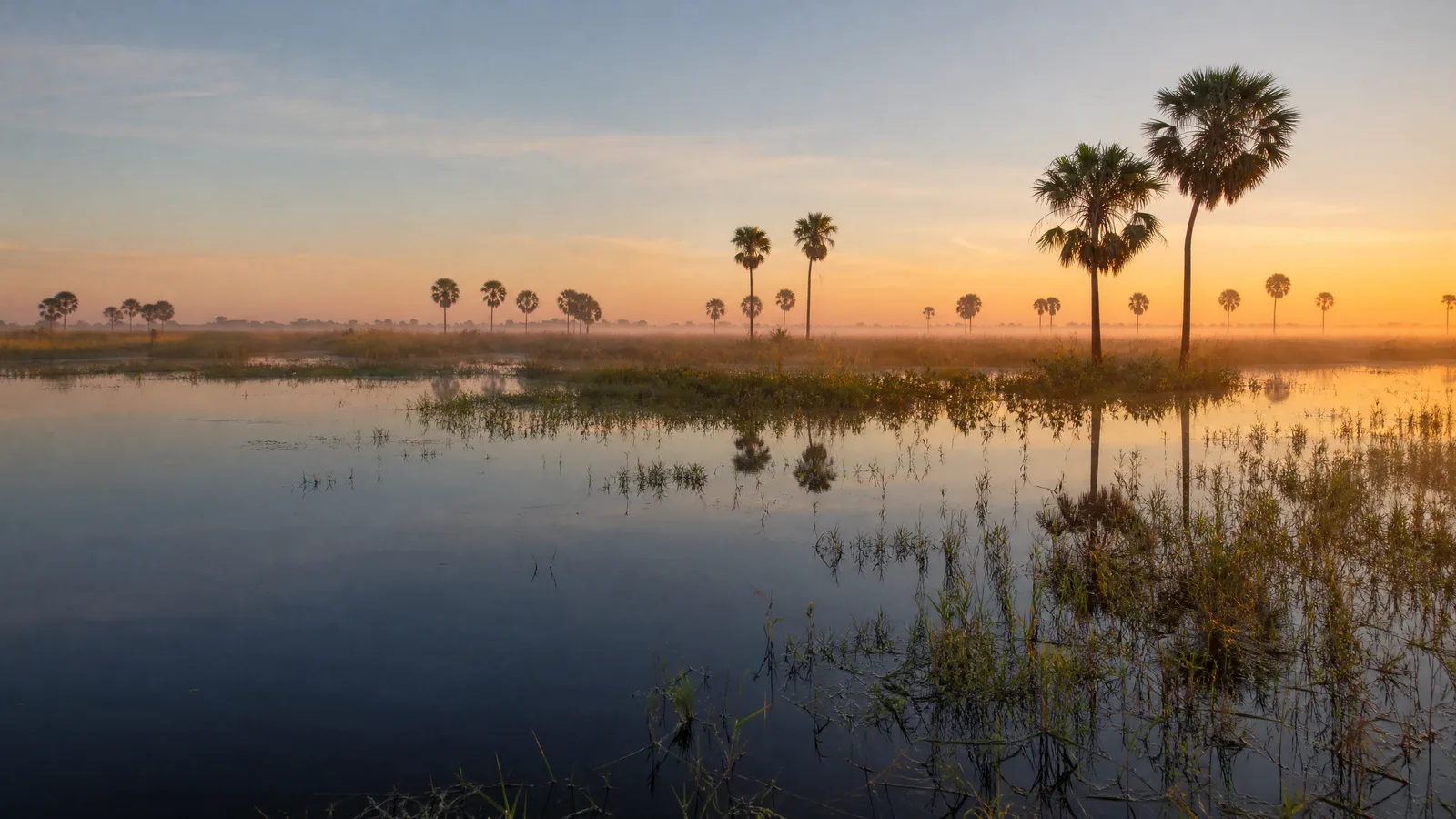
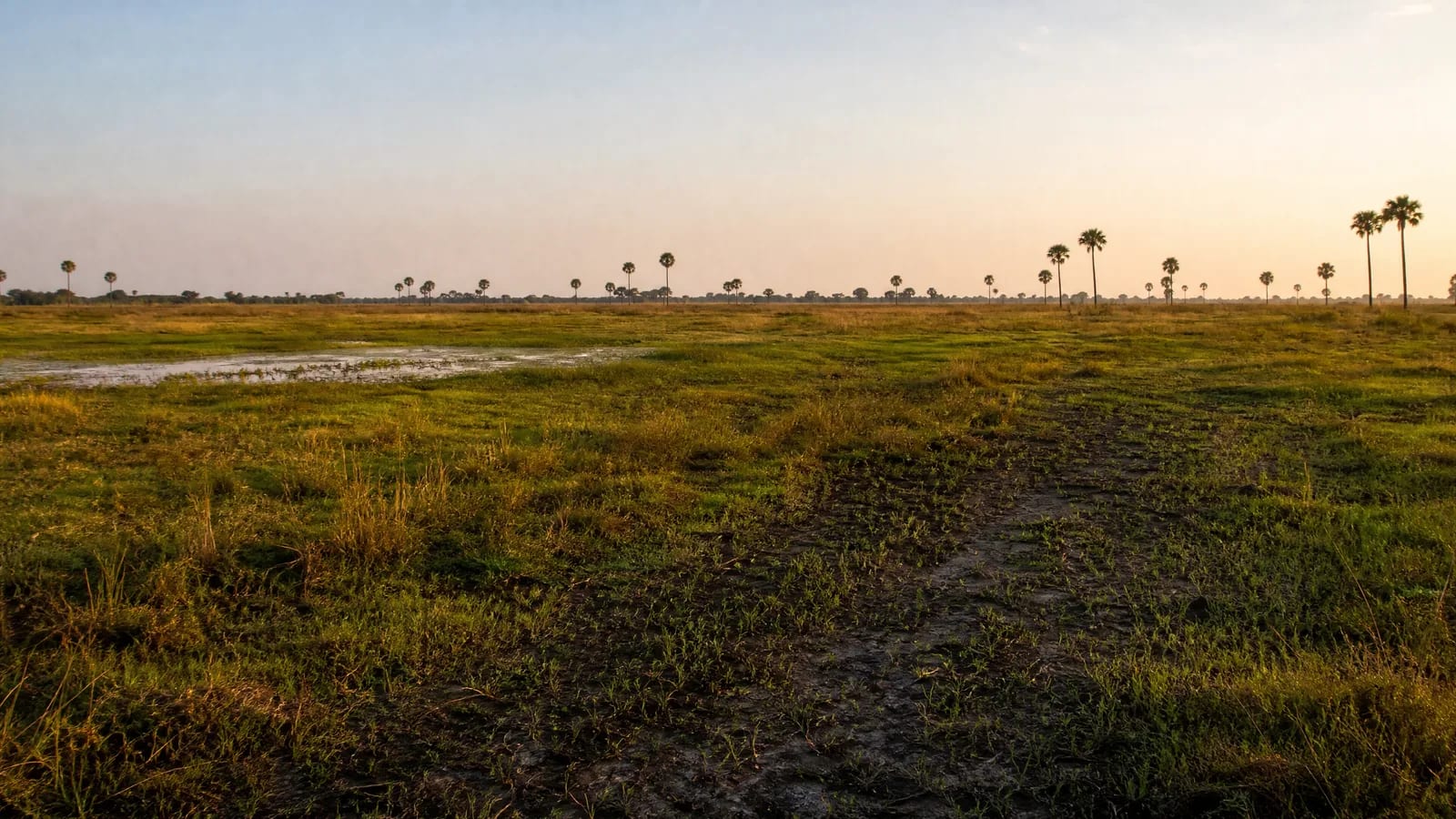
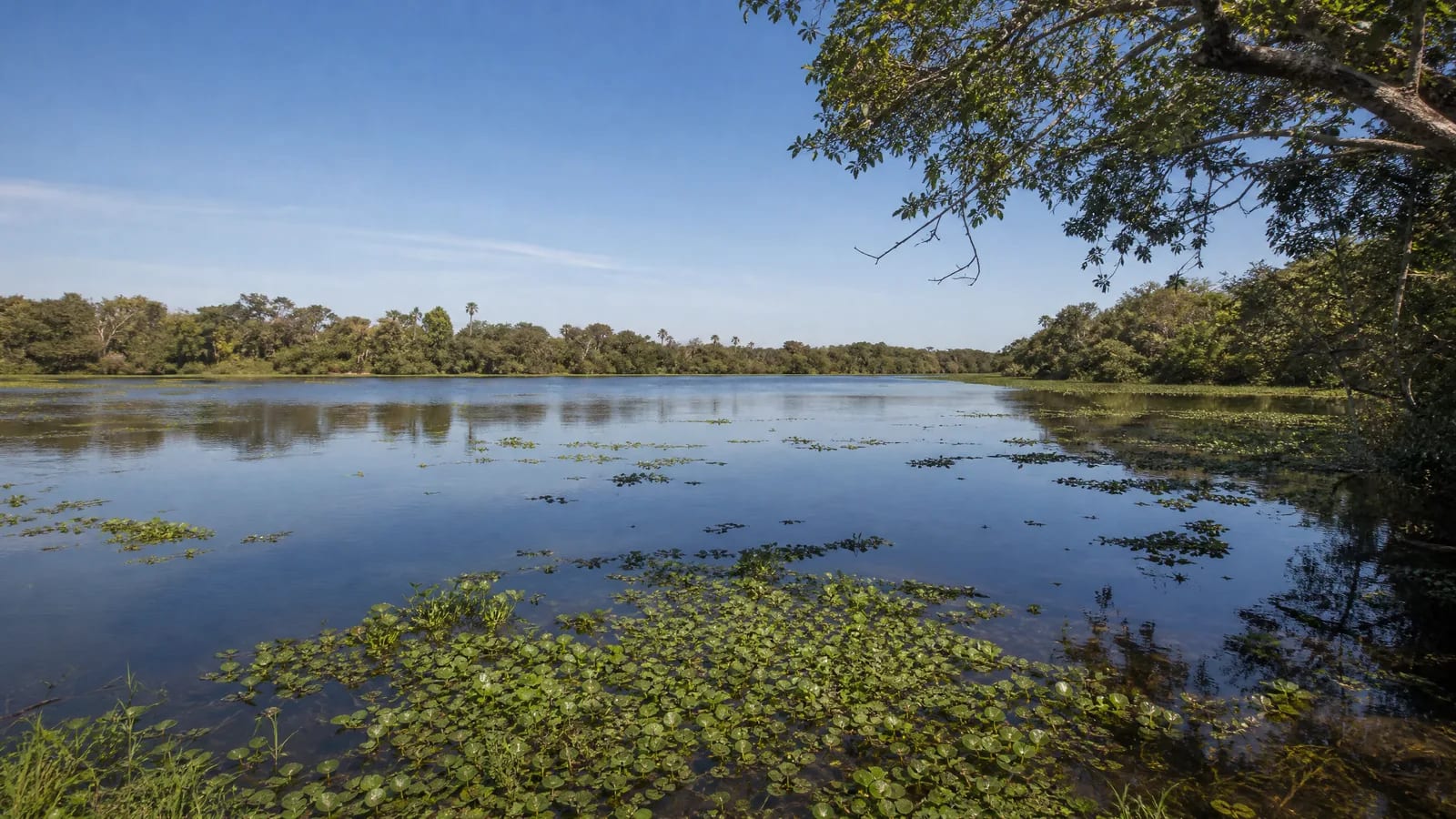
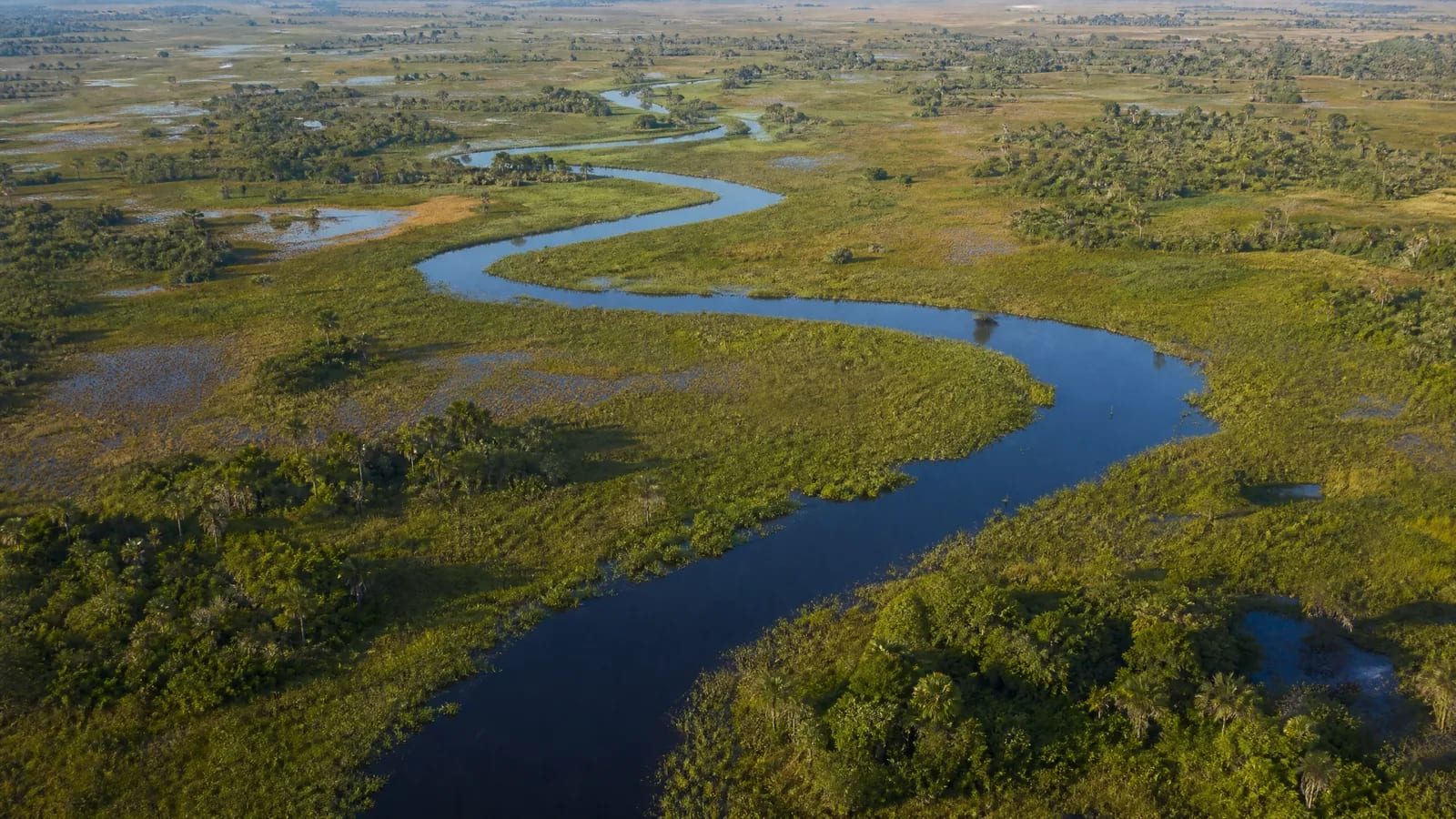
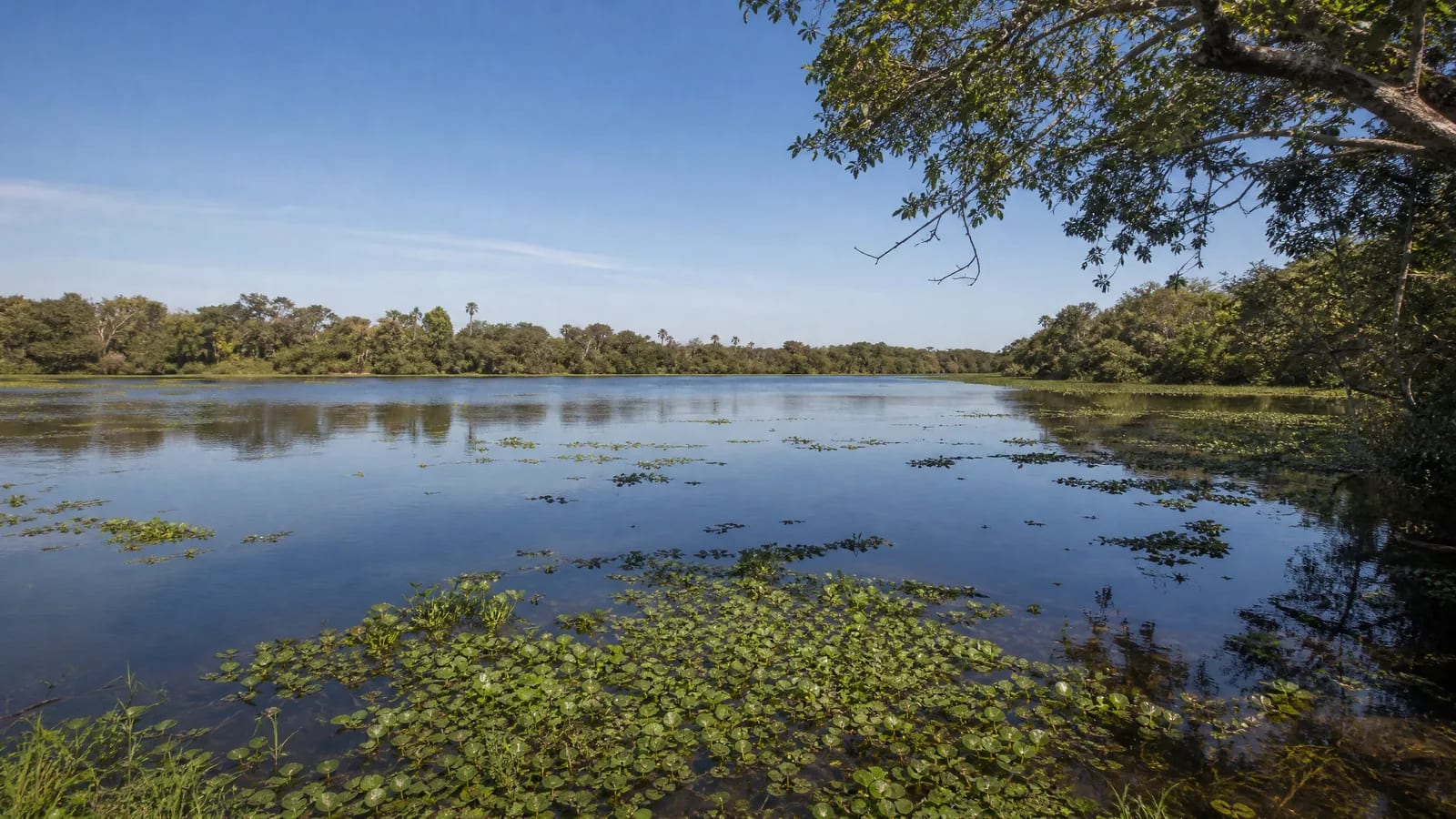
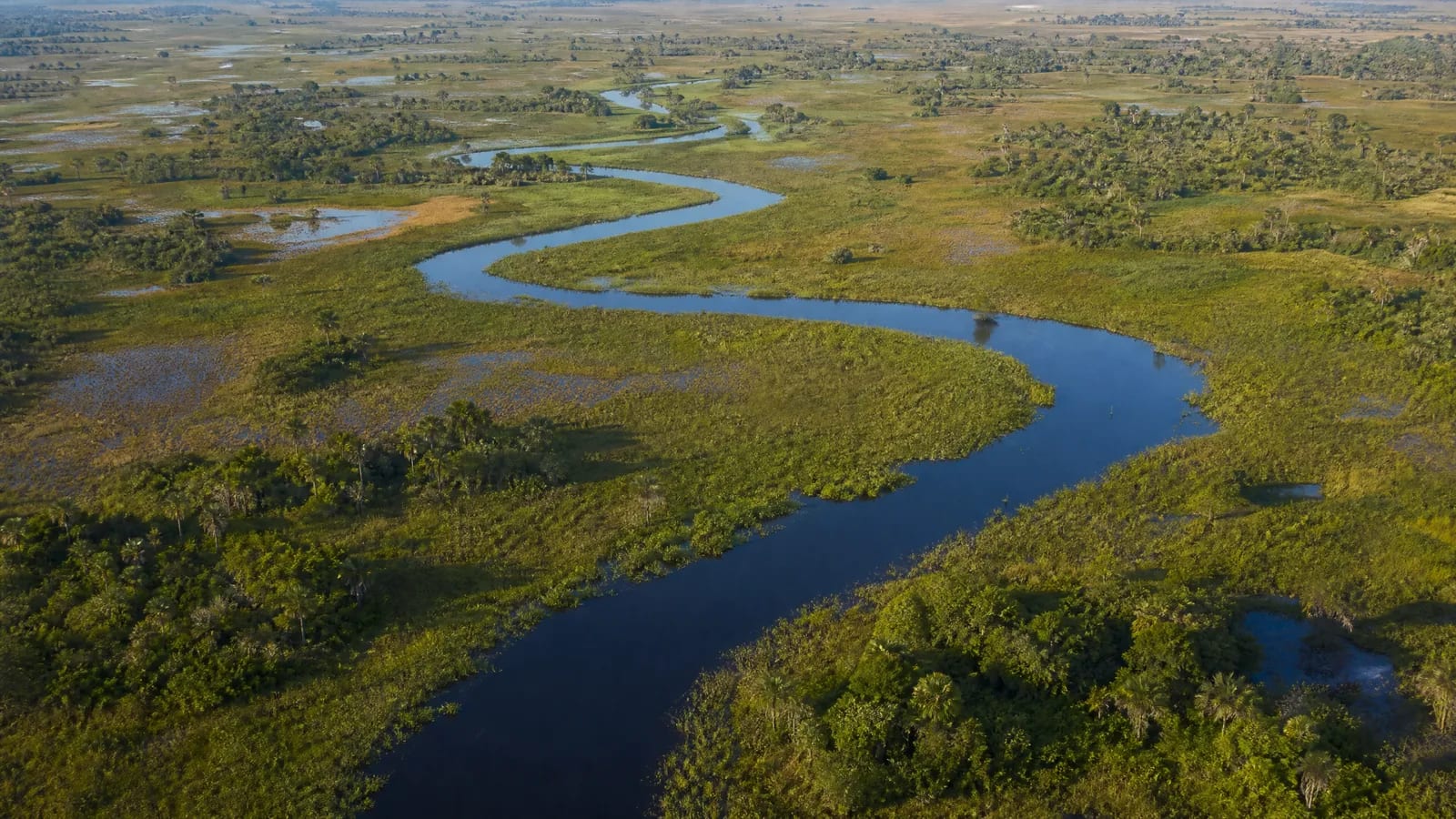
In the Pantanal (Pantanal), the landscape advances and retreats with the water. Flooded fields, forests, oxbow channels (corixos), rivers, bays, fish and birds form a horizon that changes with the seasons. The same place can serve as a passage, shelter, pasture or mirror, depending on the pulse of the flood.
A landscape of approach
To reach the Pantanal (Pantanal) is to cross a territory where rivers, roads, boats and livelihoods depend on the seasonality of water.
I · Many worlds in a single biome
The landscape is not a void between two extremes.
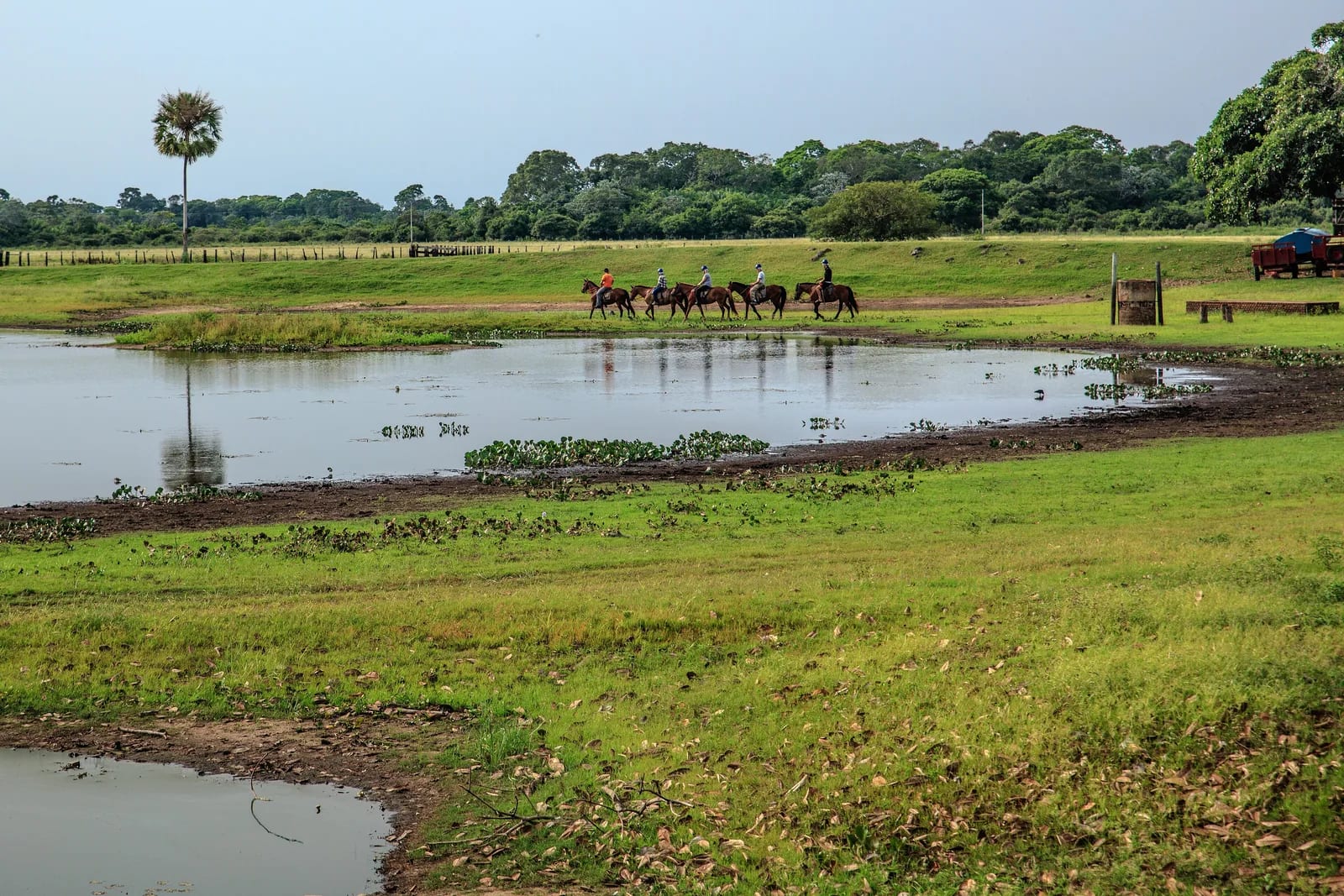
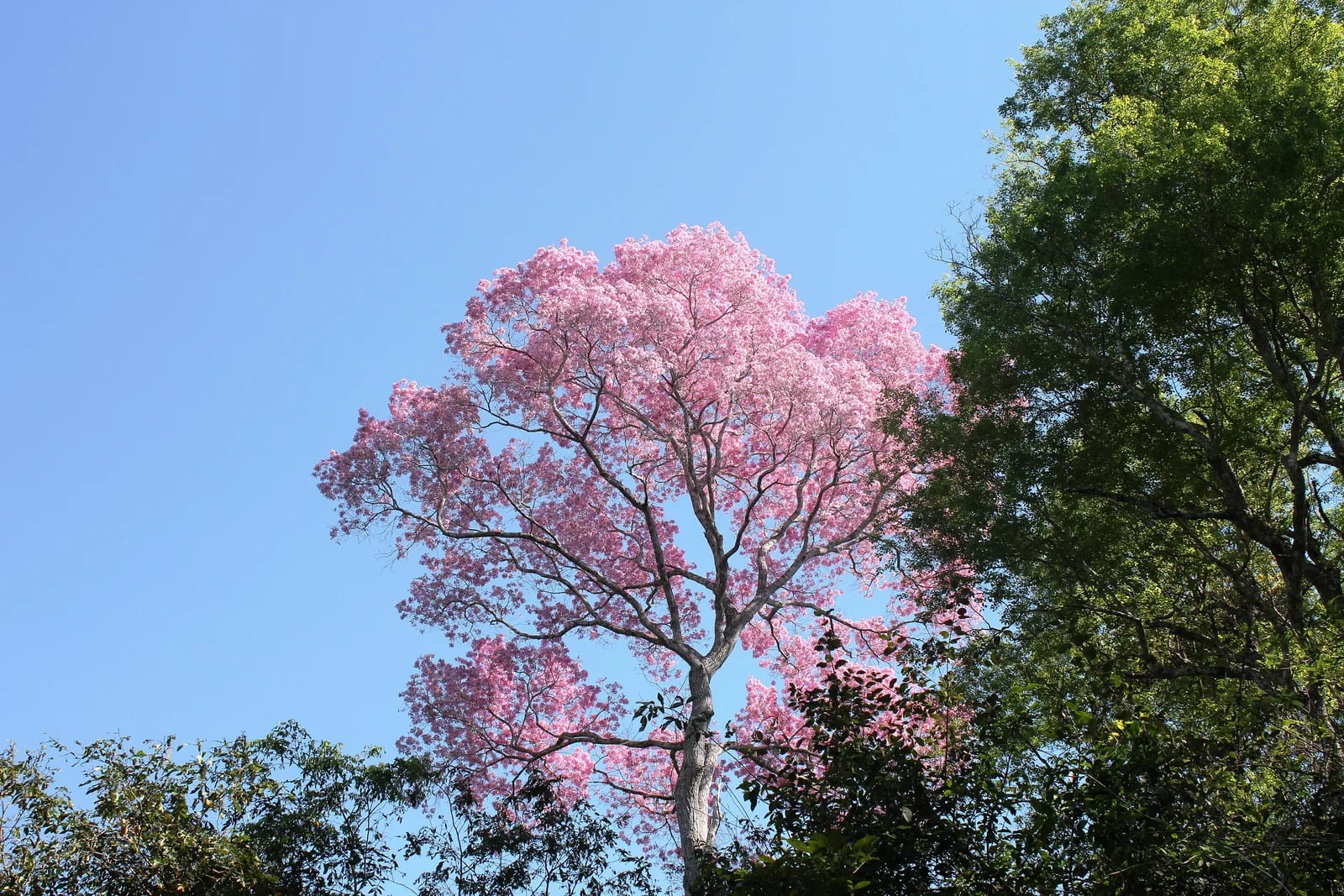
The Pantanal (Pantanal)'s diversity arises from the alternation between aquatic, terrestrial and transitional environments. Grasslands, forests and floodable areas connect to the headwaters of the Alto Paraguai Basin and to transitions with Cerrado, Amazônia and Chaco. Water creates feeding and shelter areas, sustains fish and birds, modifies pastures and influences fishing and tourism. This continuity prevents treating the plain as a collection of fragments: it is diverse because it is connected, and vulnerable for the same reason.
A crossing in images
II · Water, soil and time
The cycle is not a backdrop: it organizes life.
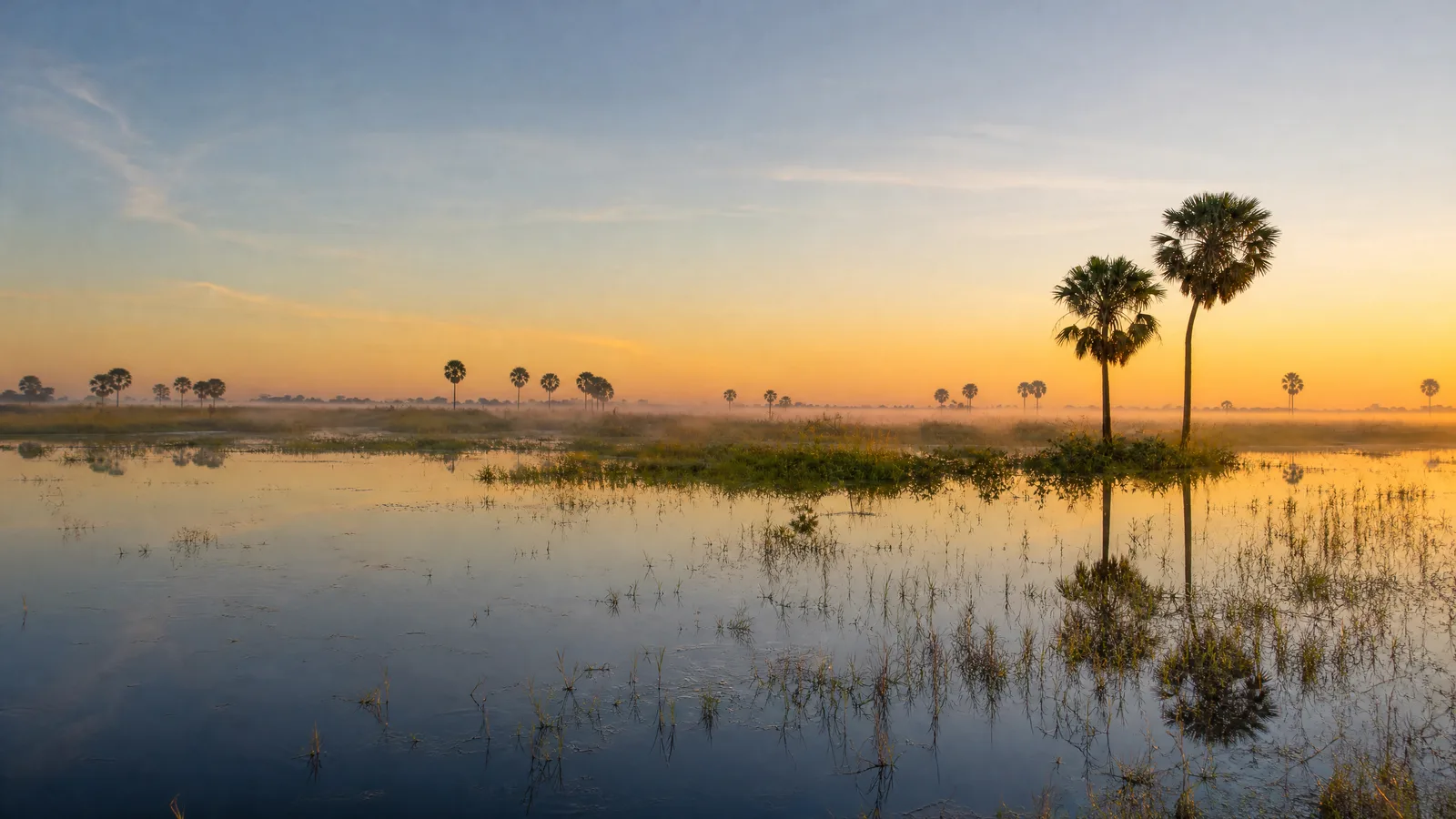
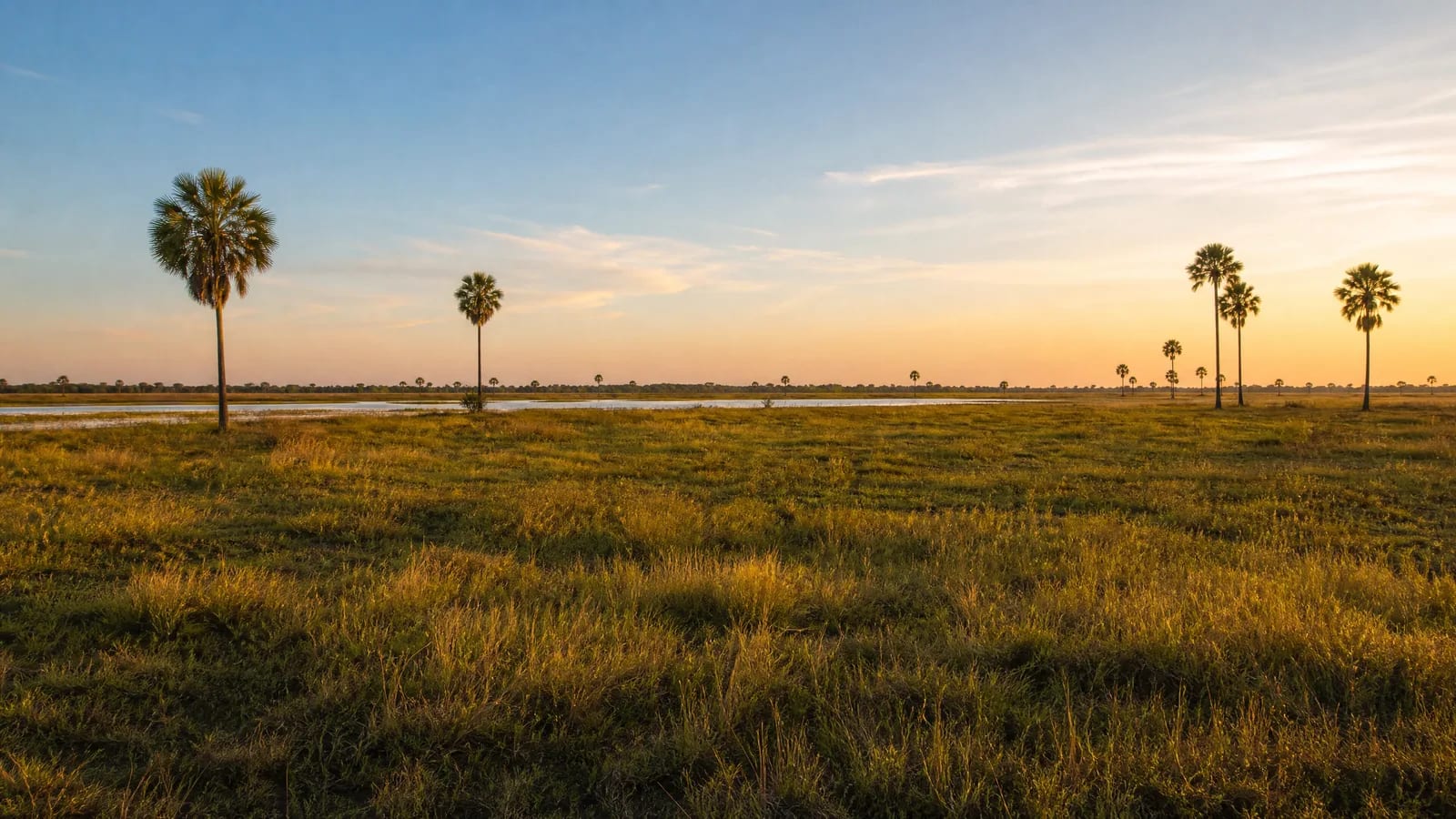
Between 1985 and 2023, the flooded area reached 3.3 million hectares in 2023, 61% below the historical average. On the plateau of the Alto Paraguai Basin, anthropogenic use rose from 22% to 42%. A hydroclimatic study attributed 96% of the runoff changes in the regimes analyzed to climate variability; this does not eliminate the potential role of aridity and land use in the vulnerability of the flood pulse.
III · Work, production and knowledge
A landscape also supports people.
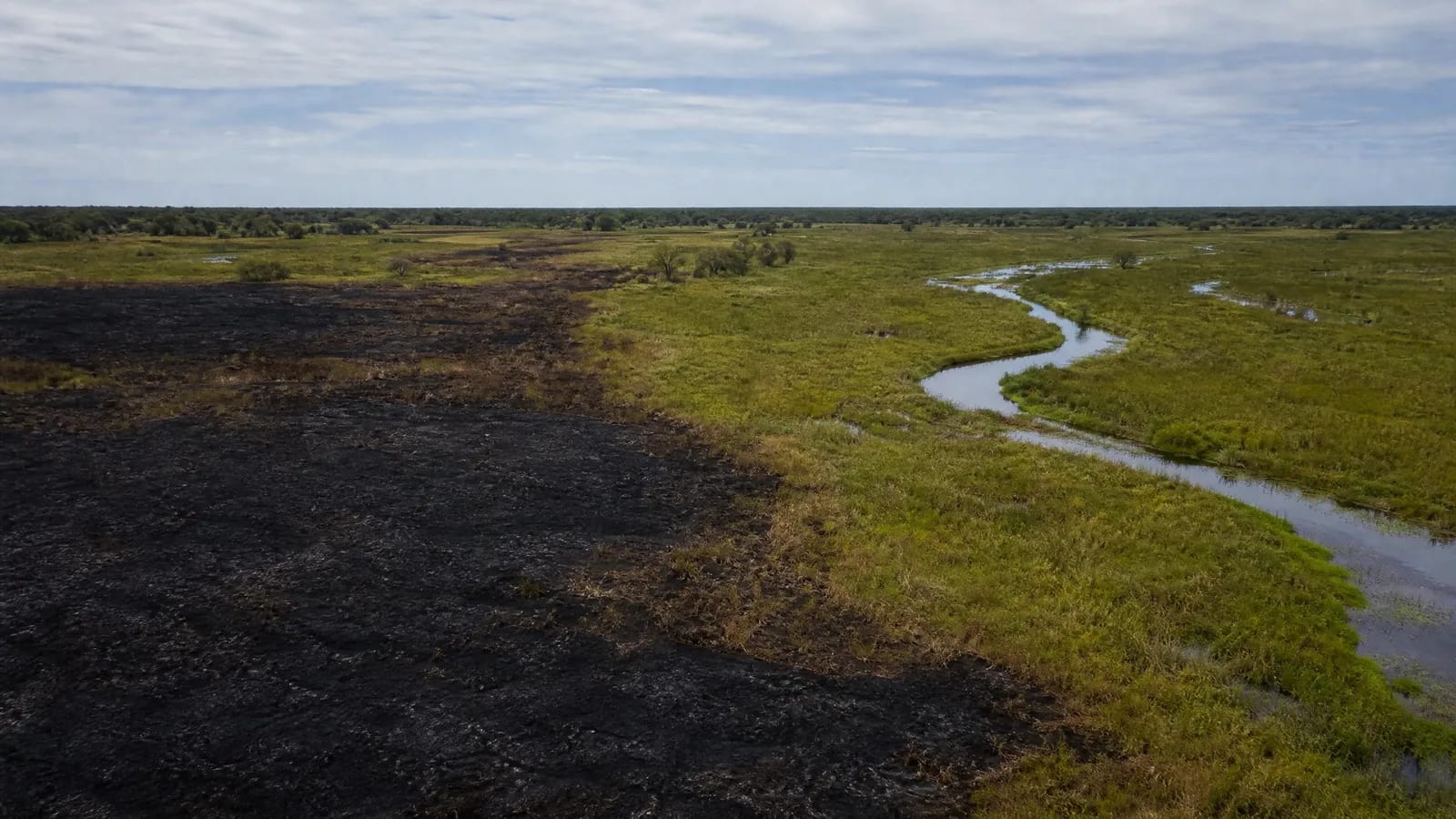
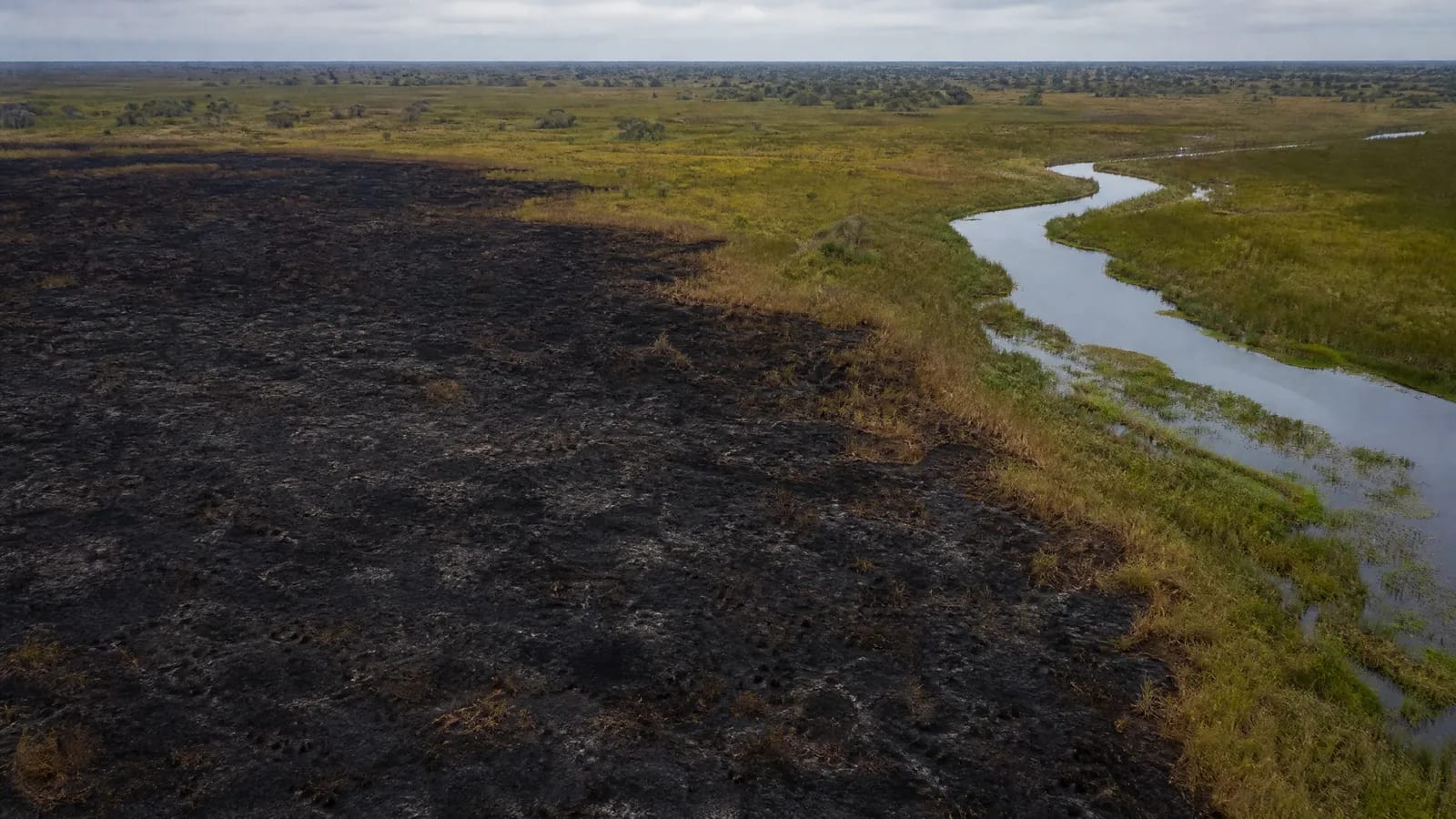
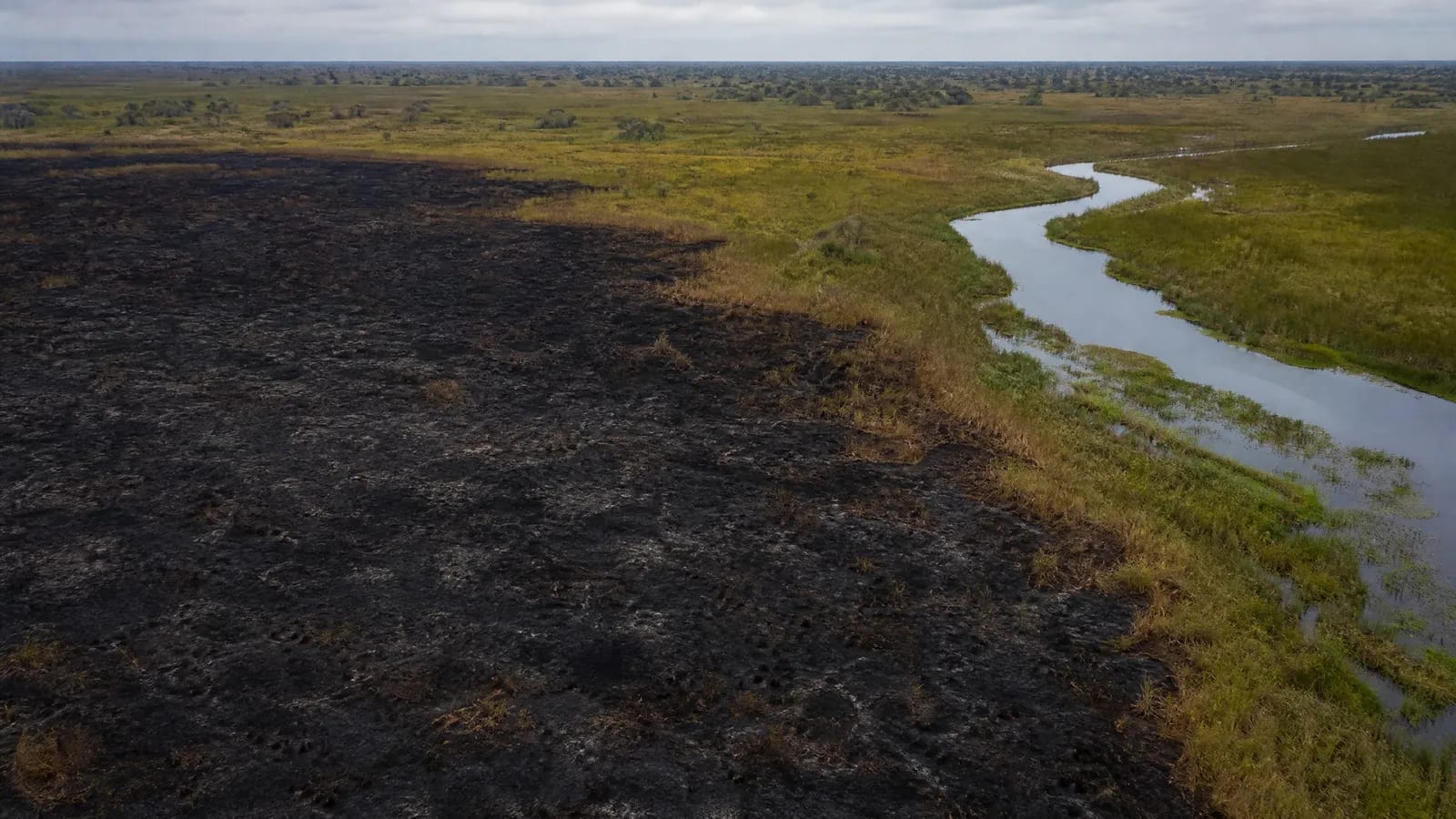
Livestock farming, fishing, tourism and navigation depend on a landscape that alternates between flood and drought. In 2019–2020, the drought lowered the Paraguay River, restricted transport and increased fires that affected biodiversity, agribusiness and cattle ranching. The area of pasture for cattle doubled between 1990 and 2021, reaching 2.54 million hectares. This situates work within the biome without assigning a single blame to all production.
IV · Choices before the showcase
To produce is to choose what the landscape will have to endure.
Every environmental policy selects what it can see. Tracing a commodity requires locating properties, dating conversions and distinguishing forest, grassland, savanna and wetland. The European rule for cattle and soy requires due diligence against deforestation after December 31, 2020, but its legal scope is organized mainly around forest and forest degradation.
V · When the conversation comes from far away
The chain does not end at the border.
External connections can be documented without becoming a straight line between consumer and drought. The Environmental Justice Foundation linked Pantanal (Pantanal) properties to the European Union market and identified 40,246.9 hectares of native vegetation converted to pasture between 2012 and 2021 within properties connected to that market. The European regulation, however, measures deforestation according to categories centered on forest. Thus, a wetland area crucial to the Pantanal (Pantanal)'s cycle can be converted without being automatically read as forest deforestation. Regulation creates pressure for traceability but does not guarantee the integral conservation of the landscape. Does what the market can prove coincide with what the biome needs to conserve?
The question that remains
The Pantanal (Pantanal) can face a drought without a single cause, while the rule that cleans cattle and soy supply chains still sees the forest more clearly than the wetland.
VI · The limit of inference
Criticism only holds when it does not exceed the evidence.
The data do not prove that agriculture and livestock alone produced the drought, that all livestock farming is destructive, or that all European exports are irregular. They also do not identify, without additional records, the origin of each lot nor the link between a specific company and each damage.
VII · What remains
A landscape that calls for more than a ready-made opinion.
Water supports biodiversity, income and circulation, but its dynamics also begin in the headwaters and cross distant markets. Reading the Pantanal (Pantanal) requires bringing climate, territory and commerce closer together without confusing them. Protecting the biome depends on recognizing what legal categories and maps still cannot see.
After the evidence
Water supports biodiversity, income and circulation, but its dynamics also begin in the headwaters and cross distant markets. Reading the Pantanal (Pantanal) requires bringing climate, territory and commerce closer together without confusing them. Protecting the biome depends on recognizing what legal categories and maps still cannot see.
Seeing it through is also a way of caring.
Water supports biodiversity, income and circulation, but its dynamics also begin in the headwaters and cross distant markets. Reading the Pantanal (Pantanal) requires bringing climate, territory and commerce closer together without confusing them. Protecting the biome depends on recognizing what legal categories and maps still cannot see.
📚 References
- 1.MapBiomas, Reduction of water surface in the Pantanal (Pantanal) favors fires, 2024
- 2.Caballero et al., Decadal hydroclimatic changes in the Pantanal (Pantanal), Scientific Reports, 2025
- 3.Marengo et al., Extreme Drought in the Brazilian Pantanal (Pantanal) in 2019–2020, Frontiers in Water, 2021
- 4.Environmental Justice Foundation, EU supply chains drive deforestation in biodiversity hotspot, 2023
- 5.European Union, Regulation (EU) 2023/1115, EUR-Lex, 2023
- 6.CPI/PUC-Rio, Brazilian Environmental Policies and the New European Union Regulation for Deforestation-Free Products, 2023