Brazilian vegetation · vegetation formation
Campinarana
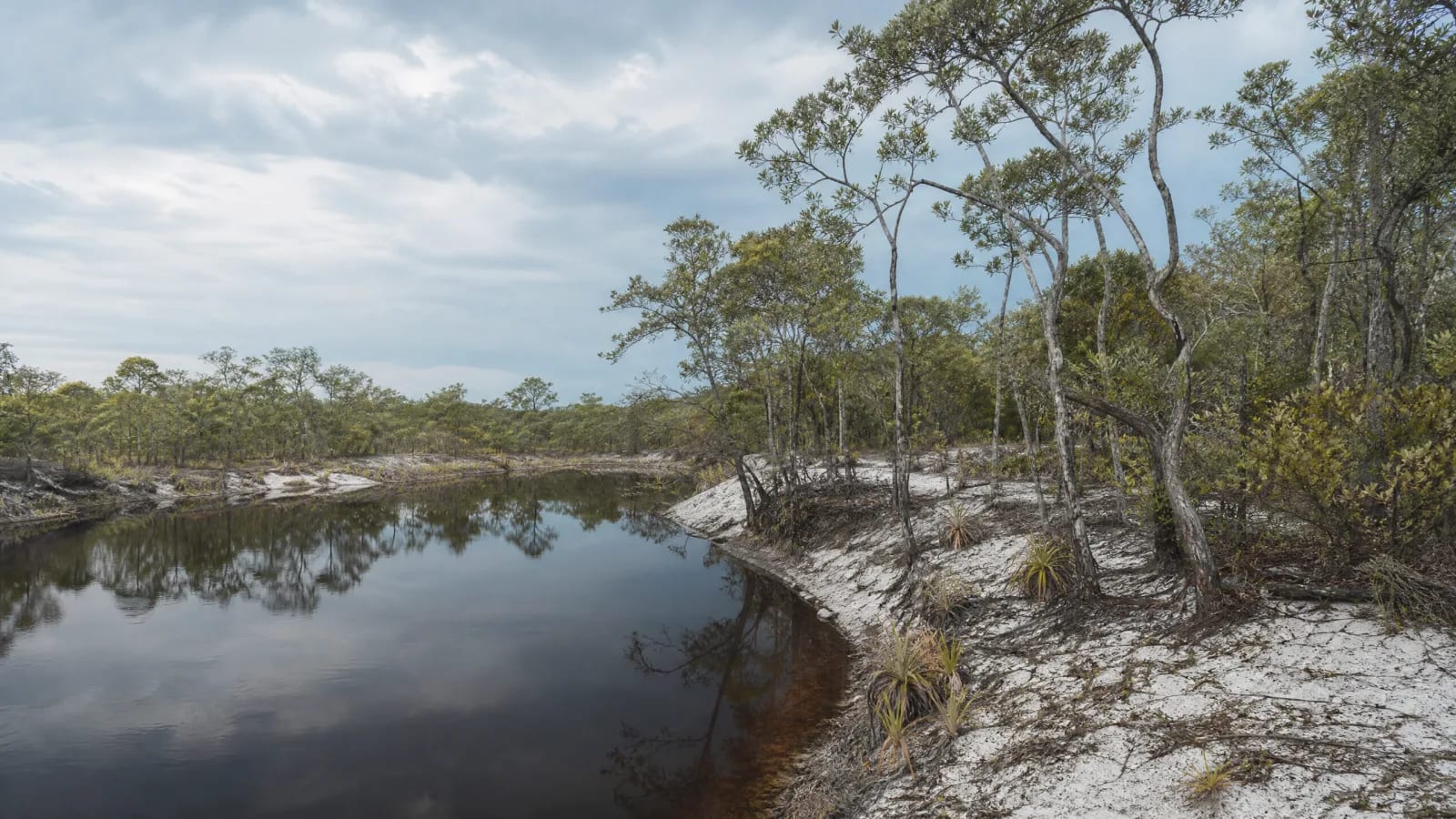
White sand may look like silence. Yet beneath it, Campinarana shelters a forest that has learned to live with little: few nutrients, abundant rain, dark water, and a water table that rises, falls, and redraws the ground. 1 2
The shape of the landscape matters.
I · Recognize
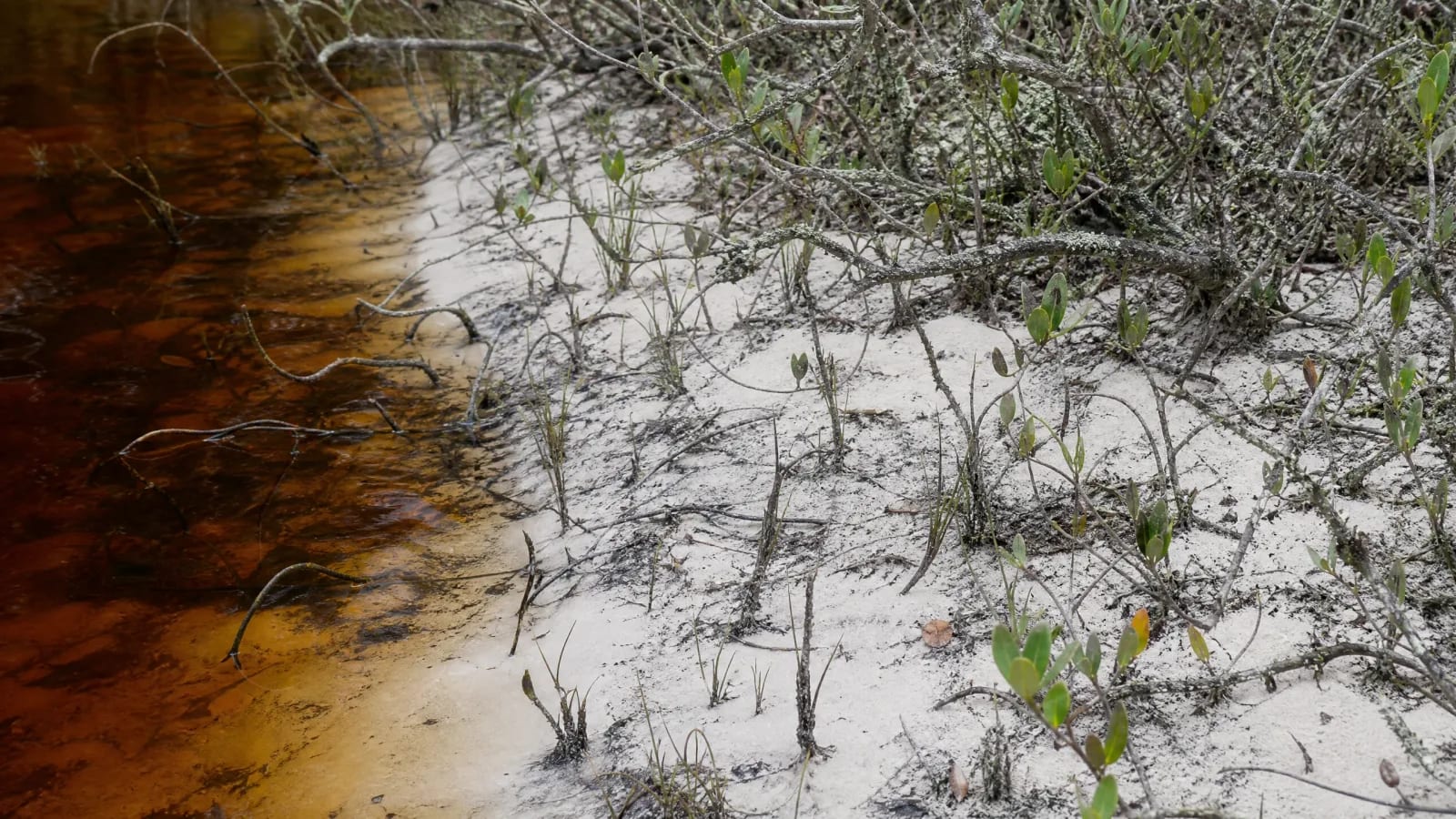
Before it becomes a backdrop, it is already life.
II · Water and rhythm
Water arrives in excess, but does not bring fertility. Quartz-rich, acidic, heavily leached sand retains little of what plants need; the water table both compensates and constrains. Pools, black reflections, and roots close to the surface make this underground negotiation visible. 2
III · Work and territory
No formation exists outside human choices.
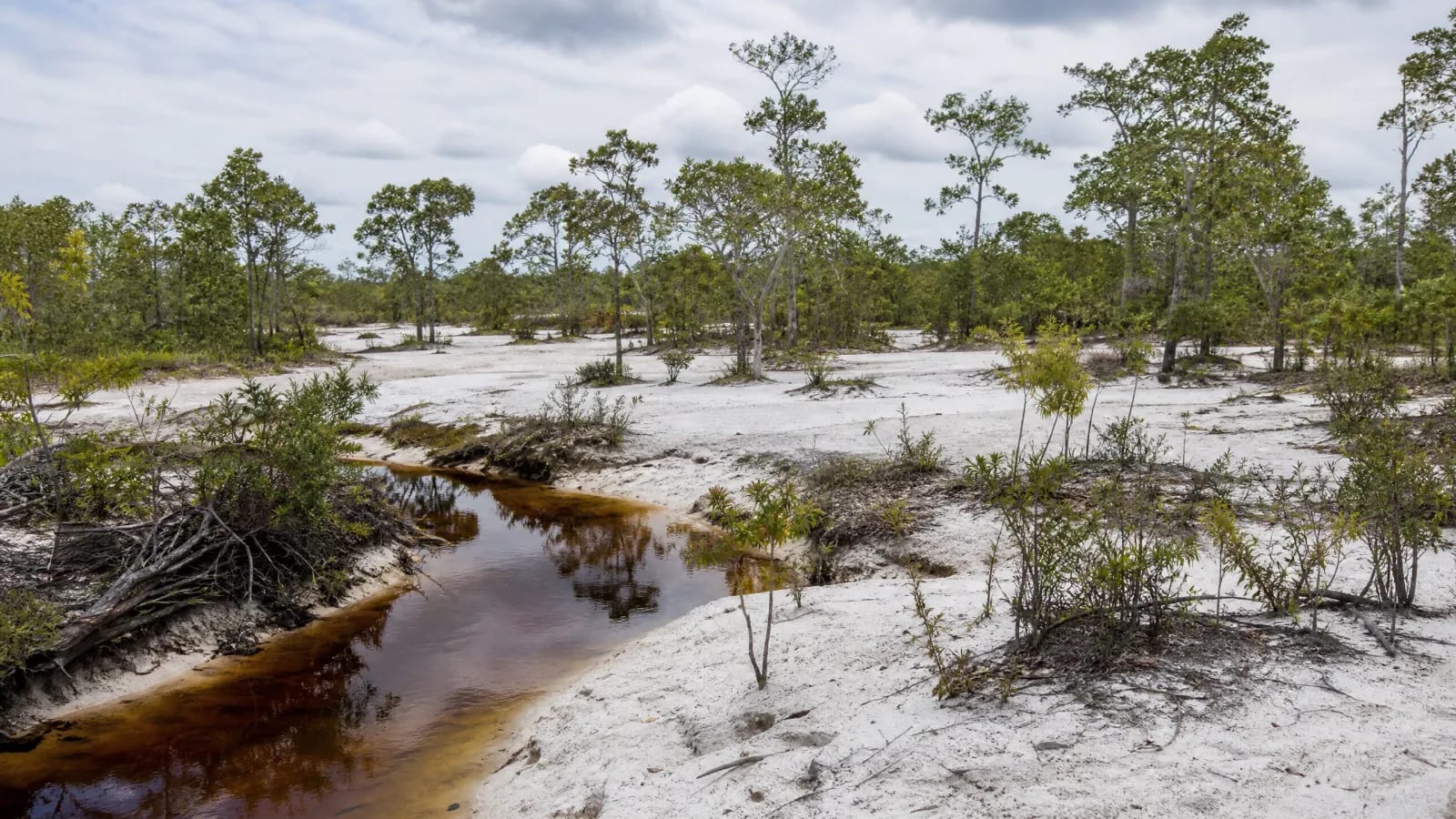
Campinarana’s work is patient: filtering rain, taking root where almost nothing can, sustaining specialized plants, and offering shelter across a discontinuous territory. Human work also appears in research, visitation, protection, and, in some places, the removal of sand for construction. 2 4
The camera should move slowly: from mineral white to low green, from trunk to moss, from still water to the broken horizon. A discreet map may show the fragmented distribution; a soil section may reveal that apparent delicacy is an architecture. Beauty first, explanation just behind it.
IV · The connection we forget
The territory remains present after the product leaves the scene.
In an area of Campinarana in the Central Amazon, sand extraction for construction removes the very substrate; the study records vegetation loss and differences in ant assemblages between exploited and conserved areas. The chain is material—sand removed, soil exposed, habitat altered—but the question remains local: what recovery is possible when the ground that sustained the formation is no longer whole? 4 5
V · Precision
Criticism is valid only when it respects the evidence.
Not every clearing is a mine, not every local activity is a threat, and not every Campinarana responds in the same way. This page asserts only what the sources permit: sand extraction has been documented as a pressure in studied areas, while conservation, monitoring, and restoration depend on place, scale, and groundwater. 4 5
To look at this formation is also to learn not to simplify it.
When you leave, the sand remains pale and the forest seems low. Yet your gaze has changed: each dark pool carries a water table, each root reveals a boundary, each open patch asks a question. Campinarana is not the absence of forest; it is forest at another measure.