Brazil's vegetation · plant formation
Deciduous Seasonal Forest
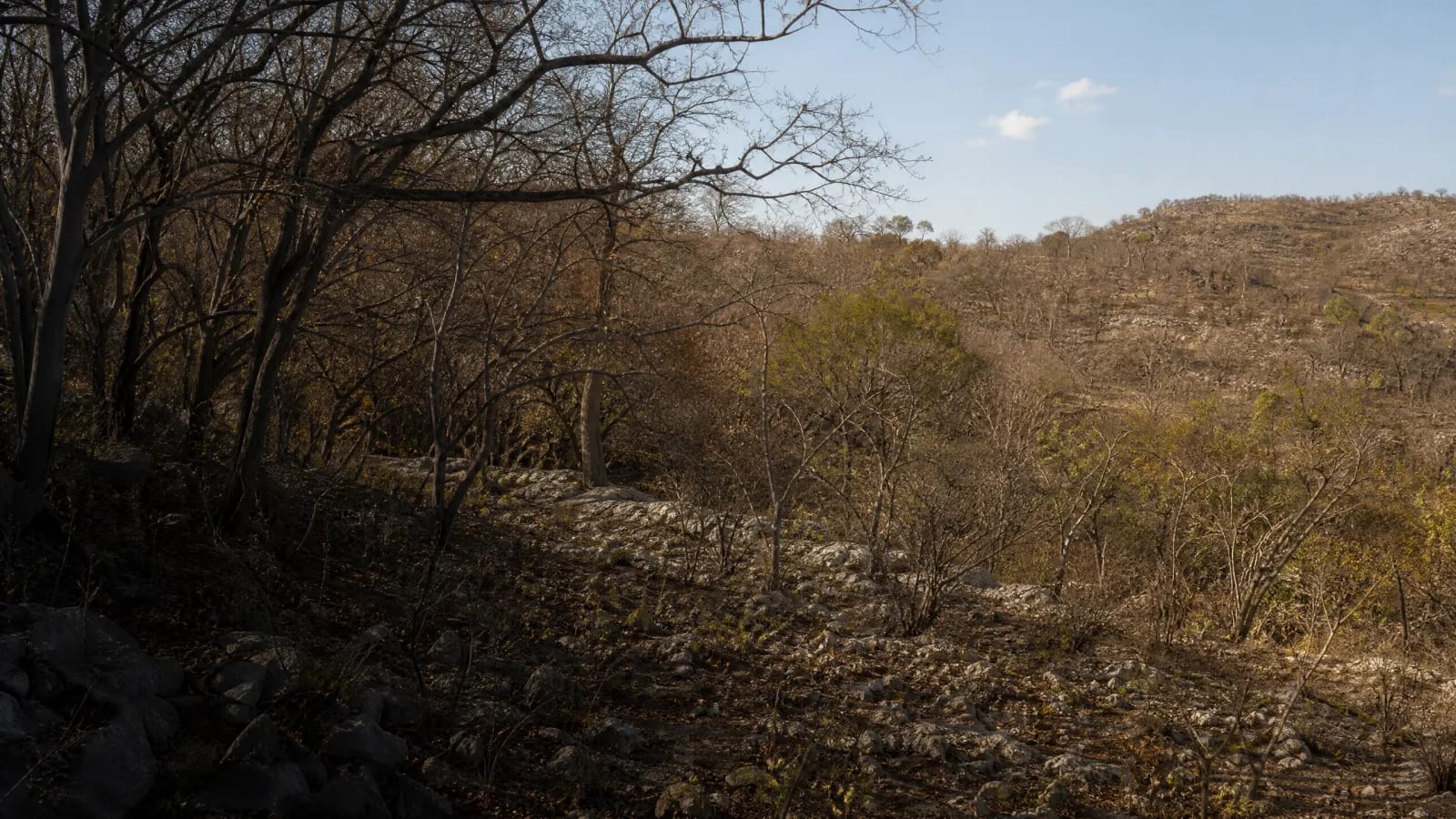
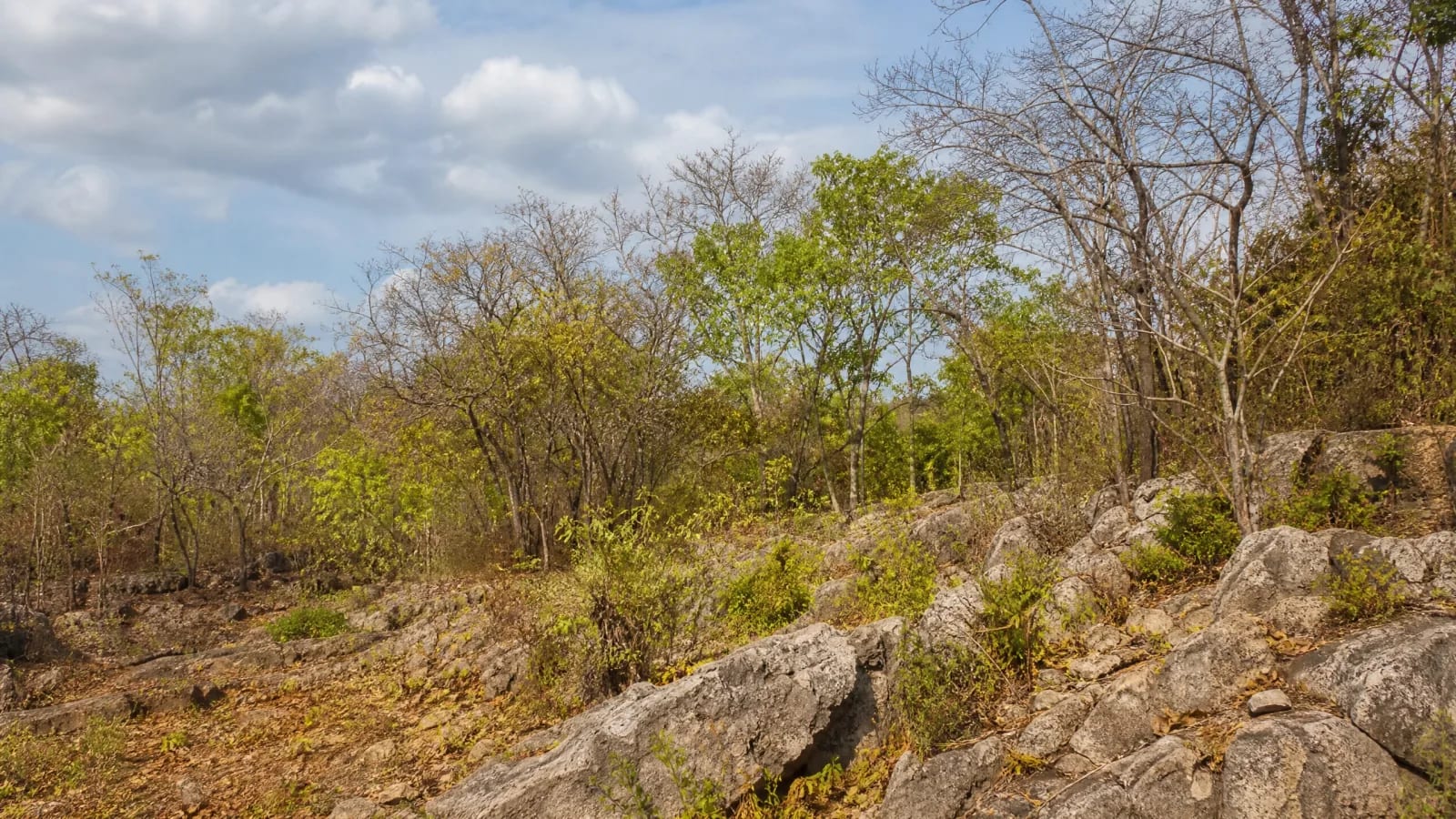
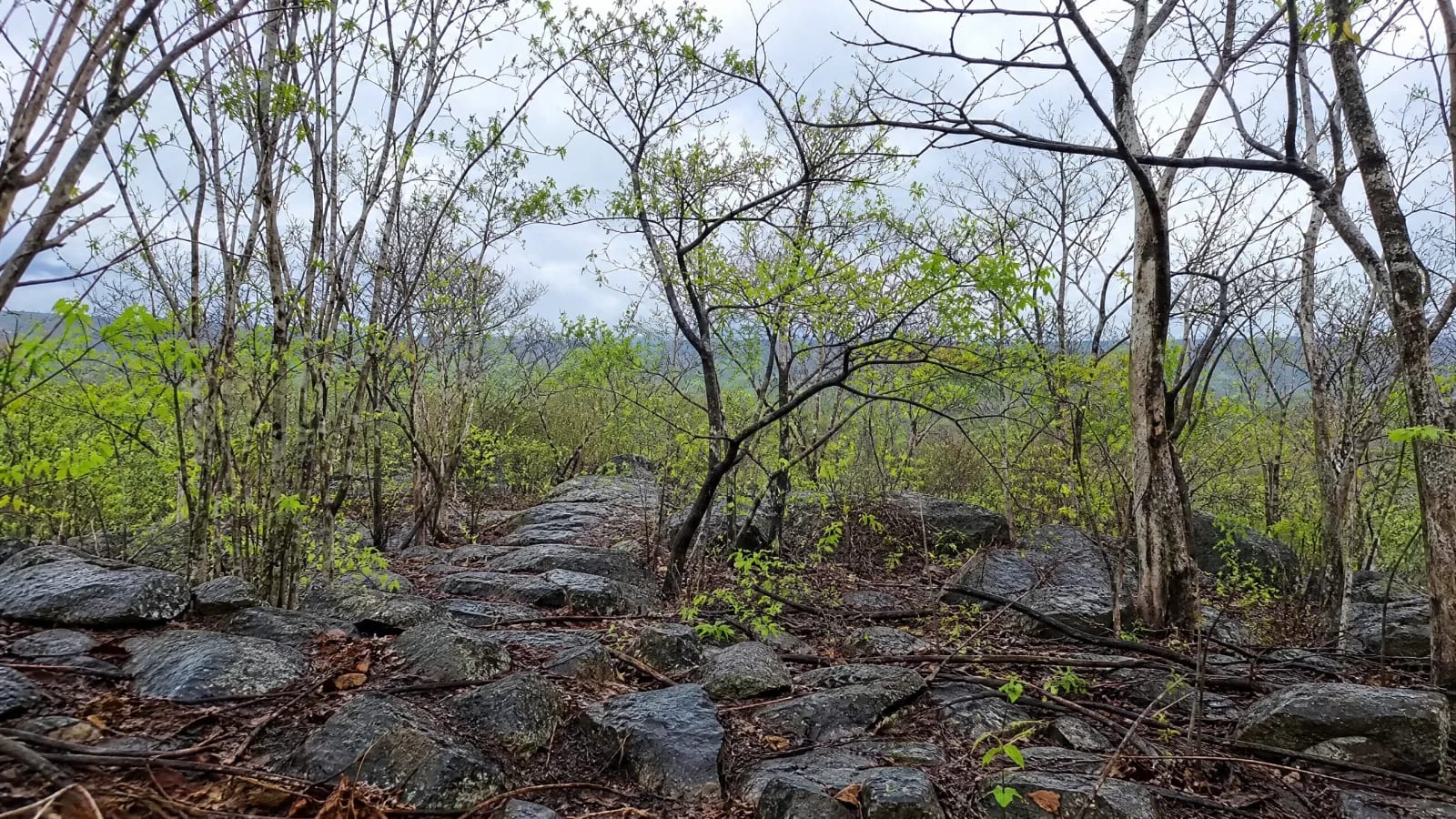
In the dry season, the canopy opens. The forest endures. Among stone, trunk and golden dust, the Deciduous Seasonal Forest turns the absence of rain into a pattern: leaves fall, light passes through, and the ground begins to tell what the canopy concealed.
The shape of the landscape matters.
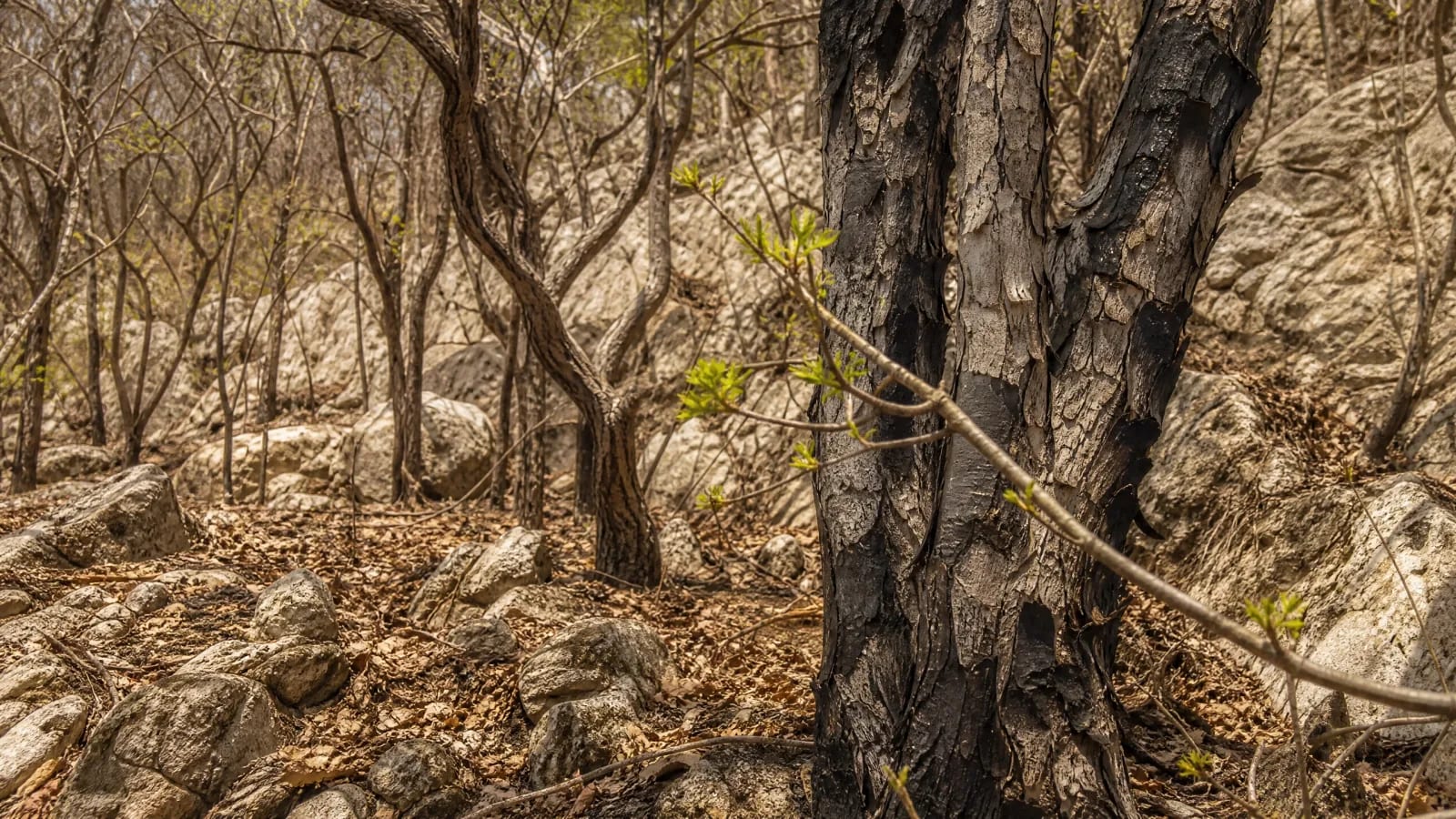
Arrive slowly, when the dry season thins the green. First, observe the distance between the crowns; then draw close to the bark, the leaf litter, the branch that scores the sky. The landscape seems lighter, but its economy is rigorous: shedding leaves reduces the surface that transpires when water becomes scarce 1.
I · Recognition
Before becoming a backdrop, it is already life.
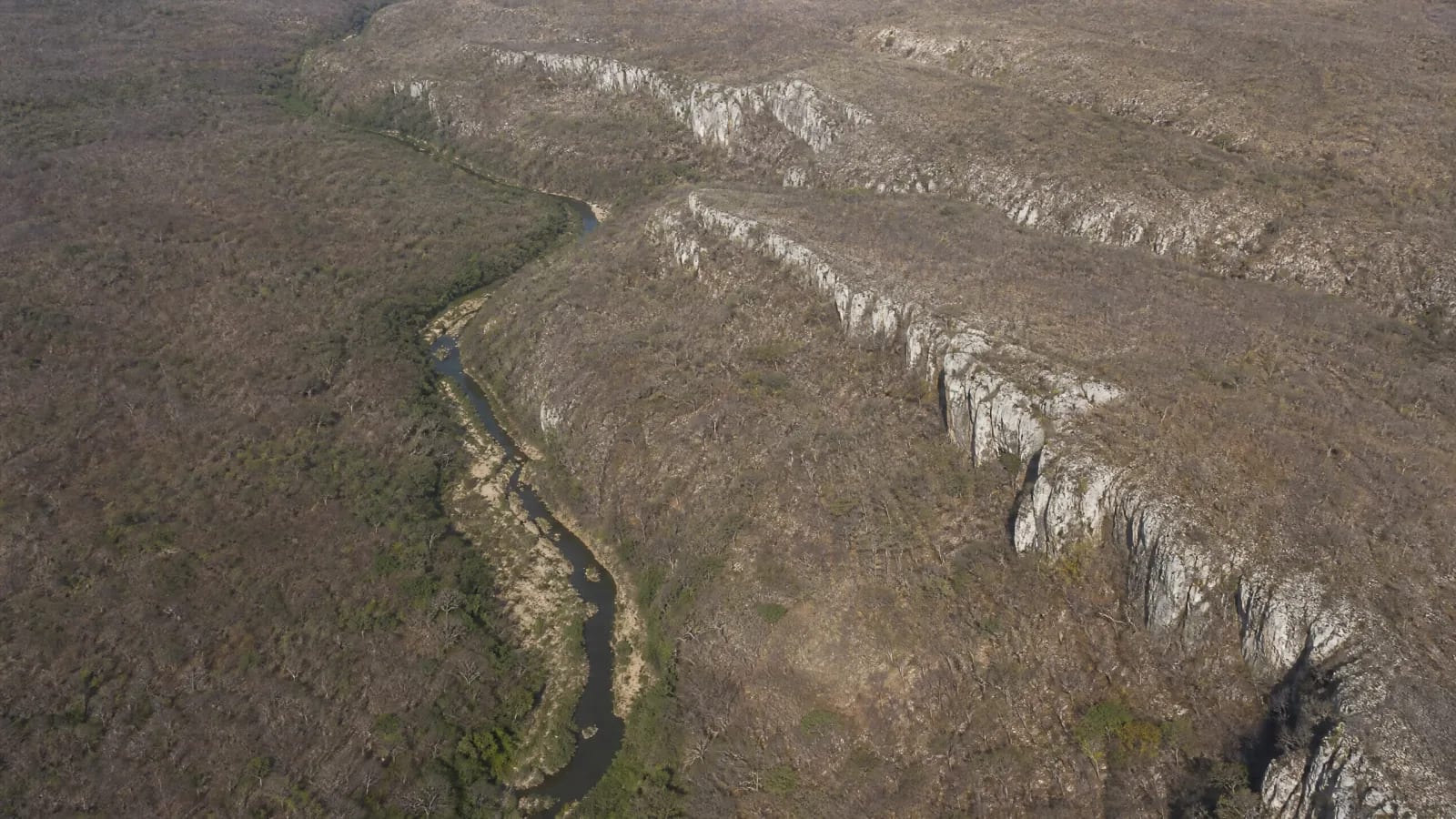
There is no single dry forest. In the North of Minas Gerais, the formation meets pelitic-carbonate rocks, slopes, valleys and mosaics of soils; each combination rearranges species, heights and rhythms of sprouting 2. Photography should follow these differences, alternating the wide frame with the small leaf that endures.
II · Water and rhythm
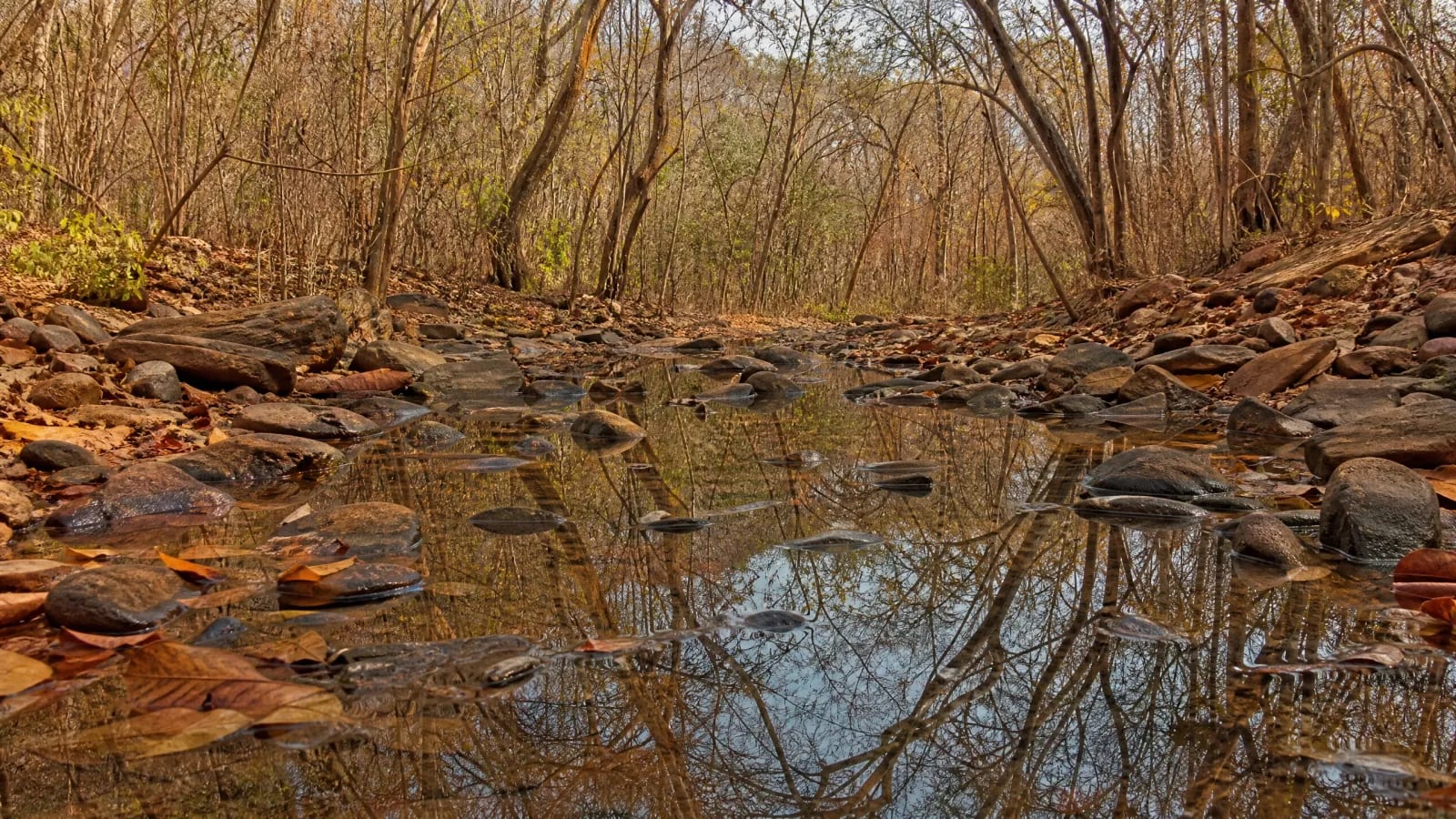
Water also appears through absence. IBGE classification recognises, in deciduous seasonal forests, a dry season that may last up to six months 1. When rain returns, it does not light the forest all at once: it filters through different profiles, reaches roots at different depths, and brings back the green at different times.
III · Work and territory
No formation exists outside human choices.
Soil supports more than trees. It supports paths, livestock, fields and decisions about where to keep a slope covered. In deciduous areas, pasture may occupy the matrix around forest patches; the material question is how use changes continuity, erosion and the possibility of regeneration—not whether an “untouched” landscape exists.
A frame can show the edge without turning those who live there into culprits. It is worth recording the fence, pasture, cultivation and remaining forest as elements of the same scene. Protecting margins and slopes, maintaining connectivity and allowing sections to recover are choices of scale and management, verifiable in the territory.
IV · The connection we forget
The territory remains present after the product leaves the scene.
Between northern Minas Gerais and southern Piauí, a study compared land covers in 2007 and 2016 and concluded that the changes observed in deciduous forests were particularly explained by pasture 3. The chain is concrete: conversion or expansion of pasture, alteration of cover, possible fragmentation. The question remains open: in each section, what management conserves soil and allows the forest to withstand the next dry season?
Read the canopy in two seasons. In the dry period, look for light between branches, the depth of the leaf litter and exposed stone; after the rains, return to the same point. Compare not only colour, but regeneration, shade and the water that remains. Contrast is method, not decoration.
V · Precision
Critique matters only when it respects evidence.
No single image proves degradation, abandonment or recovery. A leafless forest is not necessarily an impoverished one; a green fragment alone does not reveal its age, connectivity or history. Investigation begins when the gaze accepts what it still cannot conclude.
Looking at this formation also means learning not to simplify it.
The Deciduous Seasonal Forest makes the cycle legible. Drought is not an ending; rain is not an absolute beginning again. Between the two remain the memory of the soil, the pattern of stone and the silent work of trees—a beauty that asks for enough time to be seen.
📚 References
- 1.IBGE — Conhecendo os tipos de vegetação do Brasil
- 2.Embrapa — Relação solo-paisagem em florestas estacionais do Norte de Minas Gerais
- 3.SciELO — Monitoramento da floresta estacional decidual brasileira por sensoriamento remoto
- 4.Redalyc — Monitoring of Brazilian Deciduous Seasonal Forest
- 5.IBAMA — Flora e florestas