Vegetation of Brazil · plant formation
Evergreen Seasonal Forest
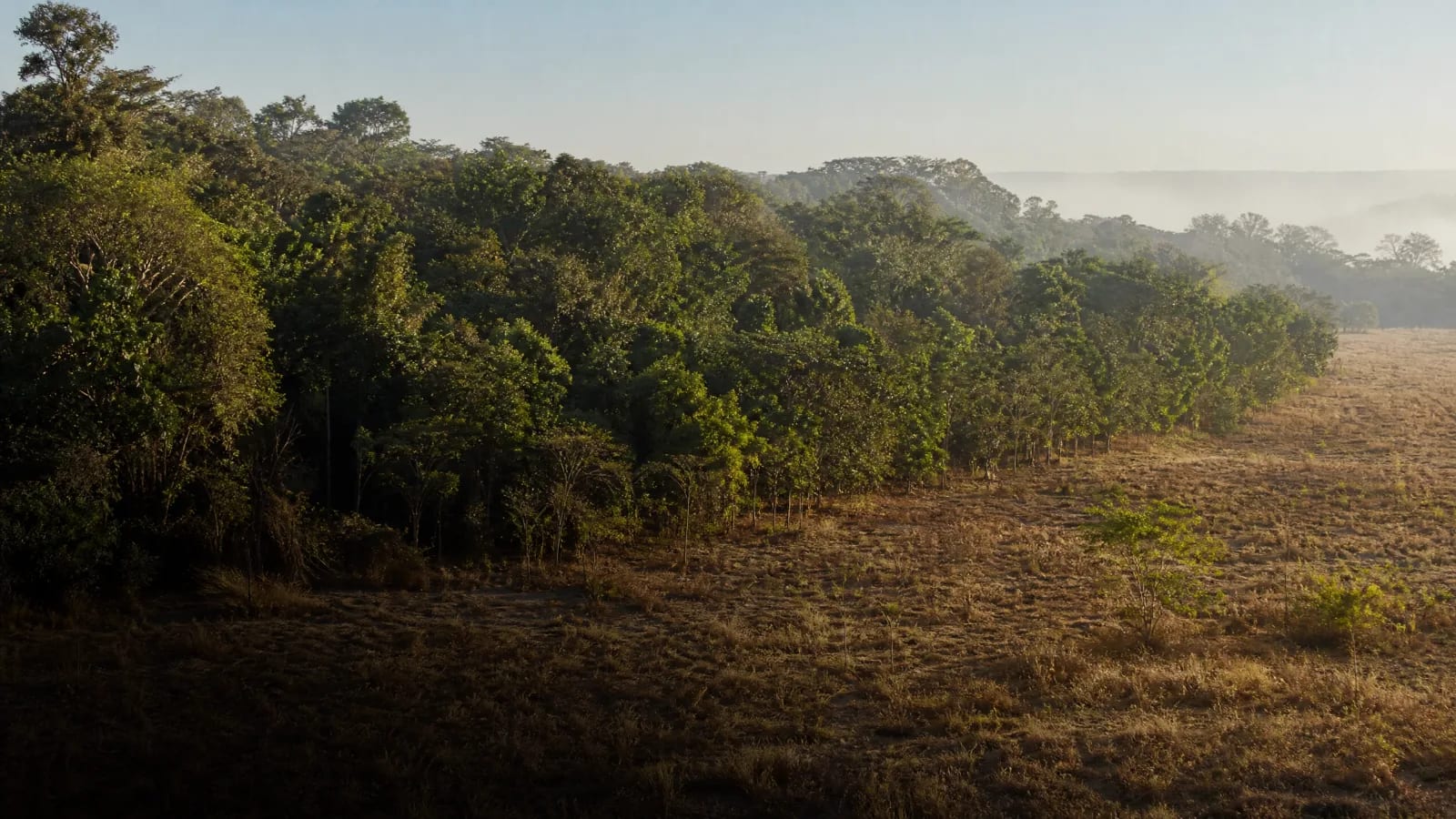
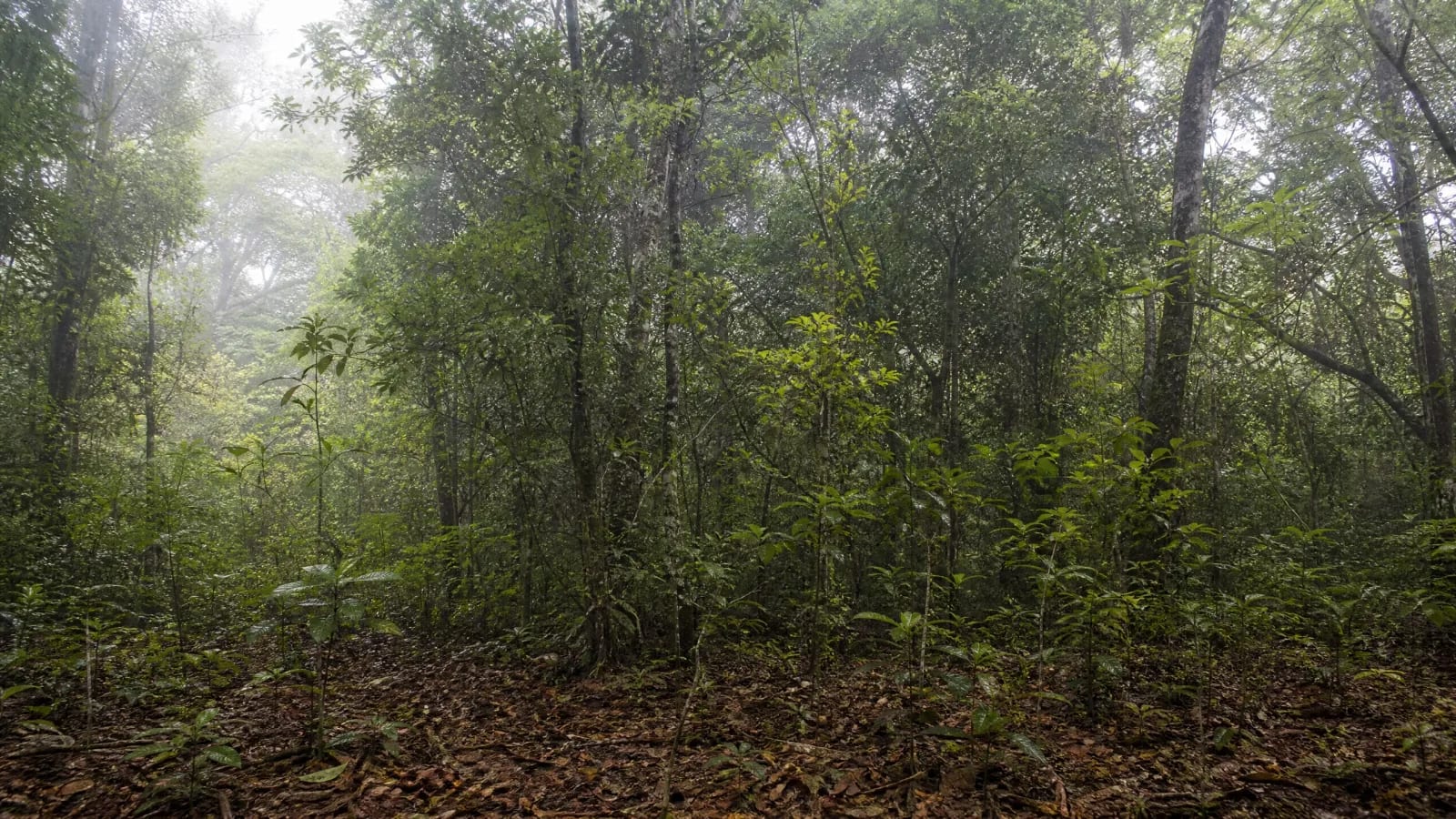
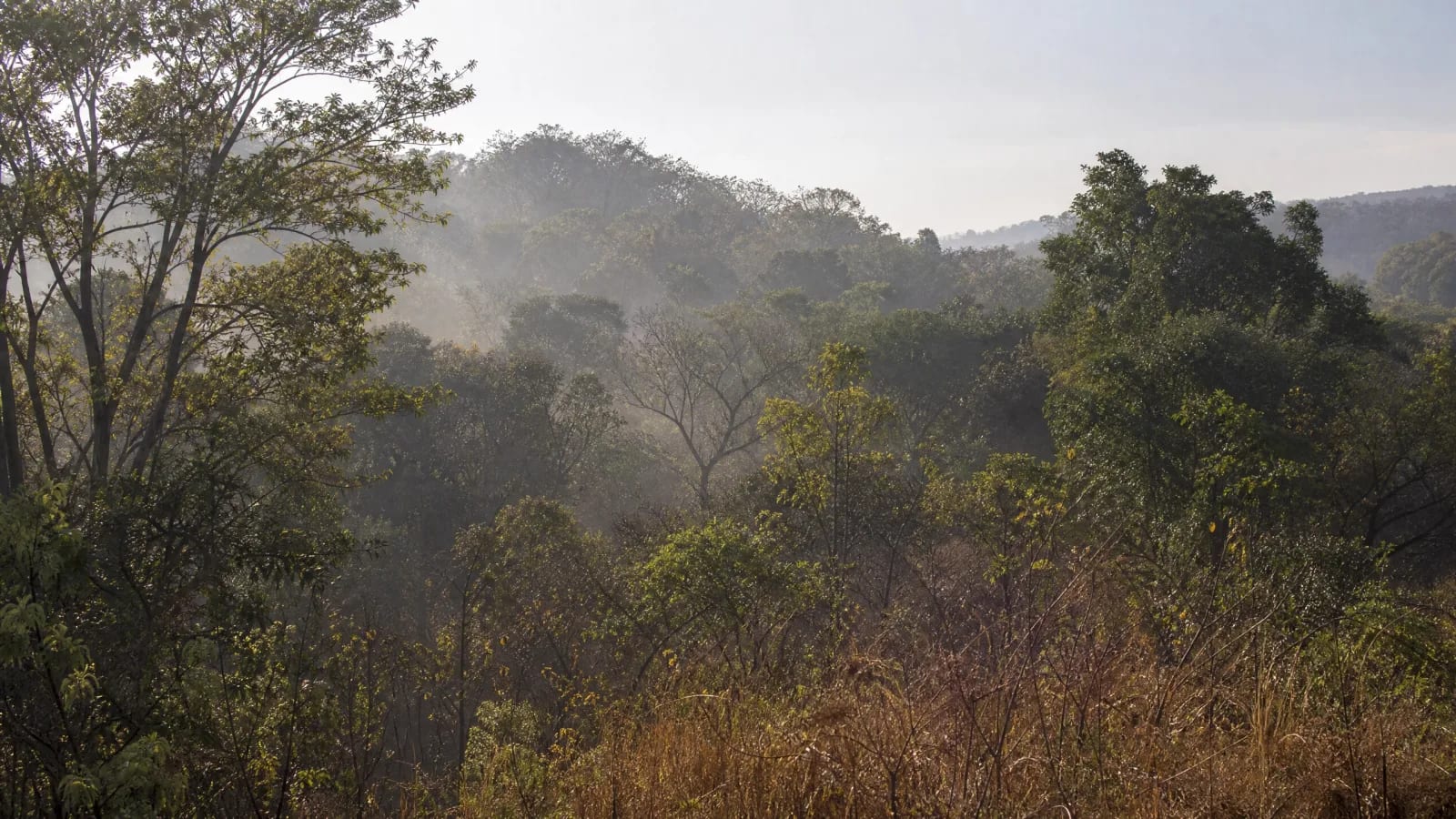
Drought reaches the landscape. Green remains in the canopy. Along the southern edge of the Amazon, the forest seems to defy the season—but its secret is not the absence of dry weather: it is the water that remains available where the eye cannot reach.
I · Recognition
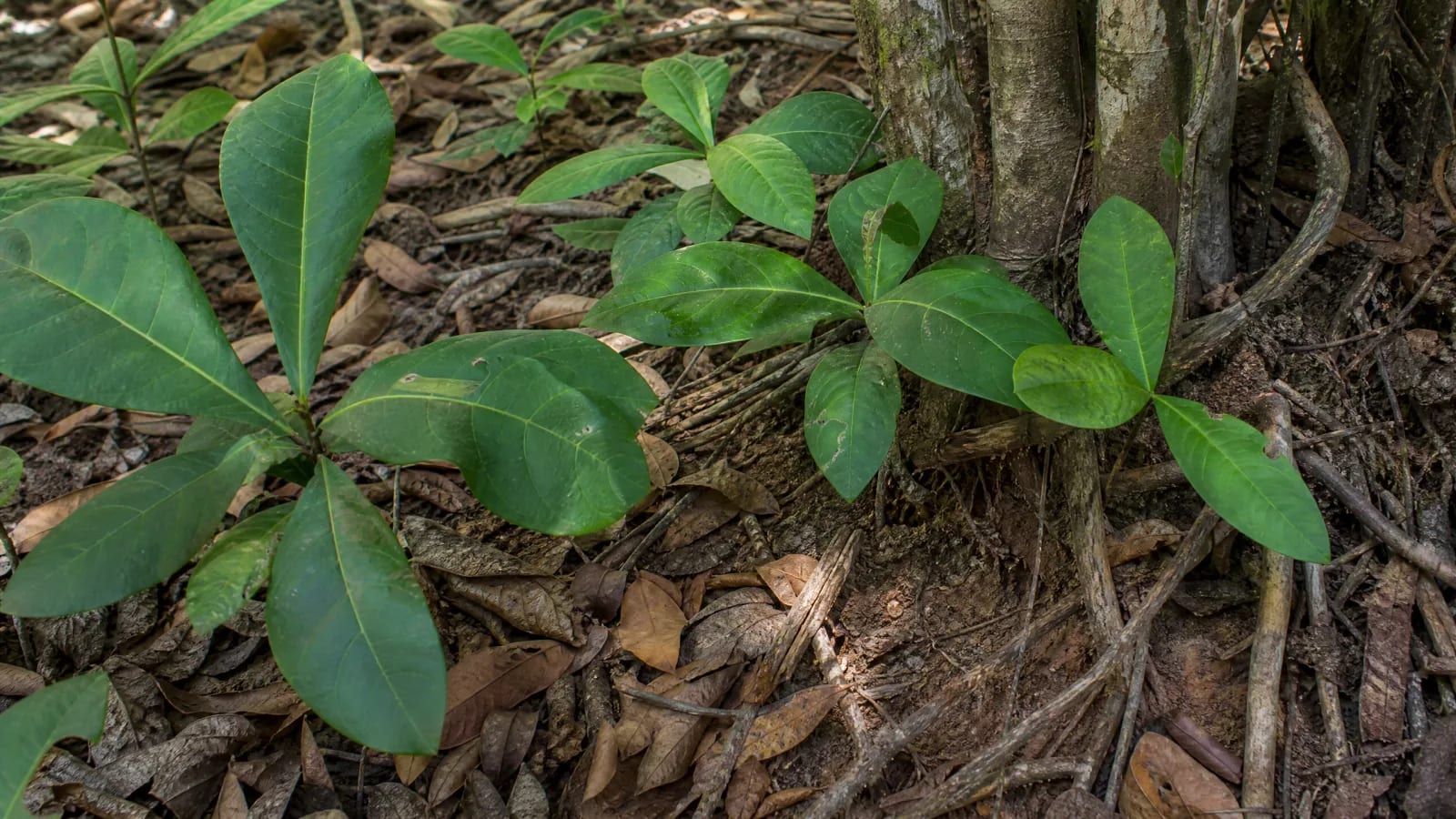
Before becoming a backdrop, it is already life.
The category was incorporated into the 2026 revision of IBGE phytogeographical regions; its most significant extent is described along the southern edge of the Amazon, especially in the Upper Xingu. In Querência, Mato Grosso, a sampled area contained 49 tree species—a localized figure, not a portrait of the entire formation. 1 3
II · Water and rhythm
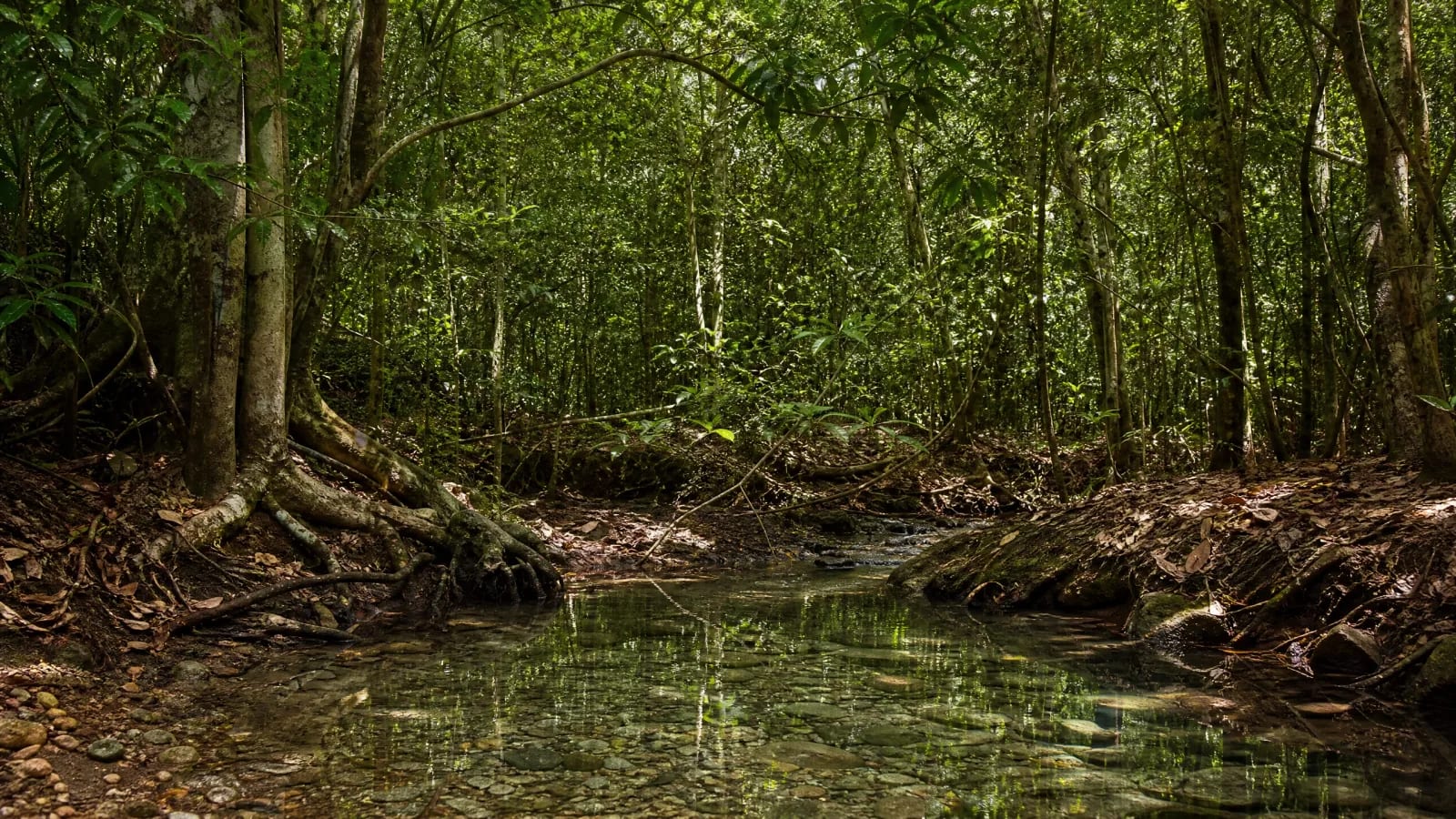
Persistent foliage is an underground clue. Even with a pronounced dry season, water available in the soil profile or water table can prevent major leaf fall. The canopy thus serves as the visible surface of an invisible reserve: roots, sediments, and drainage turn past rainfall into present presence.
III · Work and territory
No formation exists outside human choices.
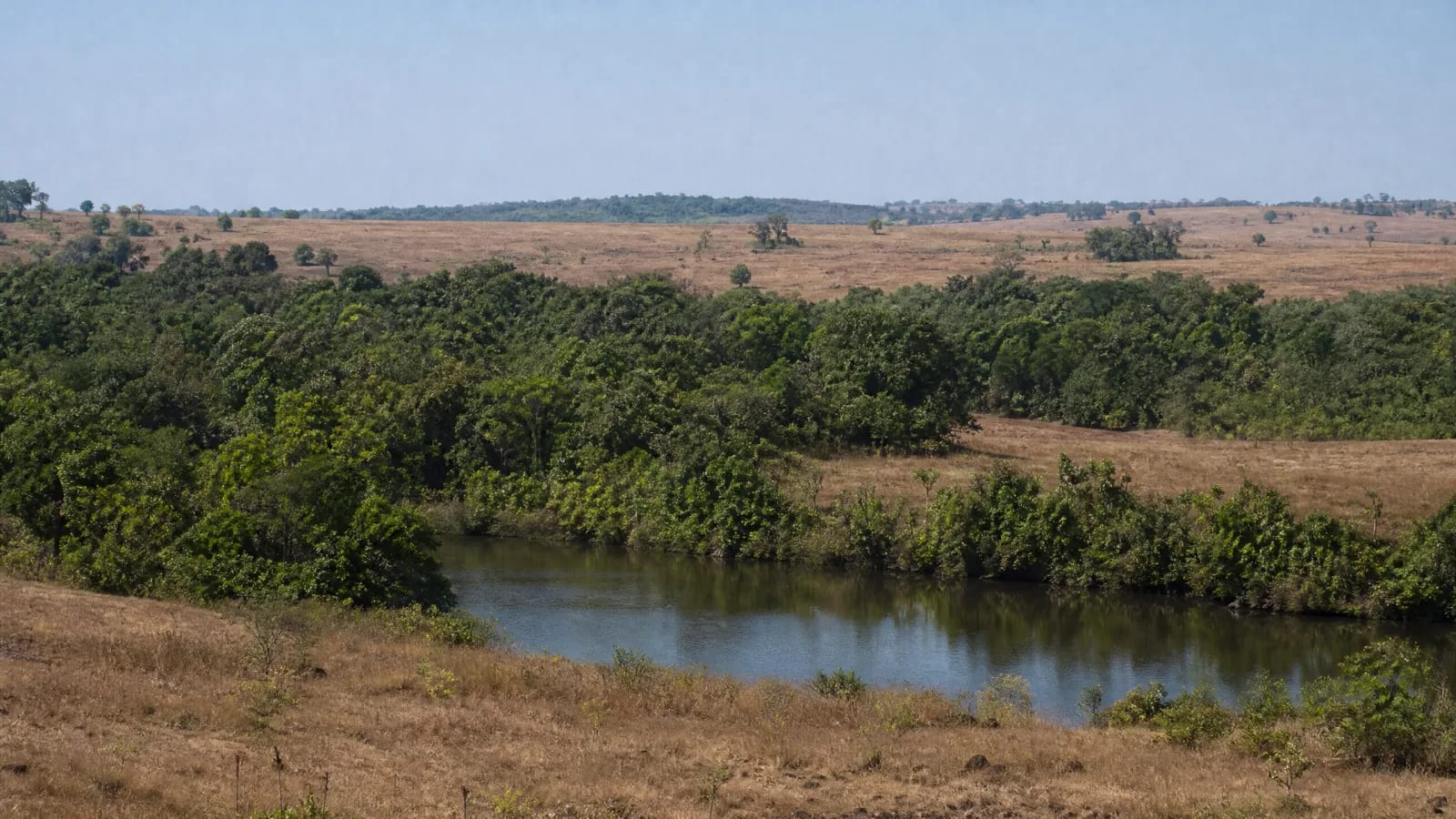
In Querência, the forest landscape coexists with a region of intensive soybean production and with restoration and governance efforts across the Xingu mosaic. The material connection is concrete: the conversion of evergreen seasonal forest and Cerrado into agricultural areas has been documented at a regional scale; this does not allow the same trajectory to be assigned to every property, community, or fragment. 4 5
Looking requires method. Photograph the green canopy beside a soil profile; follow a spring, a road, an edge; compare a continuous tract with an isolated patch. The question is not merely “how much green exists?” but what water remains, what connection has been maintained, and what future the land can still sustain.
IV · The forgotten connection
The territory remains present after the product leaves the scene.
In the Upper Xingu, a forest that retains its green through the dry season may be embedded in a matrix where agriculture is advancing. The chain is legible: demand and credit make cultivation viable; roads and cleared areas reorganize the landscape; fragmentation alters edges and connections. Without presuming intentions, the question remains: which rules, agreements, and practices can sustain production without erasing the continuity that supports the forest?
Green in the canopy does not mean unlimited water. The formation teaches us to distrust quick readings: persistent leaves reveal a hydrological condition, not a promise of invulnerability. A fragment that is still green may bear hot edges, isolation, and a history of conversion around it.
V · Precision
Critique matters only when it respects the evidence.
The cited studies describe specific areas and samples; they do not authorize generalizing composition, pressure, or ecological response across the entire territory. IBGE classification organizes a national reading, while field observation must restore depth to the place: soil, drainage, scale, season, and local names.
To look at this formation is also to learn not to simplify it.
The Evergreen Seasonal Forest makes a quiet negotiation between drought and reserve visible. When the canopy remains, it does not conclude the story: it opens a passage downward, where water, roots, and territorial choices decide how long green can continue to say “present.”