Brazilian vegetation · plant formation
Steppe (Campos Sulinos)
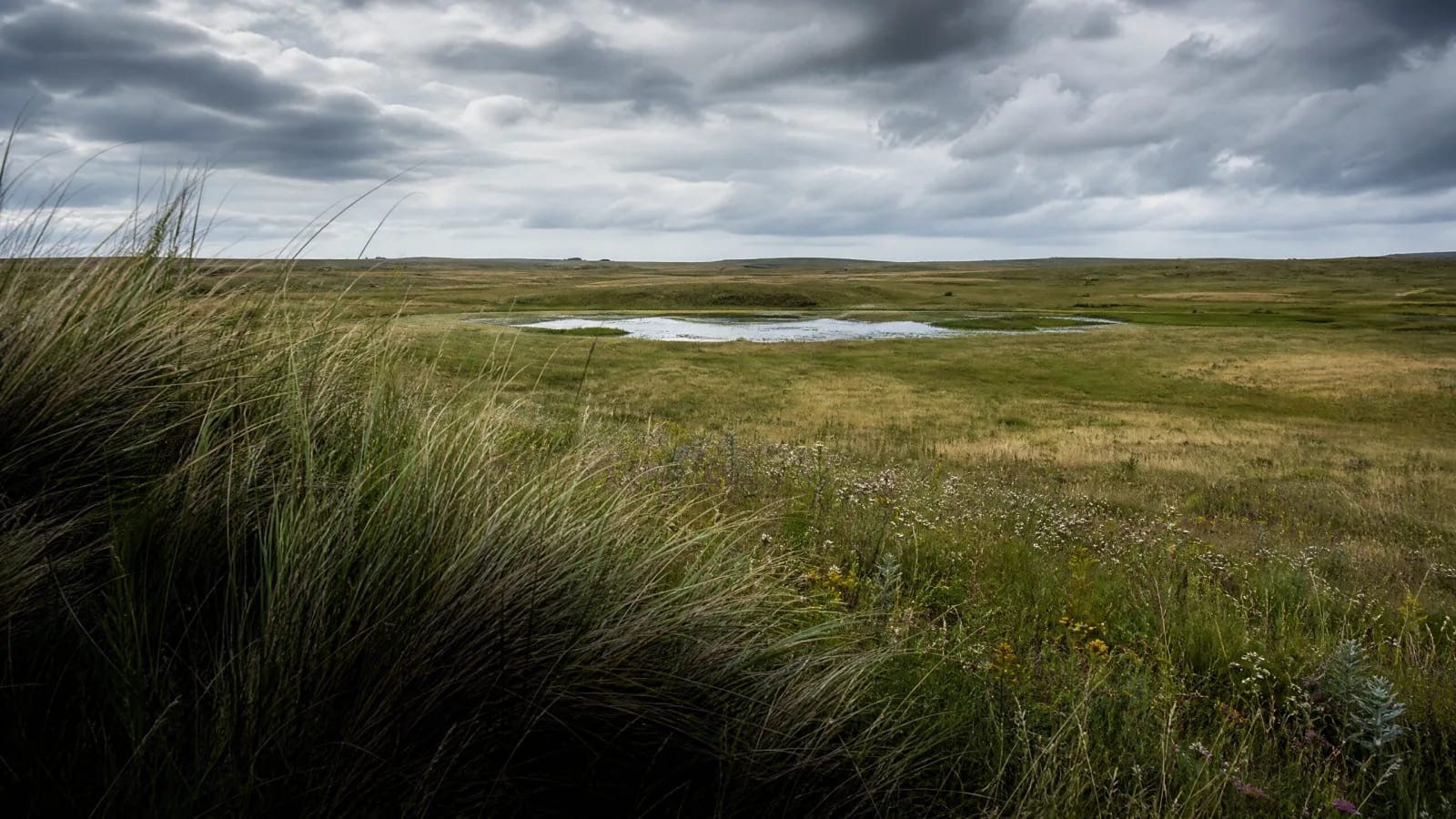
The grassland seems to breathe with the landform: a hill rises slowly, the grasses lean, and the horizon remains open. Here, the landscape is not an interval between trees. It is a living weave of herbs, grasses, and low shrubs, shaped by cold, frost, soil, water, and the timing of management. 1
The shape of the landscape matters.
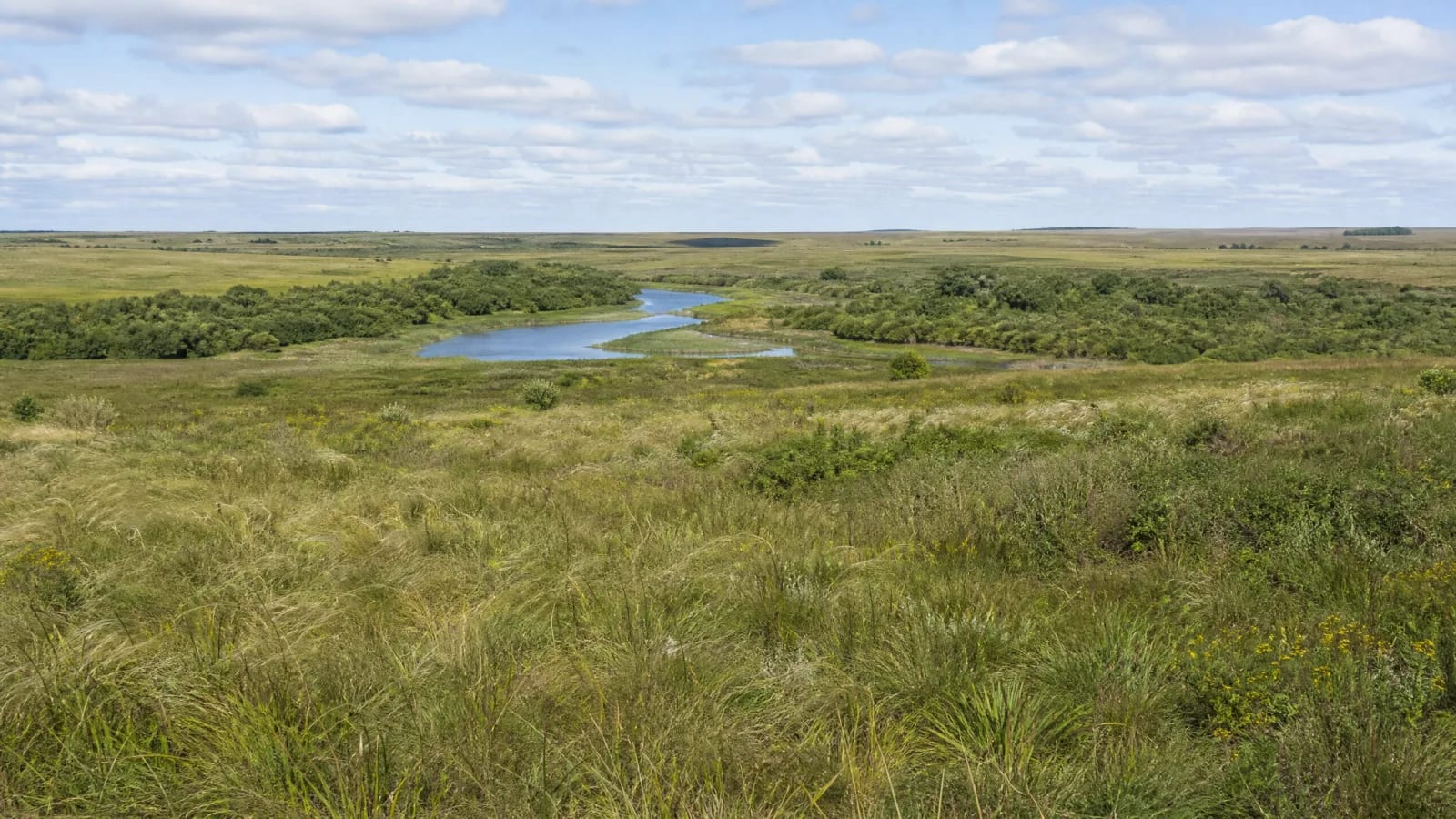
Arriving in the Campos Sulinos is learning to look from a low vantage point. In Paraná, Santa Catarina, and Rio Grande do Sul, the Steppe appears as a mosaic: highland grasslands, plains, rounded hills, woodland patches, riparian forests, and wetlands. In the Pampa, its hills hold a breadth understood only when the camera lingers. 2 3
I · Recognition
Before becoming a backdrop, it is already life.
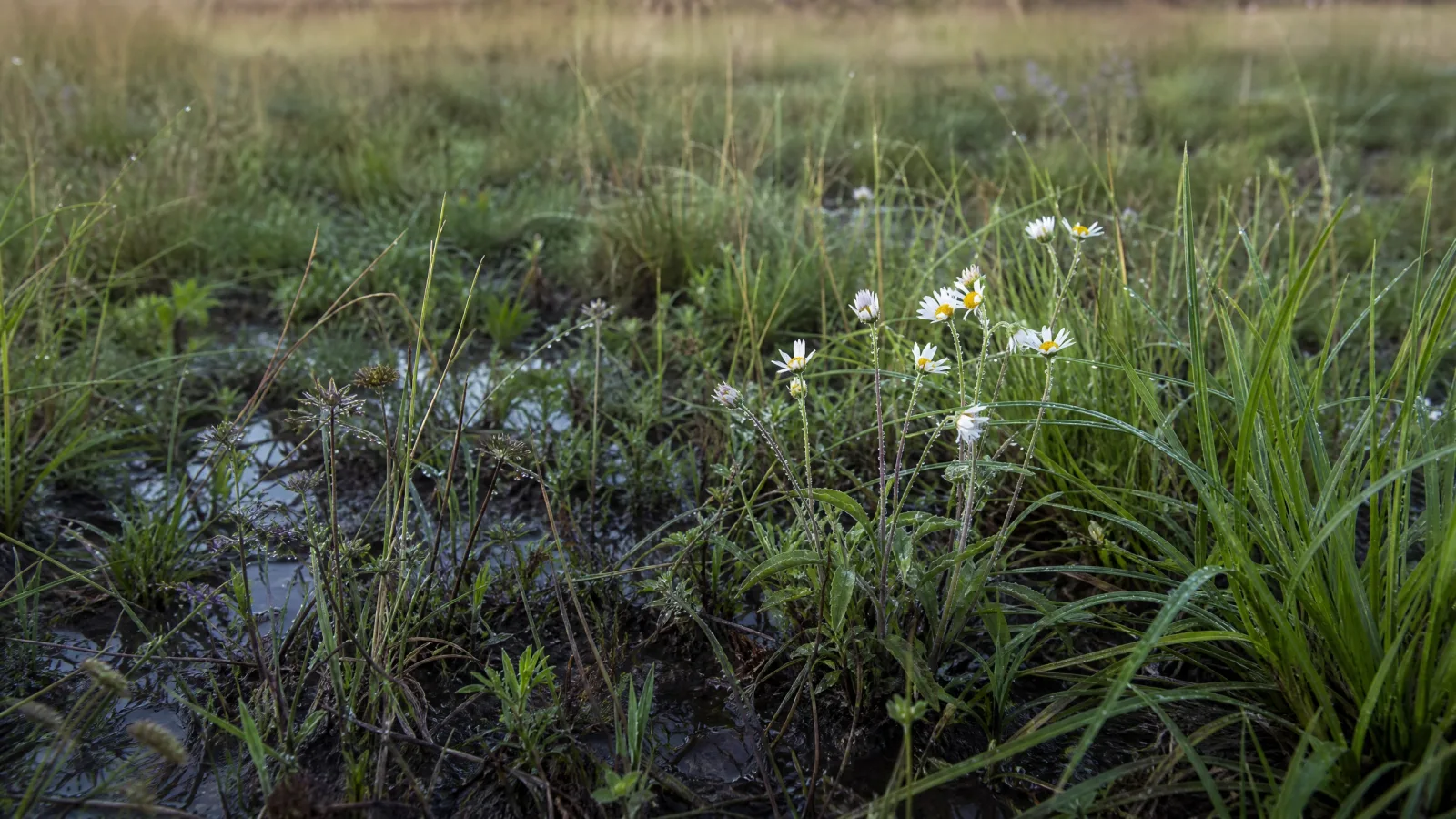
Uniformity is an illusion created by the wide shot. Under the same light, native species alternate according to altitude, soil texture, drainage, and the history of fire or grazing. Unassuming flowers, seeds, fine leaves, and low shrubs build a diversity that needs neither a continuous canopy to be a forest of relationships nor trees to be a complete ecosystem.
II · Water and rhythm
Water is not only in the river: it lingers in wetlands, seeps into the plain, runs down the slope, and reappears in riparian forest. These wet environments stitch the grassland together and help reveal why “open” does not mean dry: in the Pampa, the temperate climate and landforms organize very different water availabilities. 2
III · Work and territory
No formation exists outside human choices.
Native forage feeds cattle and sheep, and livestock raising can coexist with grassland when grazing respects the vegetation’s rhythm. The material question is: how much is taken in, how much does the grassland replenish, and what remains between seasons? Embrapa treats integrated management as a tool; excessive frequency or intensity can degrade structure and reduce productive potential. 3
Management means deciding stocking rates, rest periods, spring protection, and the conservation of wetlands and corridors. It also means distinguishing use from conversion: native forage remains cover, while cropland replaces the grassland. Each choice changes what the landscape can offer afterward.
IV · The connection we forget
The territory remains present after the product leaves the scene.
In parts of the Pampa, native grasslands have been converted to crops, while others remain under extensive livestock production. The chain is this: land-use change removes cover, reorganizes soil, and displaces diversity; poorly adjusted grazing opens another path to degradation. If production depends on the grassland, what scale of management allows it to produce without erasing its own foundation? 3 4
Observe: a hill line, the edge of a wetland, uneven grass height, the herd’s footprint, exposed soil, and the plant flowering close to the ground. Ask: what is seasonal, what is management, and what is already replacement? The most beautiful image may be the one that makes these differences legible.
V · Precision
Criticism matters only when it respects the evidence.
No panoramic view can measure a grassland’s health on its own. One must examine the soil closely, follow the water, identify species, and compare seasons. One must also resist two shortcuts: calling the grassland empty or turning all livestock production into a threat. The limit lies in the site, scale, history, and capacity for regeneration.
To look at this formation is also to learn not to simplify it.
When the wind passes, the entire grassland moves without leaving its place. The Steppe teaches that permanence is not immobility: it is the continuity of relationships among grass, water, cold, fire, animals, and people. Protecting the Campos Sulinos means keeping this future open — a landscape capable of continuing to work.