Brazilian Vegetation · plant formation
Open Ombrophilous Forest
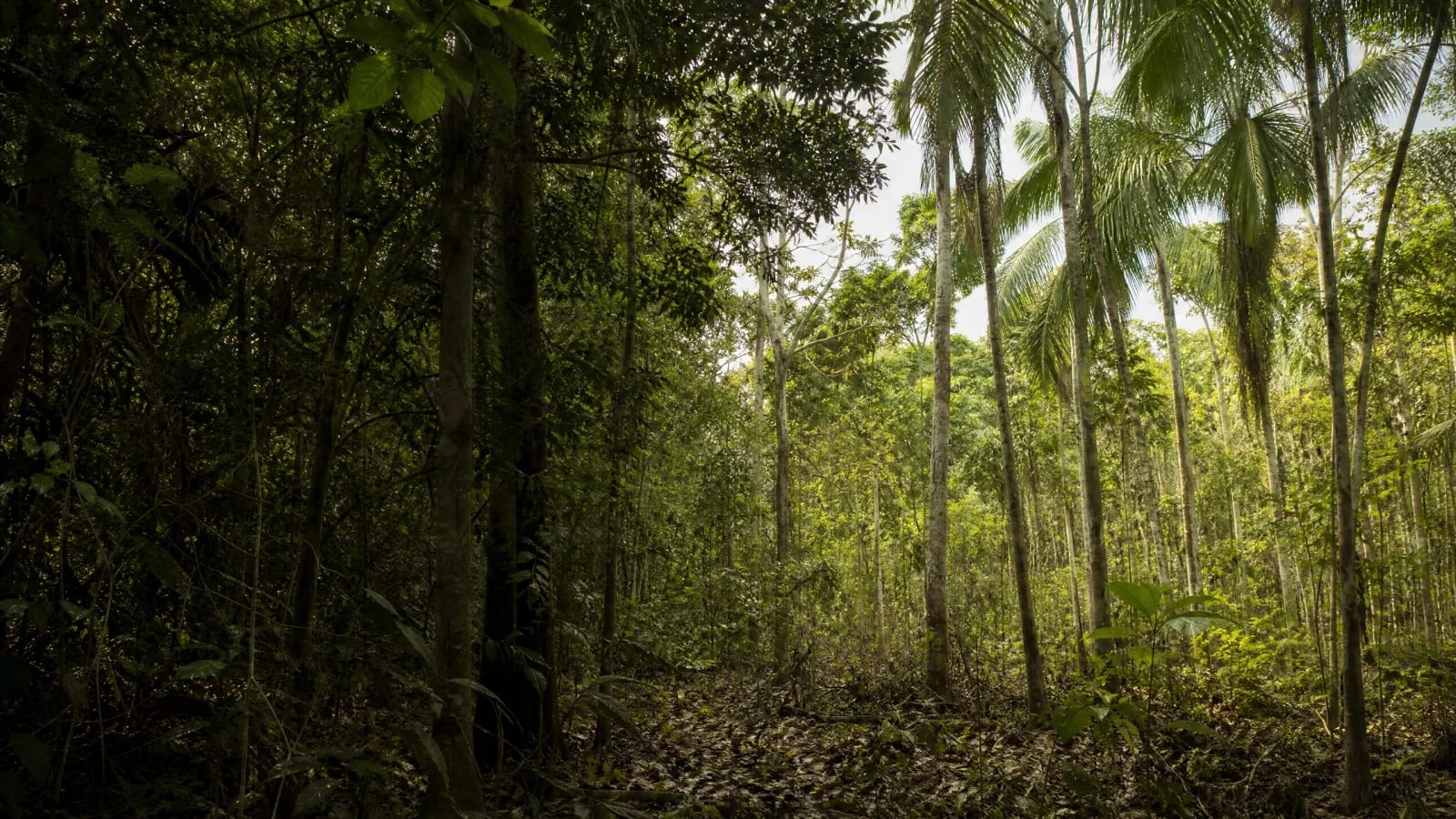
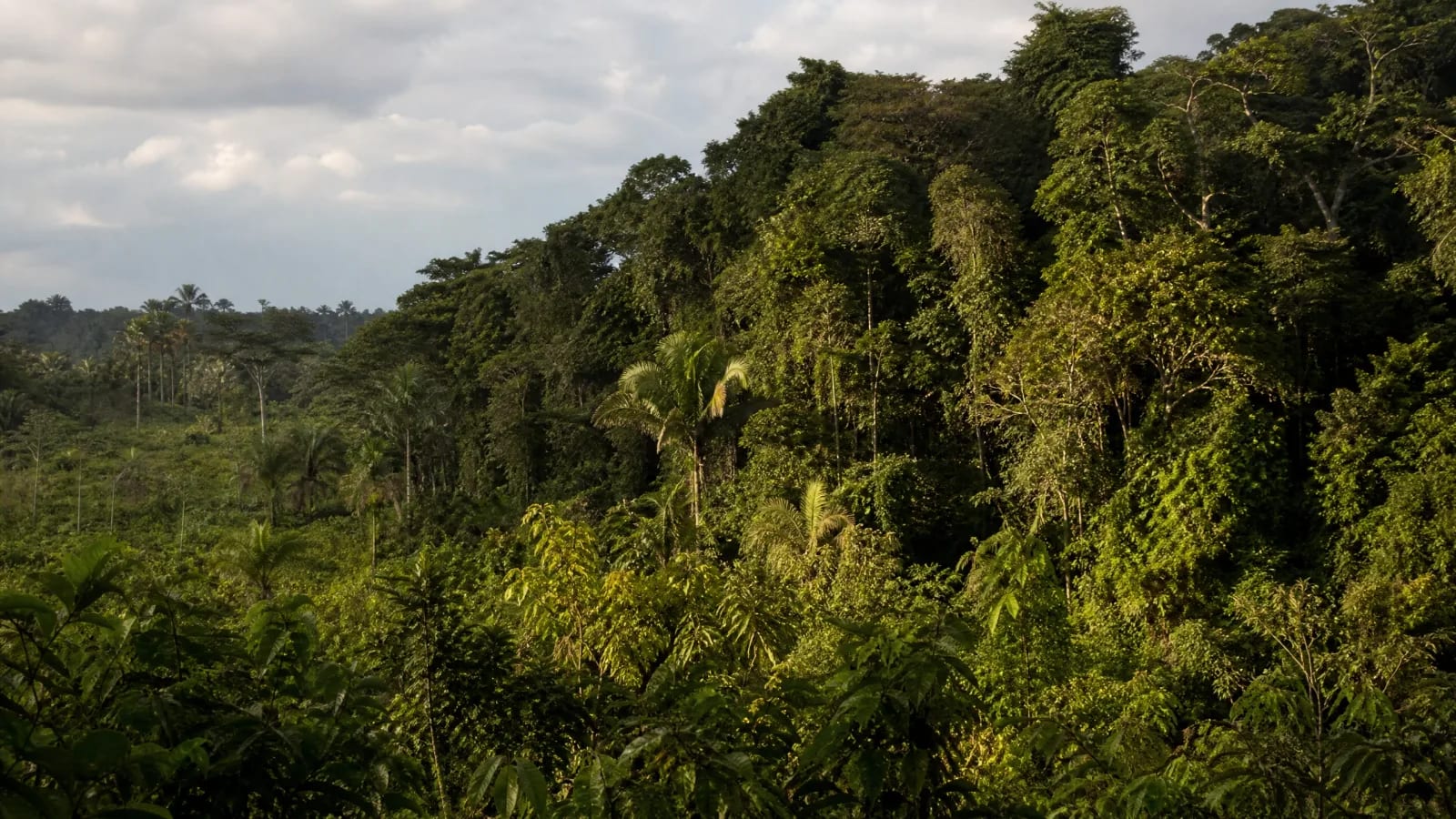
A forest can let light in without ceasing to be a forest. Among vines, palms, bamboos and sororocas, its openness shapes a distinctive way of remaining green.
The shape of the landscape matters.
I · Recognition
Before becoming a backdrop, it is already life.
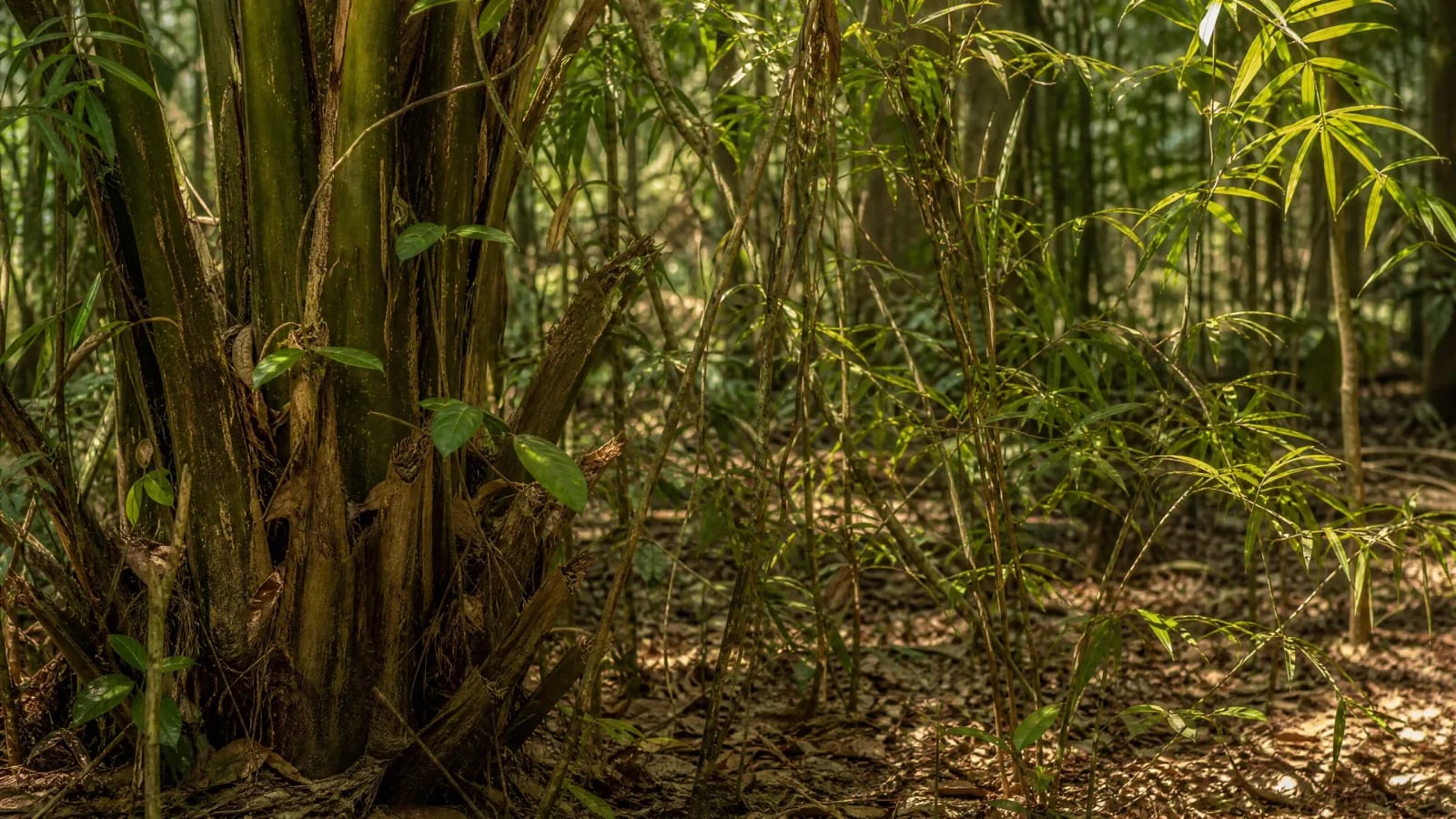
The formation is a more open variant of the Dense Ombrophilous Forest, common in Amazonian transitions toward areas with more dry days. Its facies — palms, vines, bamboos and sororocas — give different architectures to the same rainfall regime. In Rondônia, an inventory found 69 tree species in 3.5 hectares, a small sample beside the forest, but enough to challenge the idea of monotony 3.
II · Water and rhythm
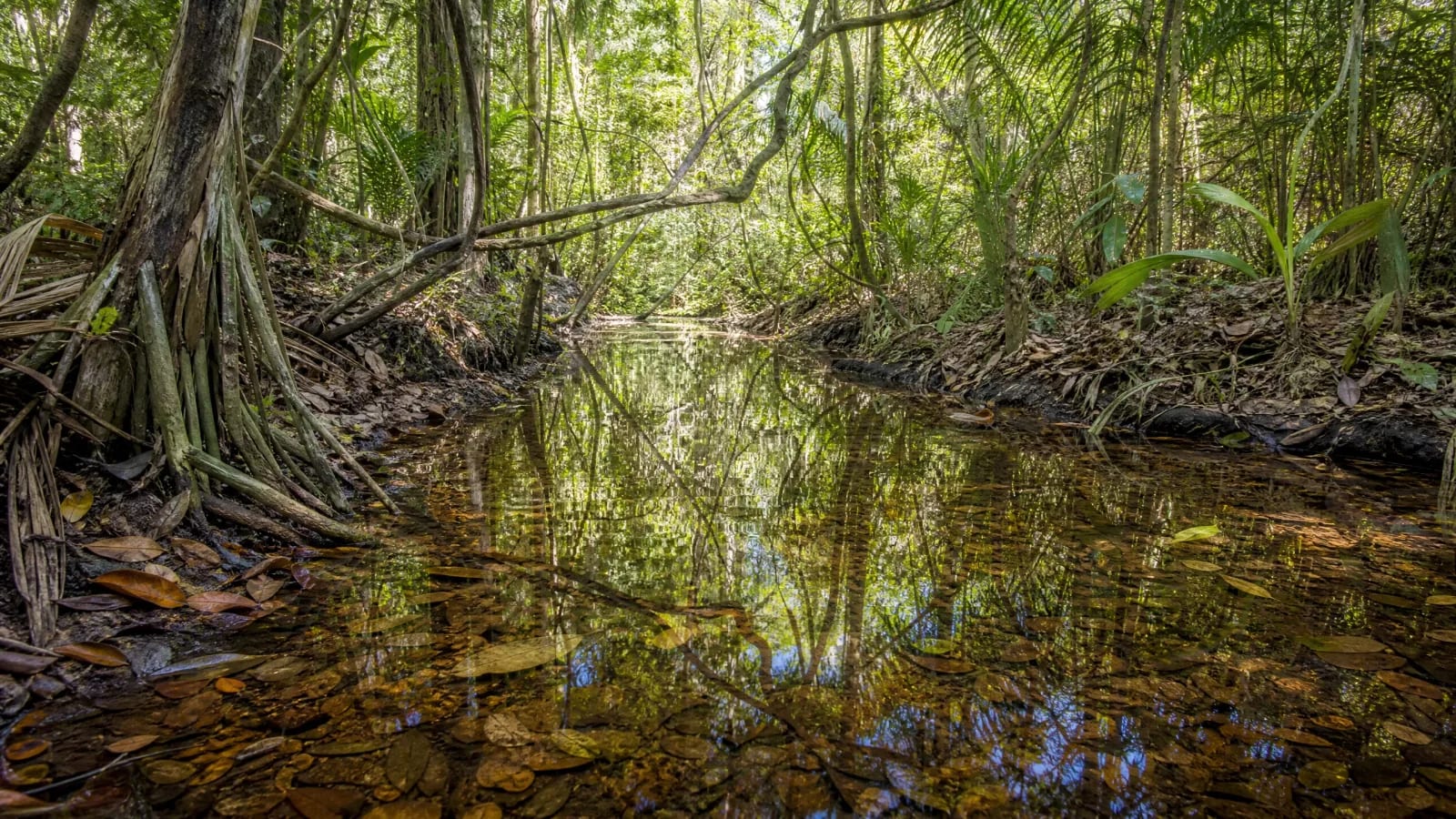
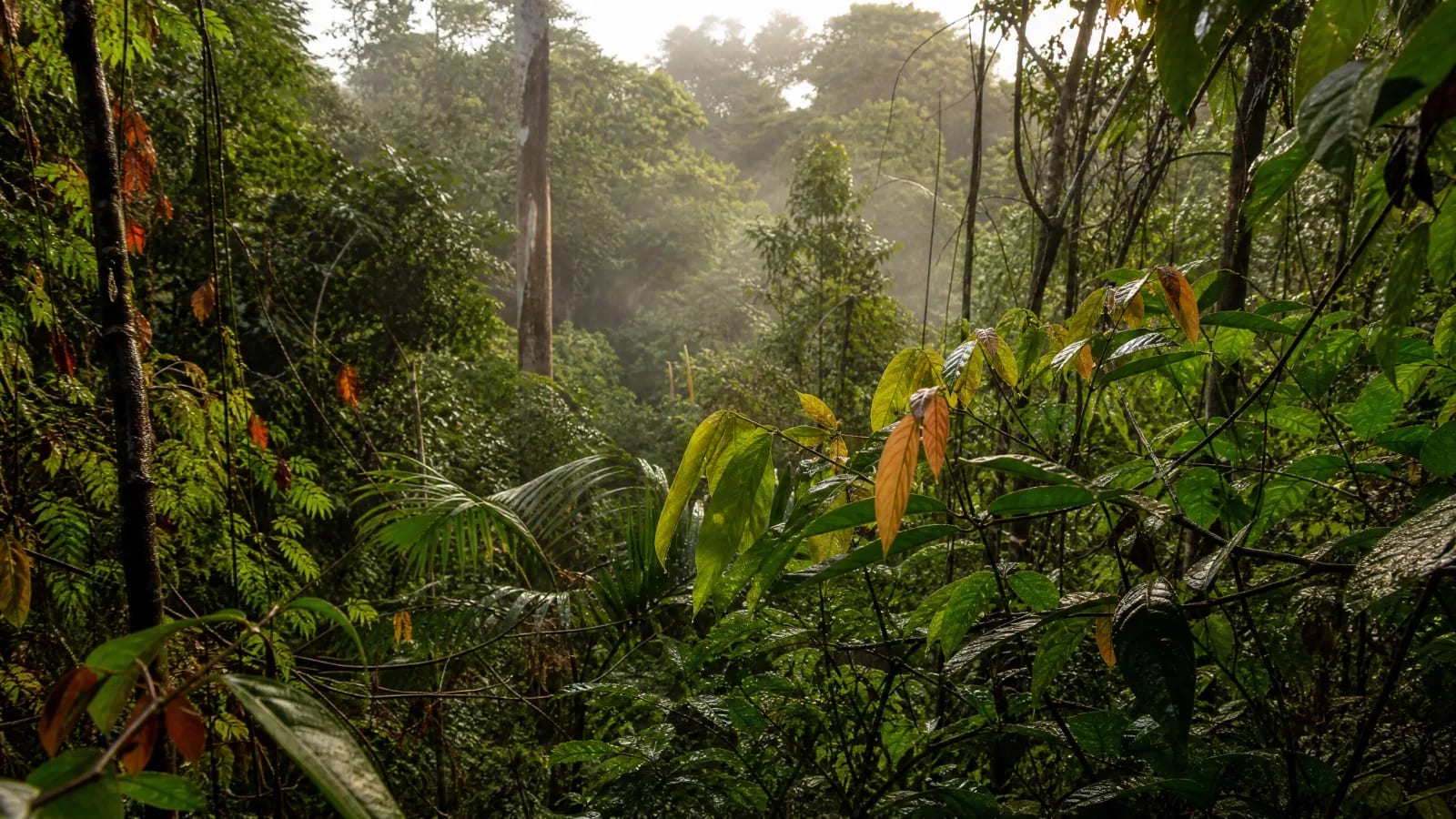
Water does not appear only as a river. It moves through the soil, follows drainage, responds to relief and arrives filtered by the canopy, leaves and leaf litter. Where light opens up, humidity may change as well; therefore, every clearing calls for a question: was it the terrain, the season, the forest’s dynamics or a recent intervention?
III · Work and territory
No formation exists outside human choices.
Timber, fruits, fibres, seeds and other resources bring the forest closer to concrete economies and practices. Sustainable forest management depends on rules, scale, inventory and regeneration time; it is not automatically synonymous with conservation or destruction. The forest remains habitat, soil protection and a storehouse of life while decisions are made about what may be removed and what must remain 1 4.
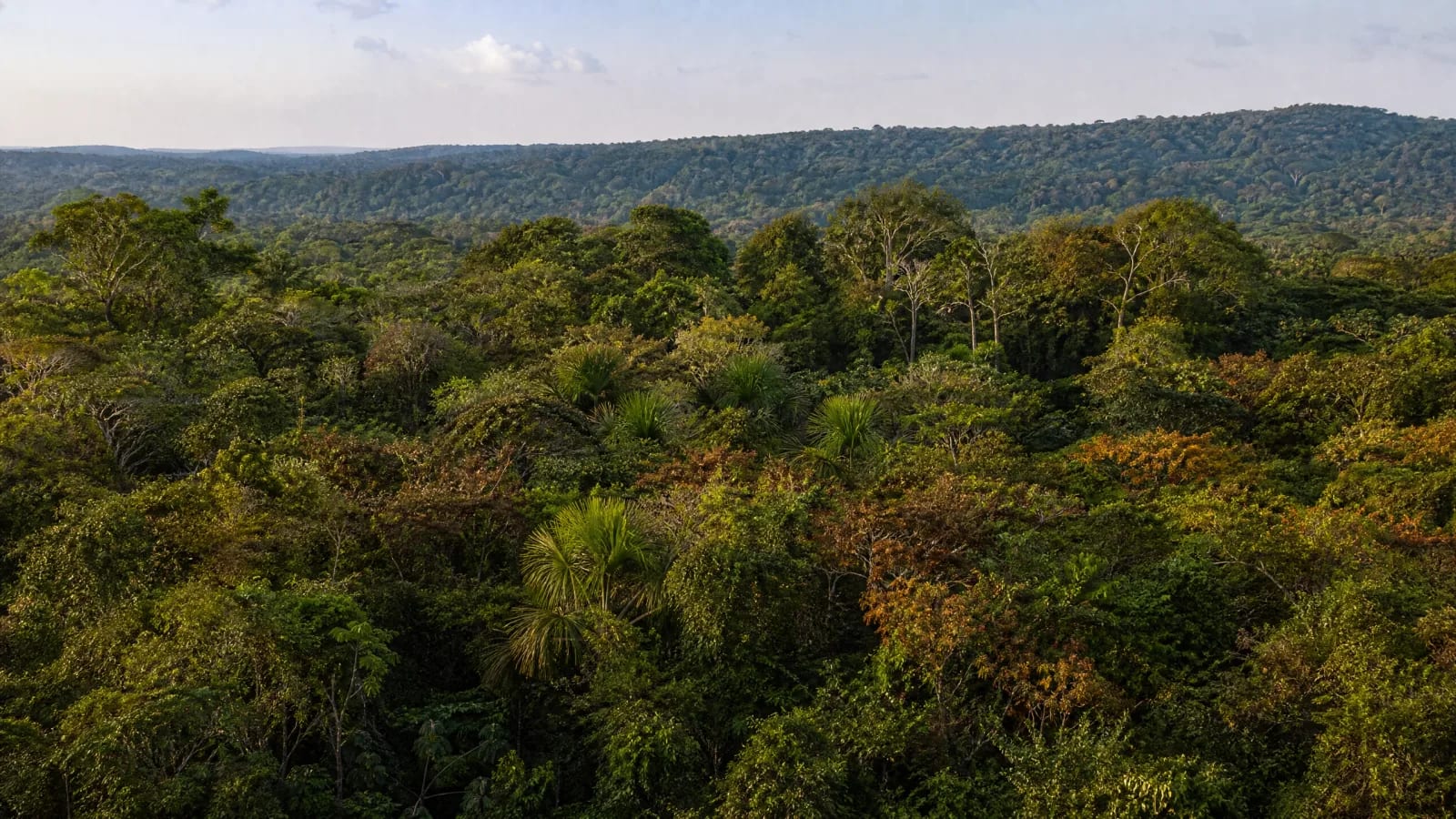
An image may choose the canopy or the ground, continuous green or the trace of a road. Here, the camera alternates wide views and details: a palm against the sky, bamboos in the understory, taut vines, water among roots. The framing does not turn every opening into damage; it records the difference between natural composition, management and conversion.
IV · The connection we forget
The territory remains present after the product leaves the scene.
In an area of Open Ombrophilous Forest in Rondônia, the species inventory was produced in a settlement context and indicated potential uses for species, while opening areas and roads can fragment the cover. The chain is material: removing or dividing the woodland alters light, humidity and regeneration; monitoring and managing can reduce part of the impact, but does not eliminate it. The question remains on the ground: who measures the return time before a productive landscape loses its continuity? 3 4
Openness is not synonymous with degradation. IBGE and the Brazilian Forest Service recognise the Open Ombrophilous Forest as a distinct formation, linked to plant associations and transition zones. The critique begins when its appearance is confused with unlimited availability: a less-closed forest still sustains complex relationships, water, soil and diversity 1 2.
V · Precision
Critique is valid only when it respects evidence.
No local inventory represents the entire formation. Species counts depend on area, method and season; signs of pressure depend on scale and history. Responsible reading keeps these margins visible, without turning a photograph into a national diagnosis.
Looking at this formation also means learning not to simplify it.
The open forest teaches a luminous precaution: appearance is not enough. Between shadow and clearing lies a complete ecology — and understanding why light reaches that place is the first gesture of care.
📚 References
- 1.Serviço Florestal Brasileiro — Conhecendo sobre as florestas
- 2.IBGE — Conhecendo os tipos de vegetação do Brasil
- 3.Inventário em Floresta Ombrófila Aberta de Rondônia
- 4.Embrapa — Aspectos das florestas brasileiras
- 5.MMA — Dados do Deter e alertas de desmatamento
- 6.Embrapa — Potencial agroecológico de uma Floresta Ombrófila Aberta em Rondônia