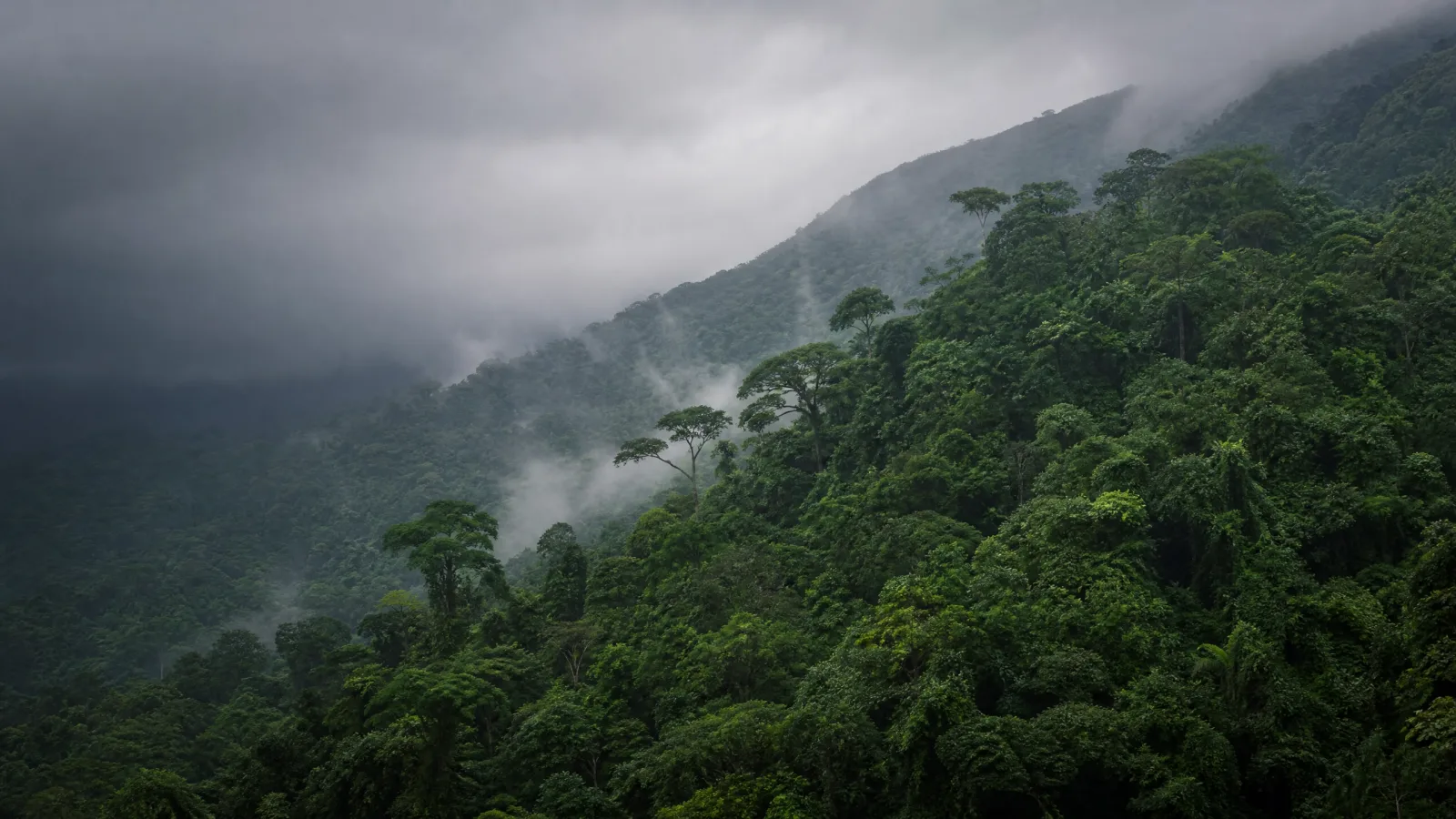
Brazilian vegetation · plant formation
Dense Ombrophilous Forest (Floresta Ombrófila Densa)
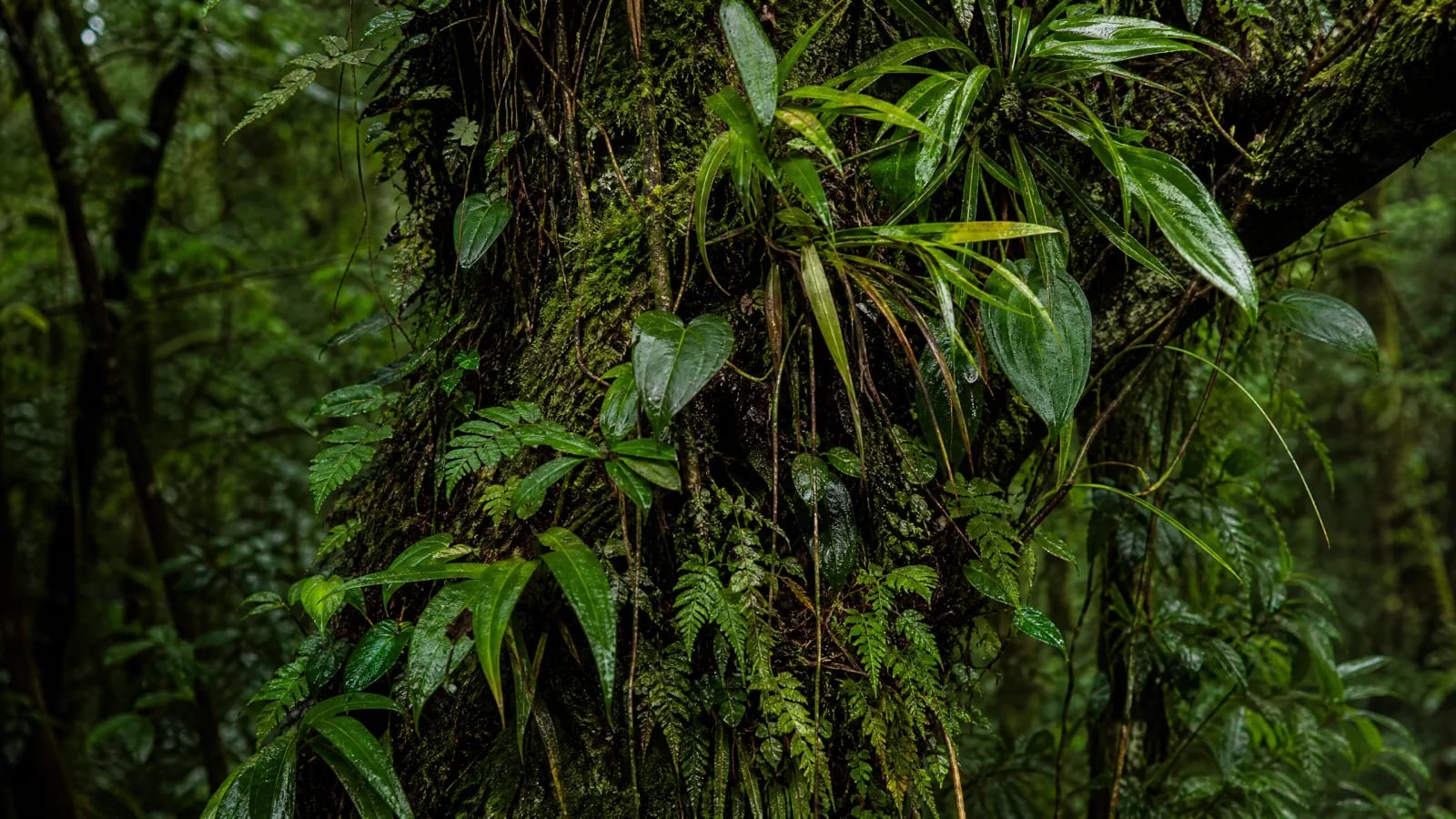
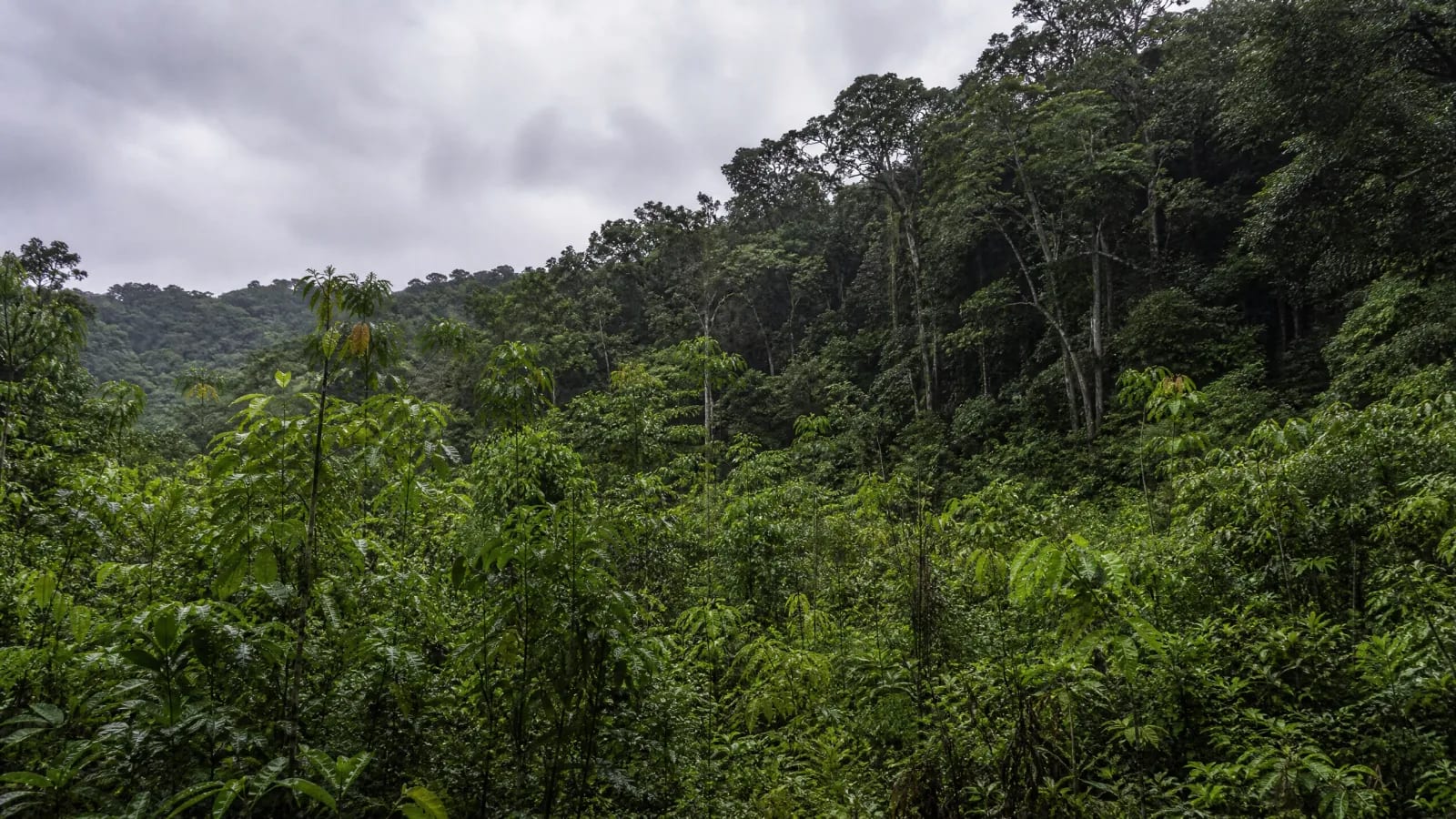
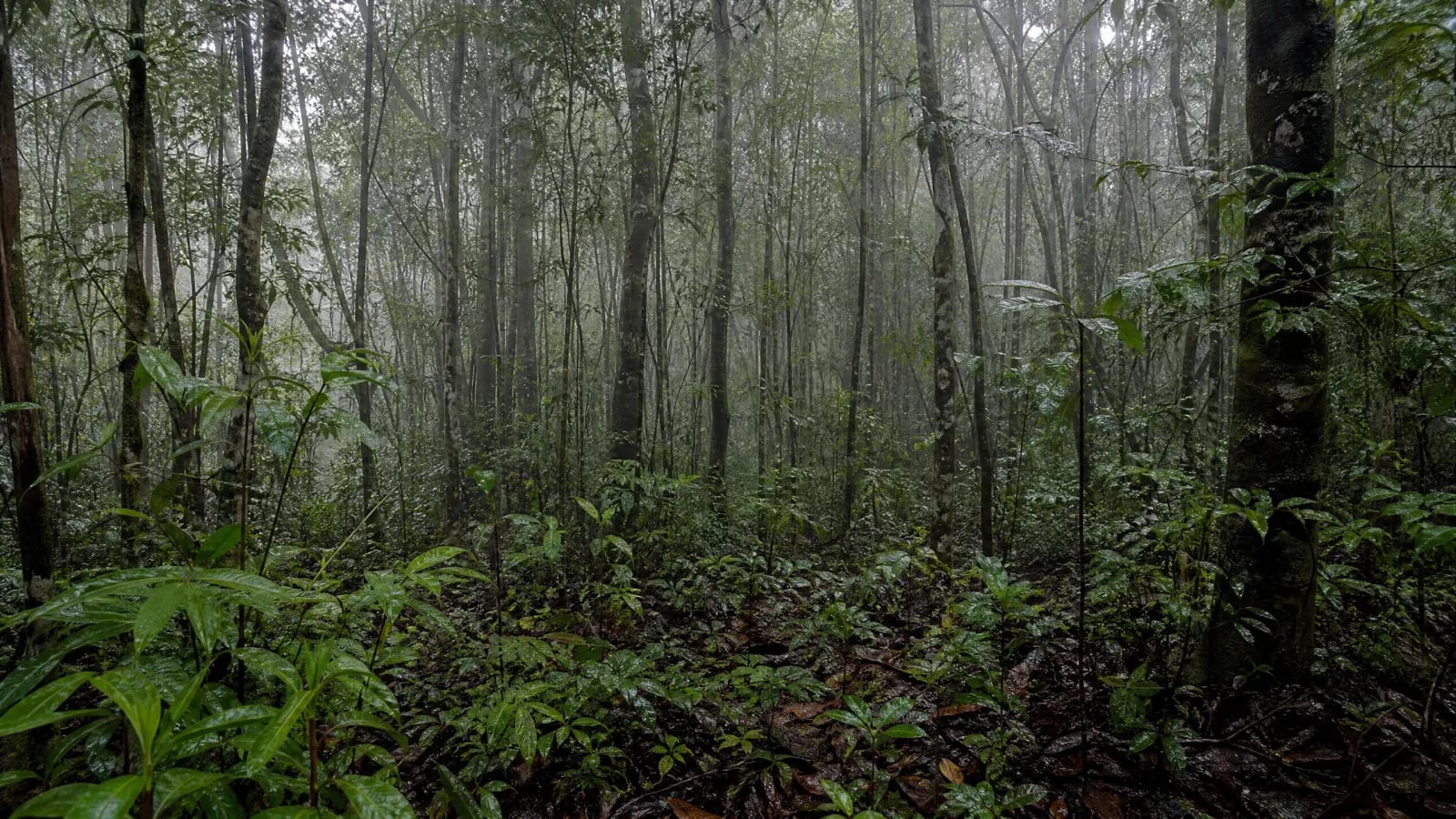
When rain does not interrupt the forest, it organizes the forest. The gaze enters through the dense green, but the landscape is not a wall: it is a thickness made of crowns, trunks, lianas, epiphytes, shade and water. 1
I · Recognition
Before becoming a backdrop, it is already life.
In Caracaraí, Roraima, nine one-hectare plots recorded 4,724 individuals, distributed across 42 families, 111 genera and 165 tree species. It is an inventory figure, not a summary of life: relationships, fungi, seeds and animals remain outside the spreadsheet. 3
II · Water and rhythm
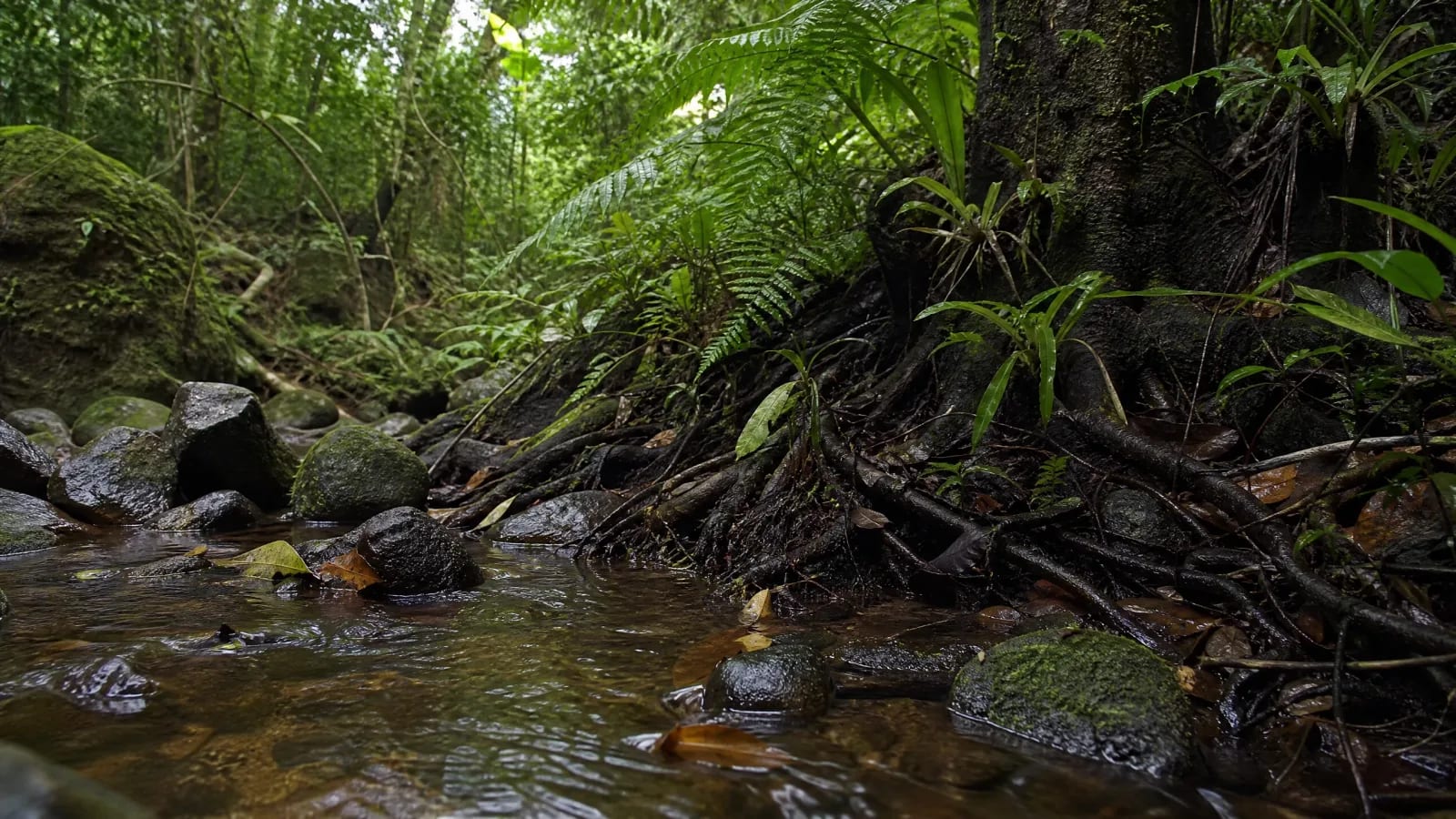
Rain arrives in layers. The canopy intercepts part of it; leaves and branches slow its fall; trunks conduct trickles; leaf litter cushions the impact; the soil receives what remains. Between one crown and another, water draws the forest’s sense of time.
III · Work and territory
No formation exists outside human choices.
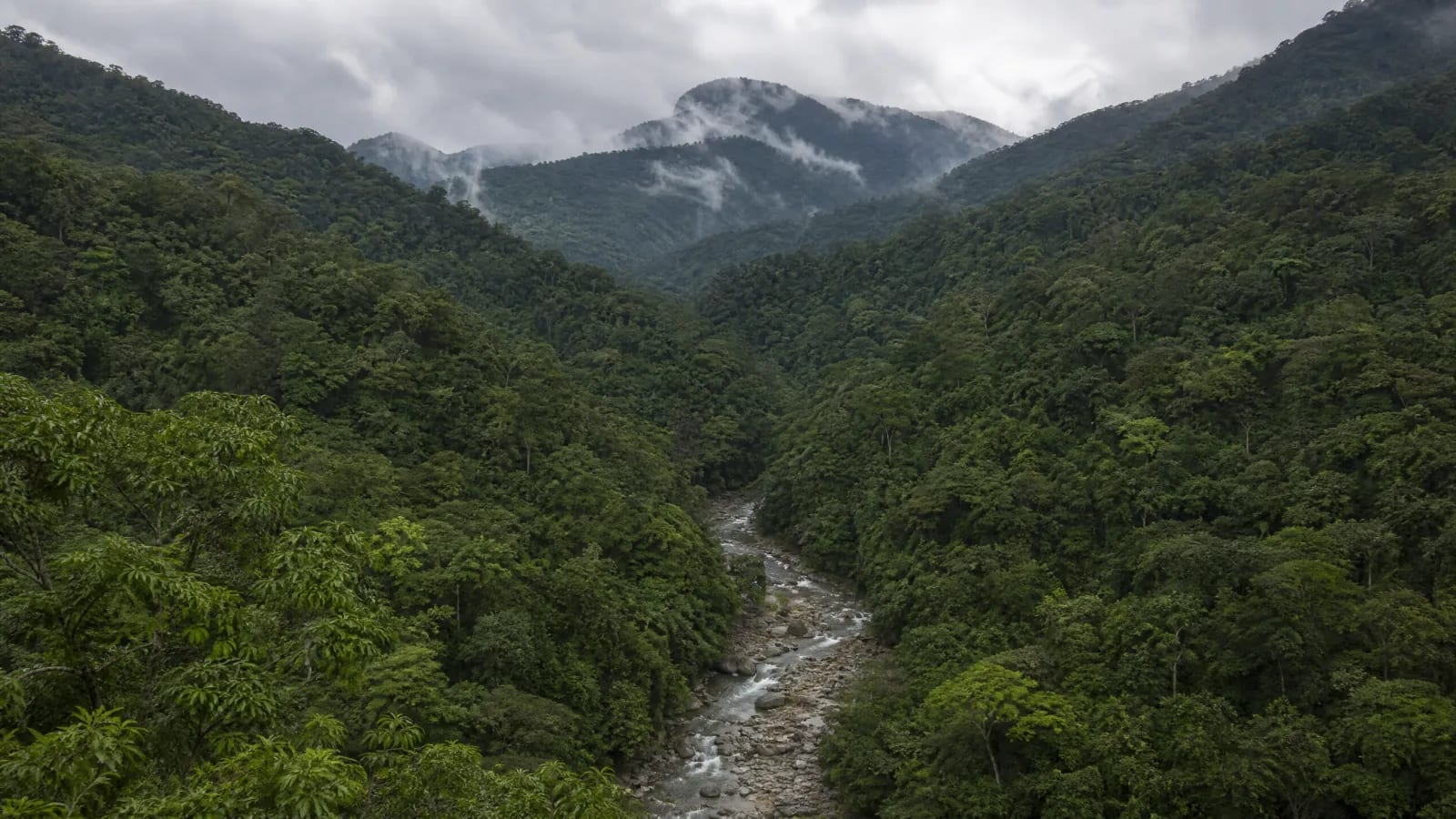
There is scientific work in measuring diameter, height and regeneration, and there is everyday work in gathering, moving through, caring for and deciding on uses. Research, extractivism and management are not synonyms for conversion: the difference lies in scale, rules, regeneration and connectivity.
A clearing may be framed as an opening, a path or a future. Choosing means asking what remains connected, which species can return and who participates in the decision. In the Atlantic Forest (Mata Atlântica), the law recognizes the Dense Ombrophilous Forest (Floresta Ombrófila Densa) and differentiates protection according to regeneration stage. 4
IV · The connection that is forgotten
The territory remains present after the product leaves the scene.
In Roraima, a study measured the commercial volume of species in Dense Ombrophilous Forest (Floresta Ombrófila Densa) to support management equations; in the Atlantic Forest (Mata Atlântica), clearing primary or advanced-secondary vegetation may be authorized only under narrowly restricted public-interest circumstances. 4 5 The material chain is clear — tree, measurement, timber, authorization —, but the question remains: how can we use it without turning a relational forest into an isolated stock?
Read the edge before the center. A road, pasture or clearing alters light, wind, humidity and movement beyond the visible line. An inventory can say how many trees exist; the landscape also asks us to observe the continuity around the plot.
V · Precision
Criticism matters only when it respects the evidence.
The figures from Roraima describe nine hectares and do not represent the entire formation. The Dense Ombrophilous Forest (Floresta Ombrófila Densa) changes with relief, soil, altitude, land-use history and region; every conclusion must carry the place from which it originates.
To look at this formation is also to learn not to simplify it.
The dense forest does not ask for a gaze that simplifies it. It asks for time to recognize the silent work of every layer — and the cost of interrupting relationships that may take decades to recompose.