Brazilian Vegetation · plant formation
Mixed Ombrophilous Forest (Floresta Ombrófila Mista)
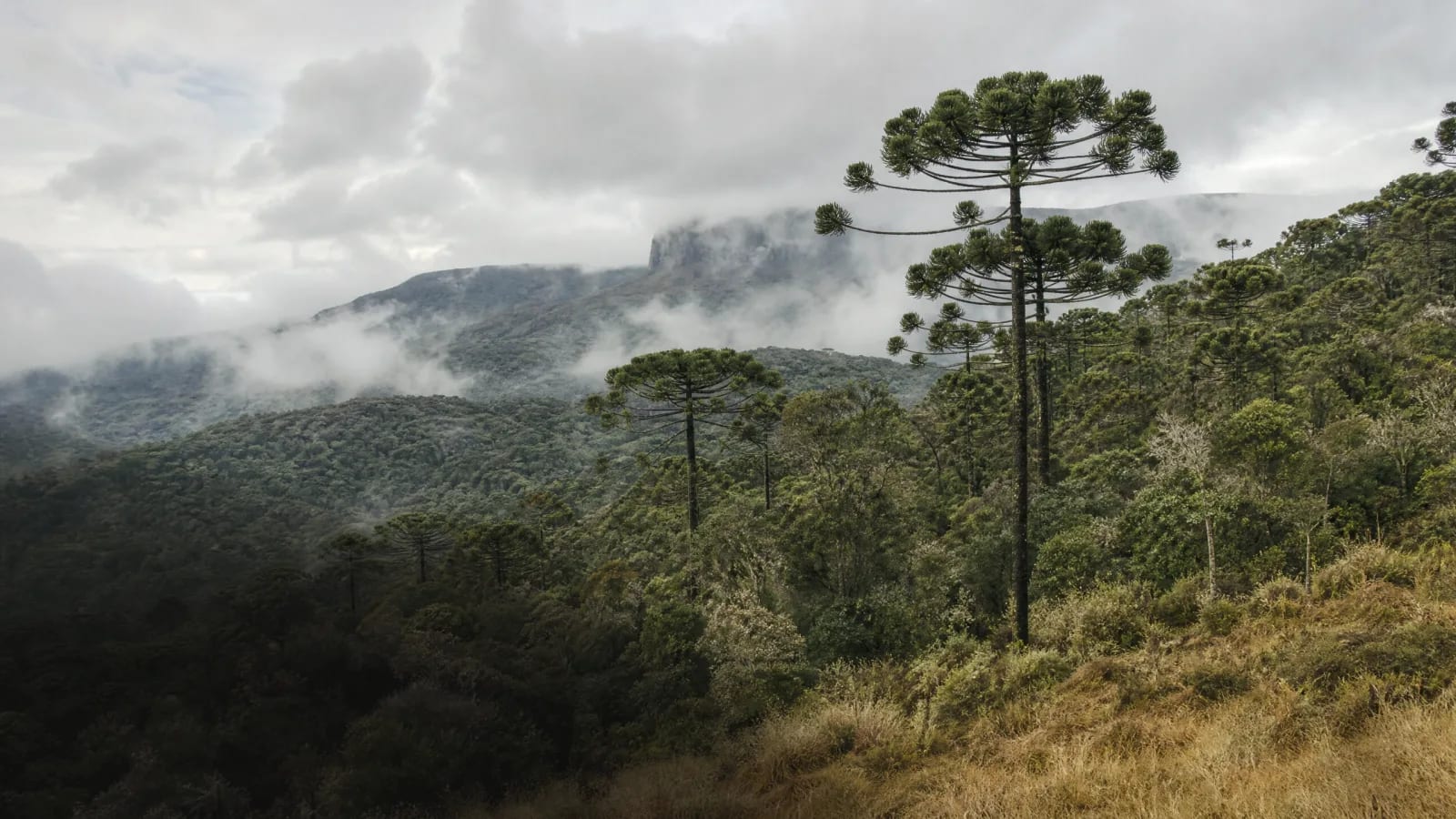
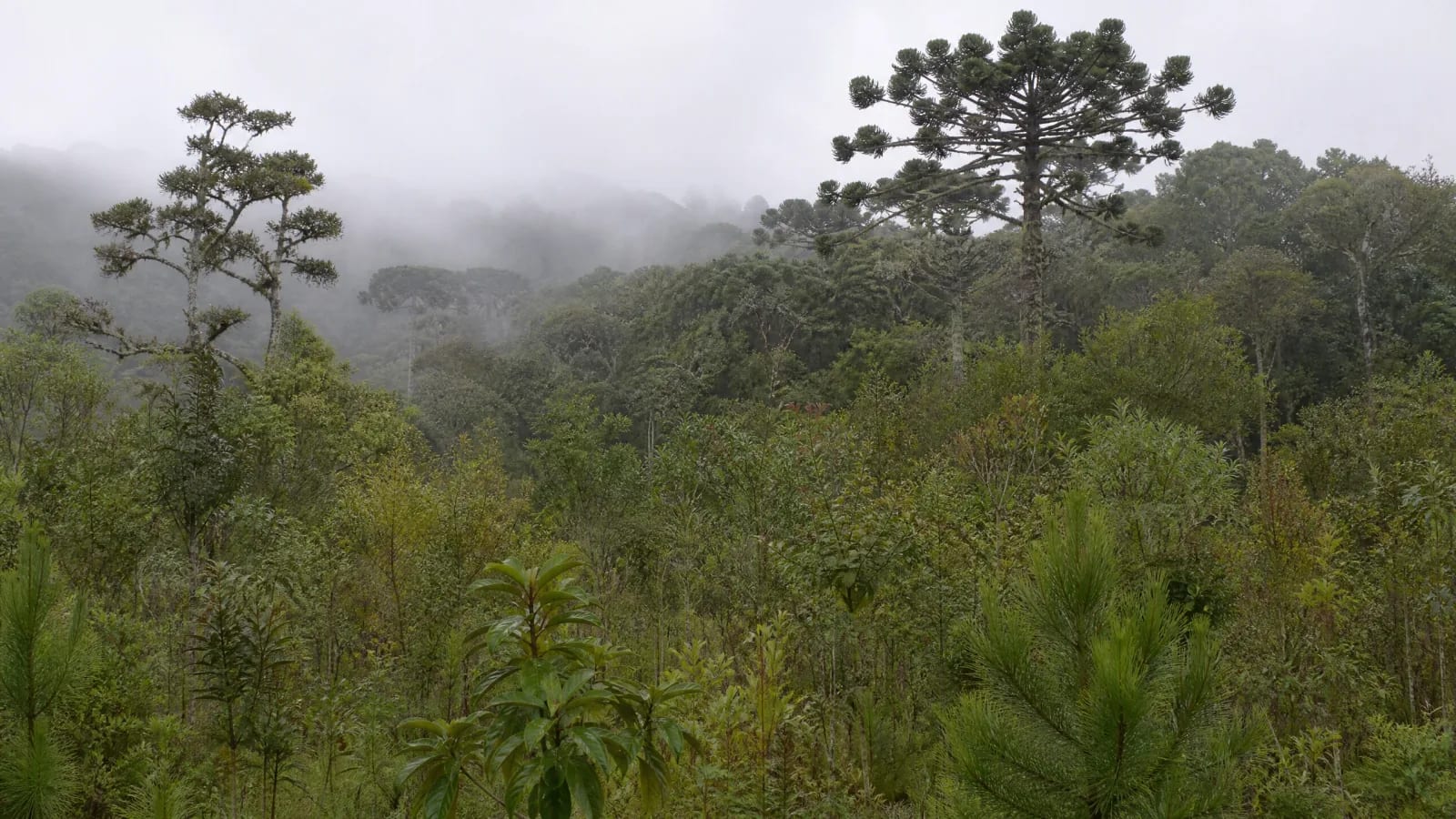
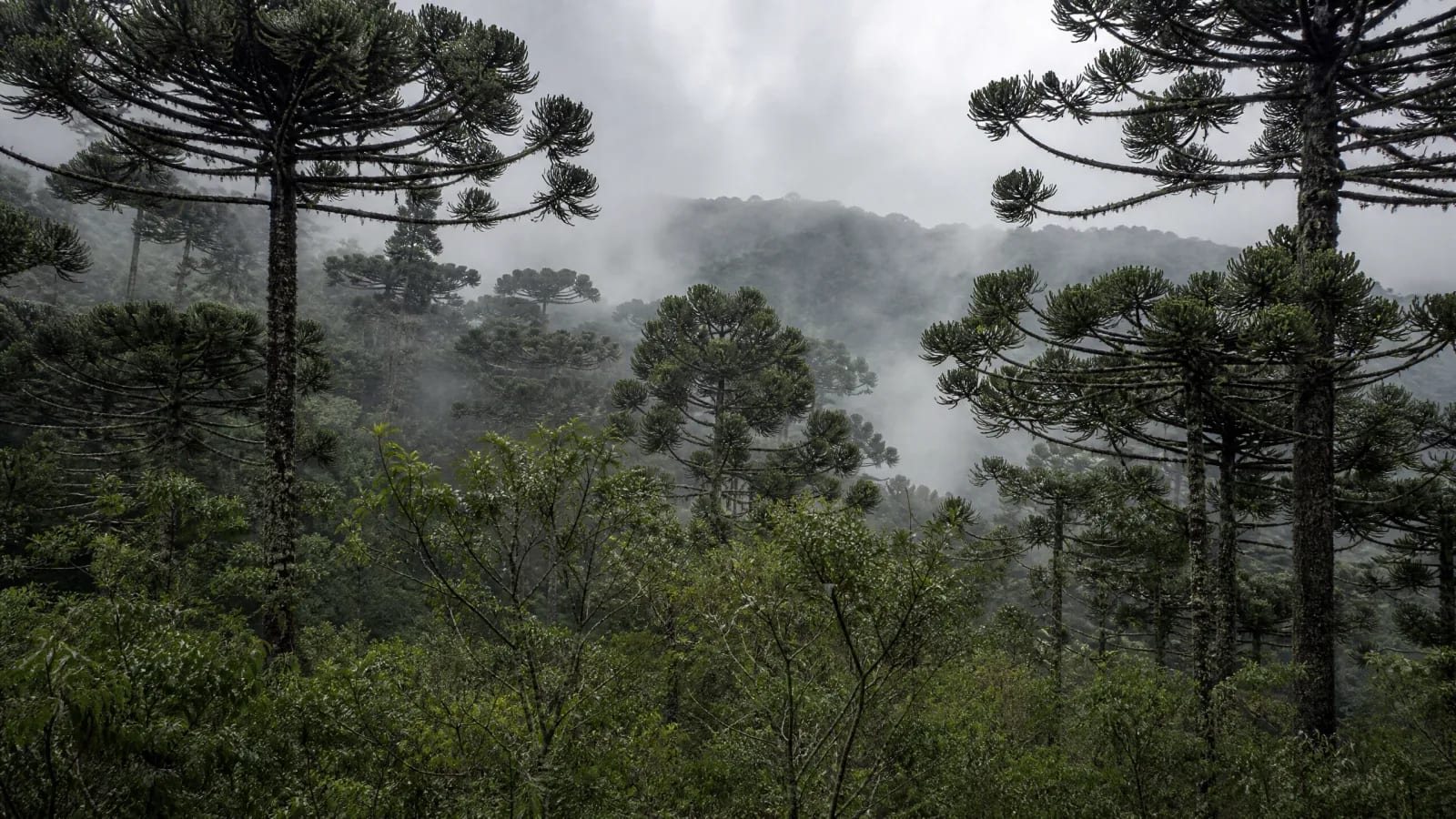
An araucaria rises above the others and redraws the sky. Its cup-shaped crown looks solitary from afar; up close, it is merely the first layer of a forest made of conifers, broadleaf trees, mosses, lichens, and water descending slowly across the plateau.
The shape of the landscape matters.
Arrive through the cold: a fine frost over the mountain range, wind passing through the branches, pale light settling on tall trunks. This is the Araucaria Forest (Mata de Araucária), concentrated in the Southern Plateau and also present in high-mountain enclaves. Altitude matters, but never alone: terrain, soil, temperature, and rainfall compose the address.
I · Recognition
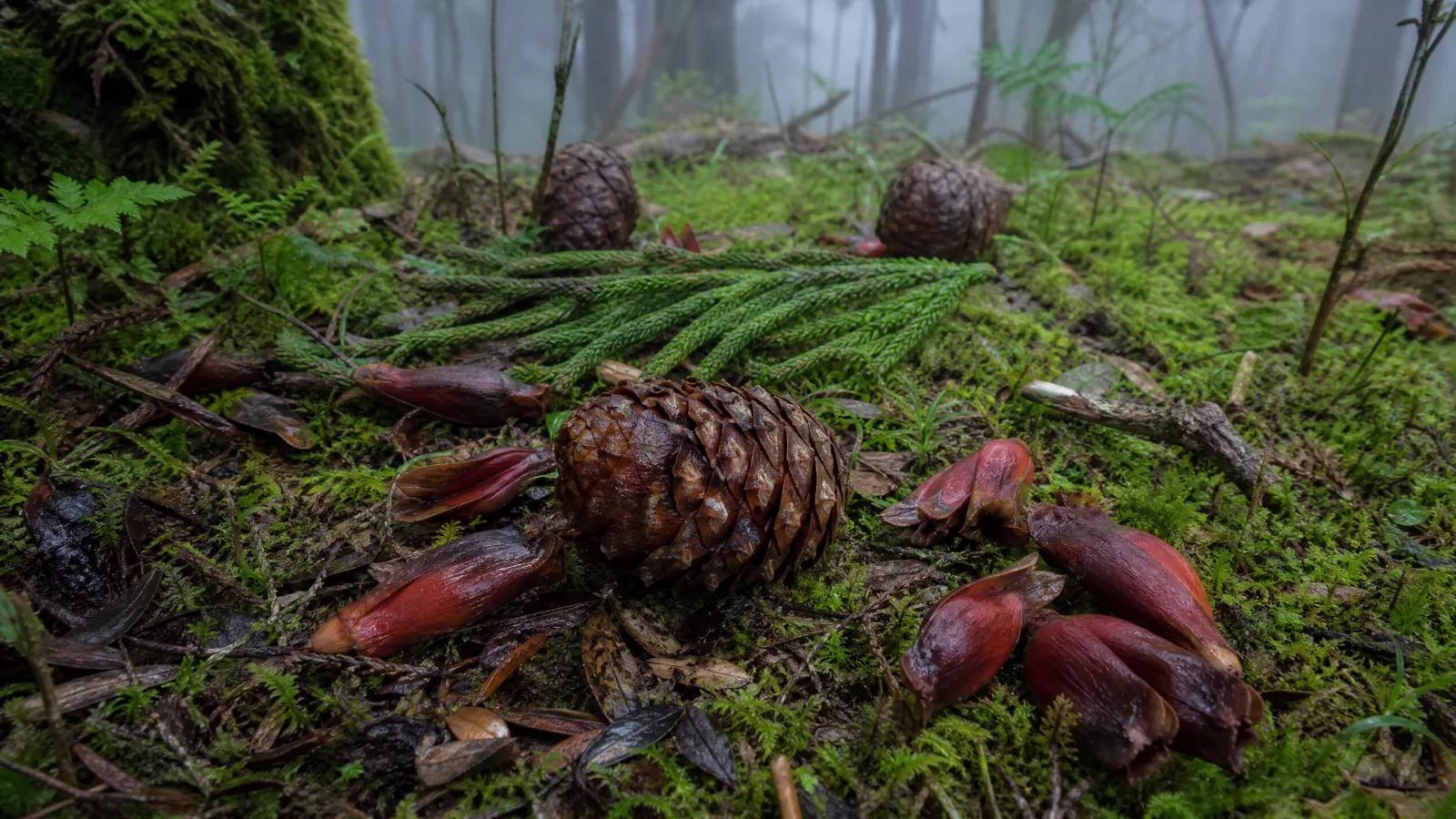
Before becoming a backdrop, it is already life.
II · Water and rhythm
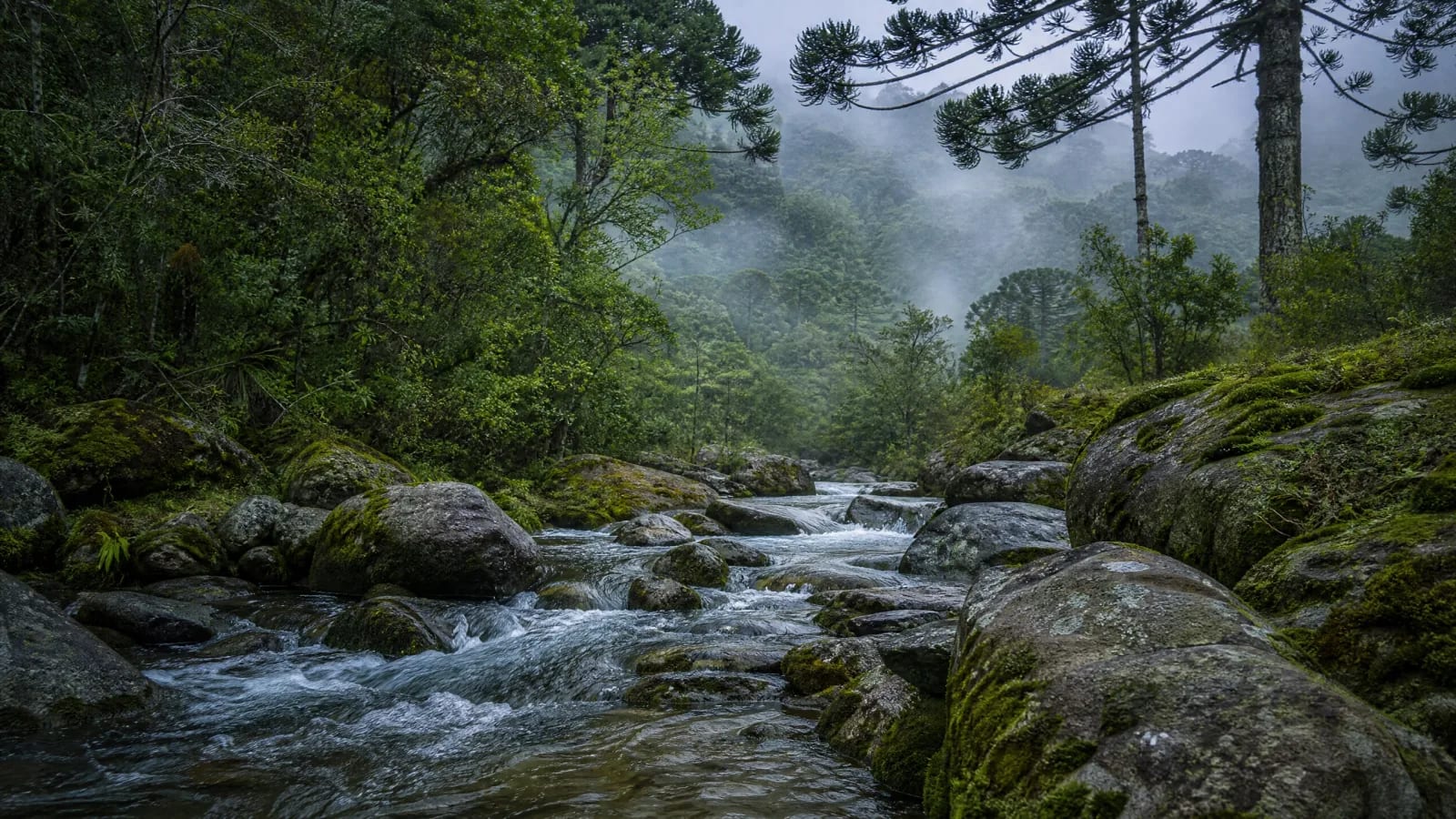
Evenly distributed rain does not fall onto a smooth surface. The canopy intercepts it, branches slow it, roots infiltrate it, leaf litter stores it, and soil releases it. At headwaters, this delay becomes continuity: small streams that seem unassuming but connect slope, forest, and valley.
III · Labour and territory
No formation exists outside human choices.
The pinhão (araucaria seed) brings the forest closer to the table and to income. It is food, seasonal commerce, and a possibility of staying; at the same time, it depends on mature trees, production cycles, and remnants capable of continuing to produce. Gathering is not a detail outside ecology: it is a practice within it. 3
Between April and July, the sale of pinhão is regulated in Rio Grande do Sul; the rule seeks to prevent the early removal of immature cones and organizes the harvest season. The material gesture is simple—wait, gather, transport—but its consequence depends on respecting maturation, regeneration, and the territory’s legislation. 4
IV · The connection we forget
The territory remains present after the product leaves the scene.
On a property with remnant araucarias, pinhão can finance a family’s winter; if early gathering removes immature cones, however, the chain shortens the tree’s own future. Case, chain, question: how can value circulate without turning today’s seed into the absence of new araucarias tomorrow?
V · Precision
Criticism matters only when it respects the evidence.
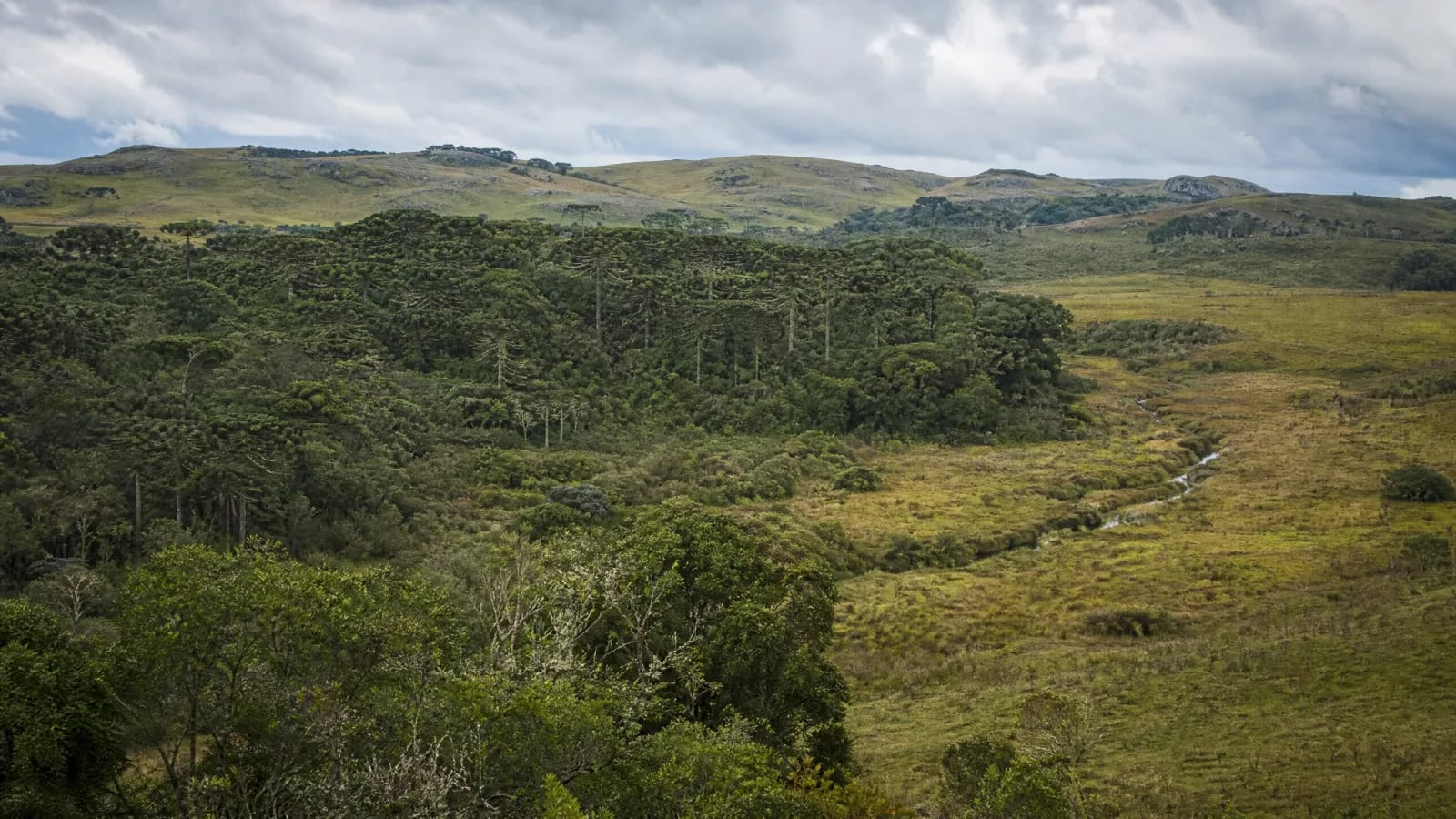
The remnants are described as greatly reduced, but percentages vary according to method and scope. For this reason, this page does not turn a figure into a single verdict. A photograph of an araucaria does not prove continuity either: one must examine the understory, edges, regeneration, and what lies between one patch and the next. 1 2
Looking at this formation also means learning not to simplify it.
The Araucaria Forest makes time appear on the horizon. Its persistence depends on not treating the emergent tree as a solitary symbol, but as part of an entire forest—with water, labour, silence, and future sharing the same ground.
📚 References
- 1.IBGE — Conhecendo os tipos de vegetação do Brasil
- 2.Serviço Florestal Brasileiro — Conhecendo sobre as florestas
- 3.SciELO — Distribuição e estrutura da Floresta Ombrófila Mista
- 4.Prefeitura de Sertão (RS) — Colheita e comercialização do pinhão seguem regulamentação ambiental
- 5.Embrapa — Fatores climáticos limitantes para a distribuição da araucária