Brazilian vegetation · plant formation
Vegetational refuges
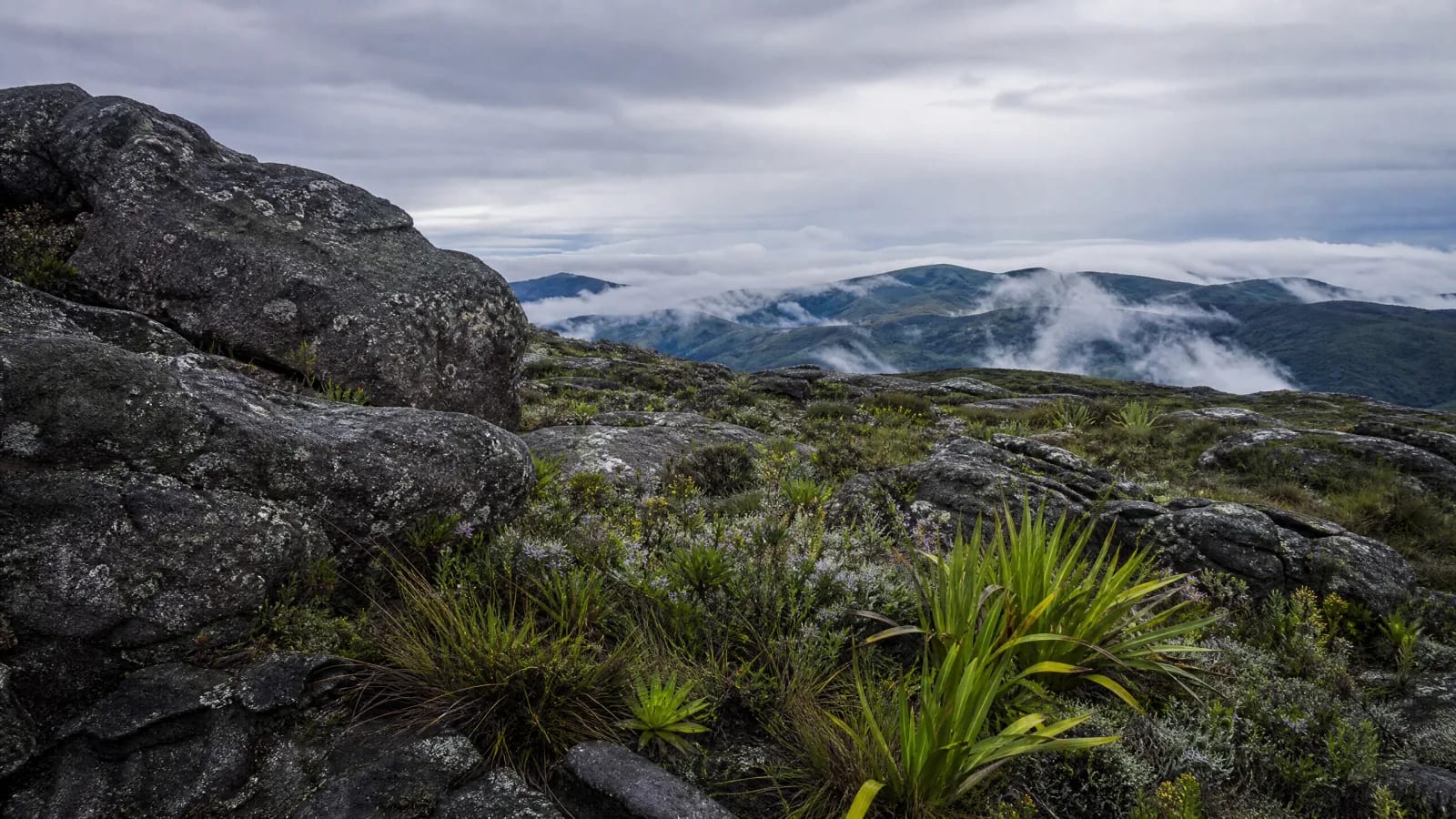
High in the mountains, the landscape seems suspended between two eras. A root searches for a fissure, lichen traces a margin, and a cloud passes close to the stone. These are islands of flora: small areas floristically distinct from the dominant vegetation 1. Exception is concentration.
The shape of the landscape matters.
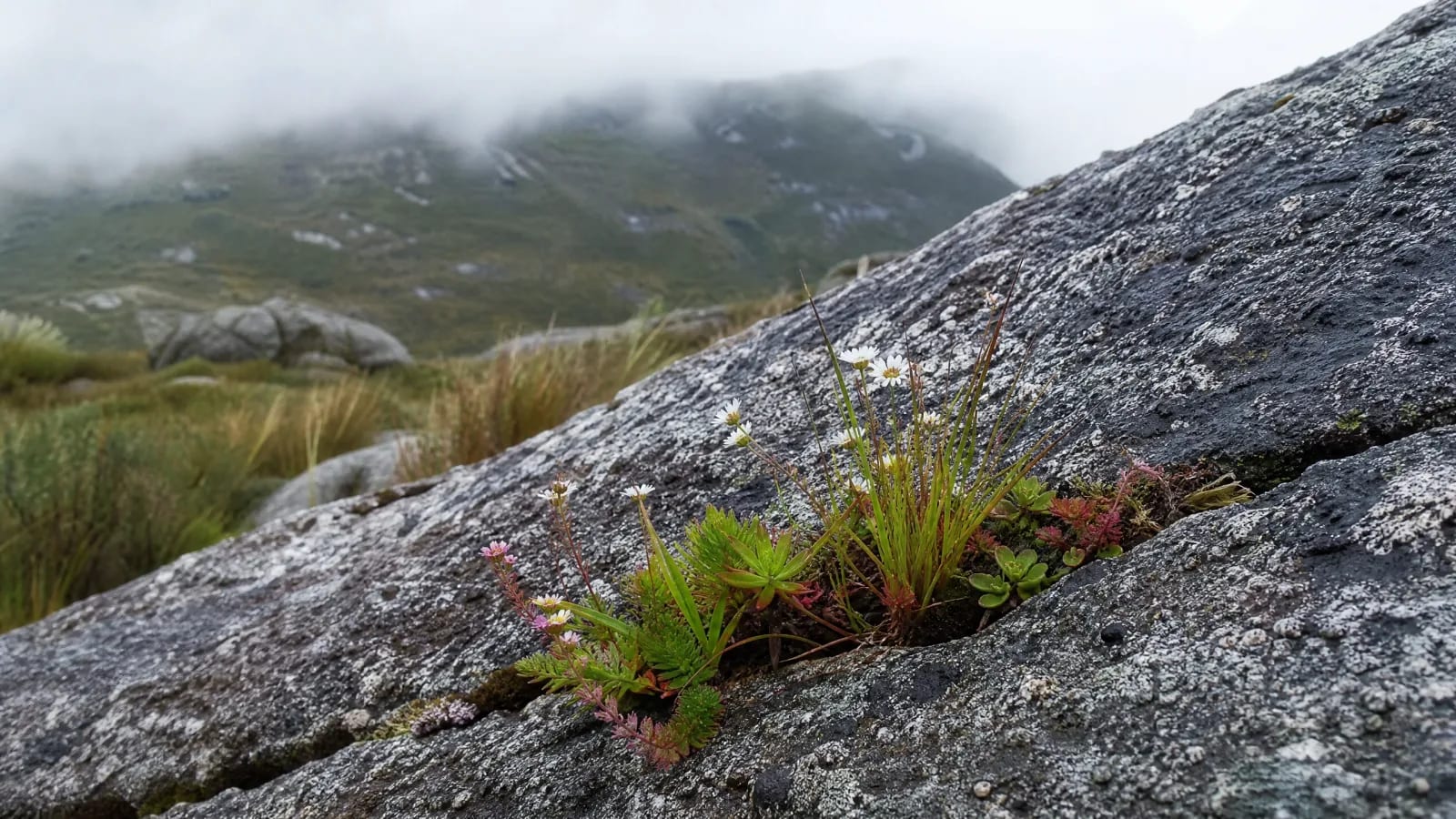
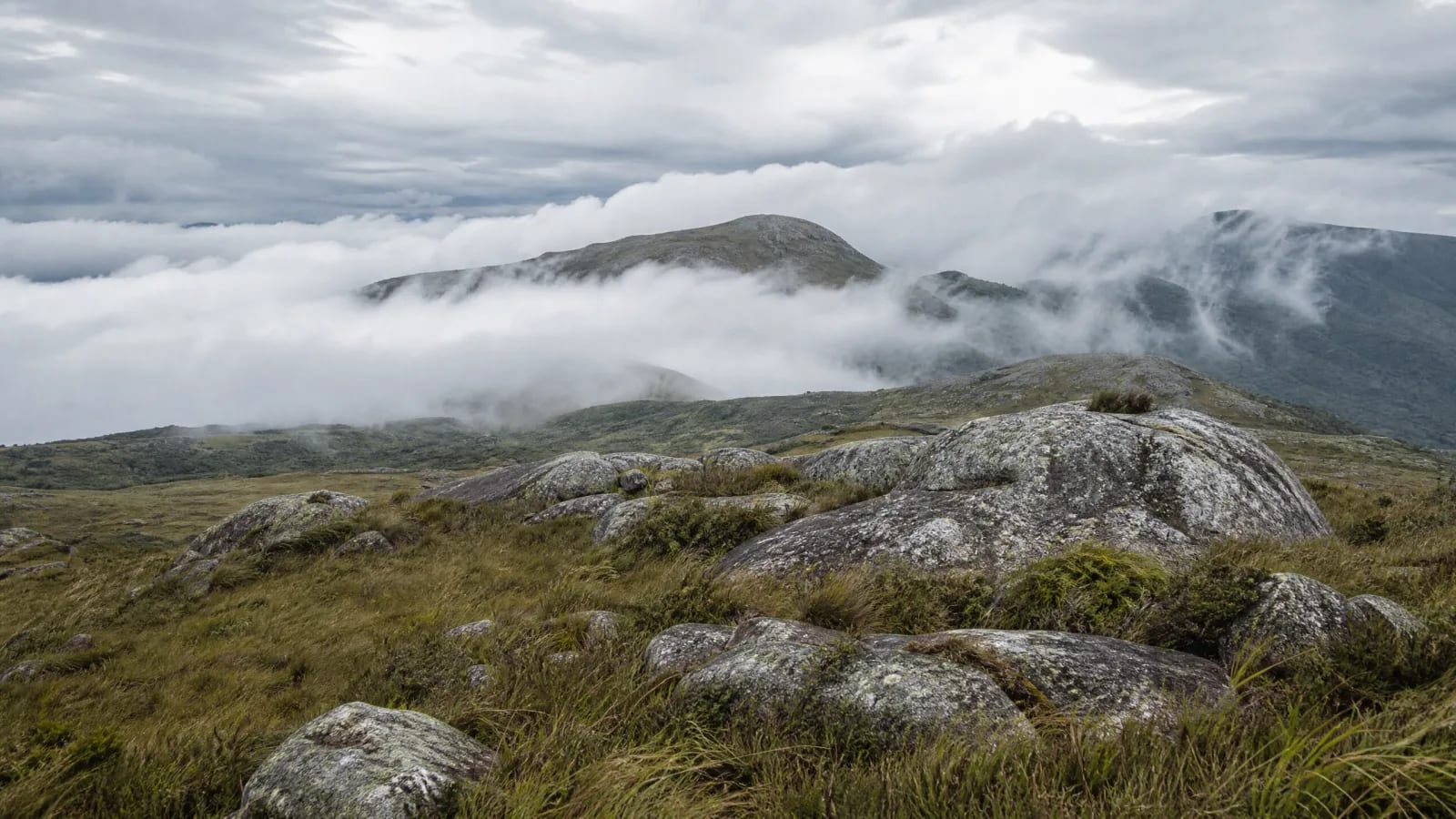
The camera arrives slowly: first the plateau, the hills, the quartzite or granite; then, an everlasting flower, bromeliad, or grass clinging to the gravel. The refuge has no single form: it may be a rocky grassland (campo rupestre), high-altitude grassland (campo de altitude), shrubland, or disjunct humid forest. It emerges from the meeting of altitude, relief, rock, climate history, and water 1 2.
I · Recognize
Before becoming a backdrop, it is already life.
Within a few steps, wind, soil, and temperature change. The flora responds: tough leaves, hidden roots, flowers that wait for the season. In rocky complexes, soils are often shallow or sandy, poor in nutrients and rich in aluminum 2. Scarcity produces forms, but not a simple landscape.
II · Water and rhythm
Water may be absent from the surroundings and reappear on the slope; it may run quickly over the stone or remain in a dark depression. In Buíque, water deficit contributes to local distinctiveness; on slopes facing moist winds, altitude may favor another combination. Each refuge negotiates rainfall, mist, drainage, and retention.
III · Work and territory
No formation exists outside human choices.
Along edges and access routes, cultivation, livestock raising, visitation, collecting, and mining appear in different contexts. No single word summarizes every place. In ferruginous areas, ore brings extraction close to rocky grasslands (campos rupestres) dependent on exposed rock; the Carajás case is studied by ICMBio as a conservation problem in the face of mining 3.
Conservation begins by recognizing scale. A small patch may preserve combinations that do not recur in the regional matrix. Mapping, protecting springs and slopes, managing fire, reducing roads, and monitoring visitation are concrete choices. Wherever there is use, it matters to ask what cannot be replaced.
IV · The connection we forget
The territory remains present after the product leaves the scene.
In Carajás, rare ferruginous formations coexist with mineral interest and the creation of protected areas. The chain is material: canga contains ore; mining removes or alters the substrate; substrate loss can affect specialized vegetation. ICMBio’s management plan and Cenários Project make this tension visible 3 4. How do we decide when compensation, limits, or non-intervention best preserves life concentrated in so little space?
Olhe para a escala do mapa e para a escala da raiz. O que parece uma mancha isolada pode ser um arquivo de clima, pedra e adaptação. Antes de chamar o lugar de improdutivo, observe a flora; antes de chamá-lo de intocável, conheça os usos e as regras locais. O encanto não deve encobrir a disputa.
V · Precision
Criticism matters only when it respects the evidence.
This portrait does not turn every refuge into rocky grassland (campo rupestre), nor every mining operation into the same case. The IBGE term encompasses distinct situations. Pressures, rights, techniques, and restoration vary by site; caution is part of precision.
Looking at this formation also means learning not to simplify it.
When the light fades, the stone gives back its heat and mist erases distances. The landscape seems silent, but holds a persistent question: how much of the world can fit within a small difference? In vegetational refuges, protecting the exception also means protecting the memory of the conditions that allowed life to arrive here.