Brazilian vegetation · plant formation
Restinga
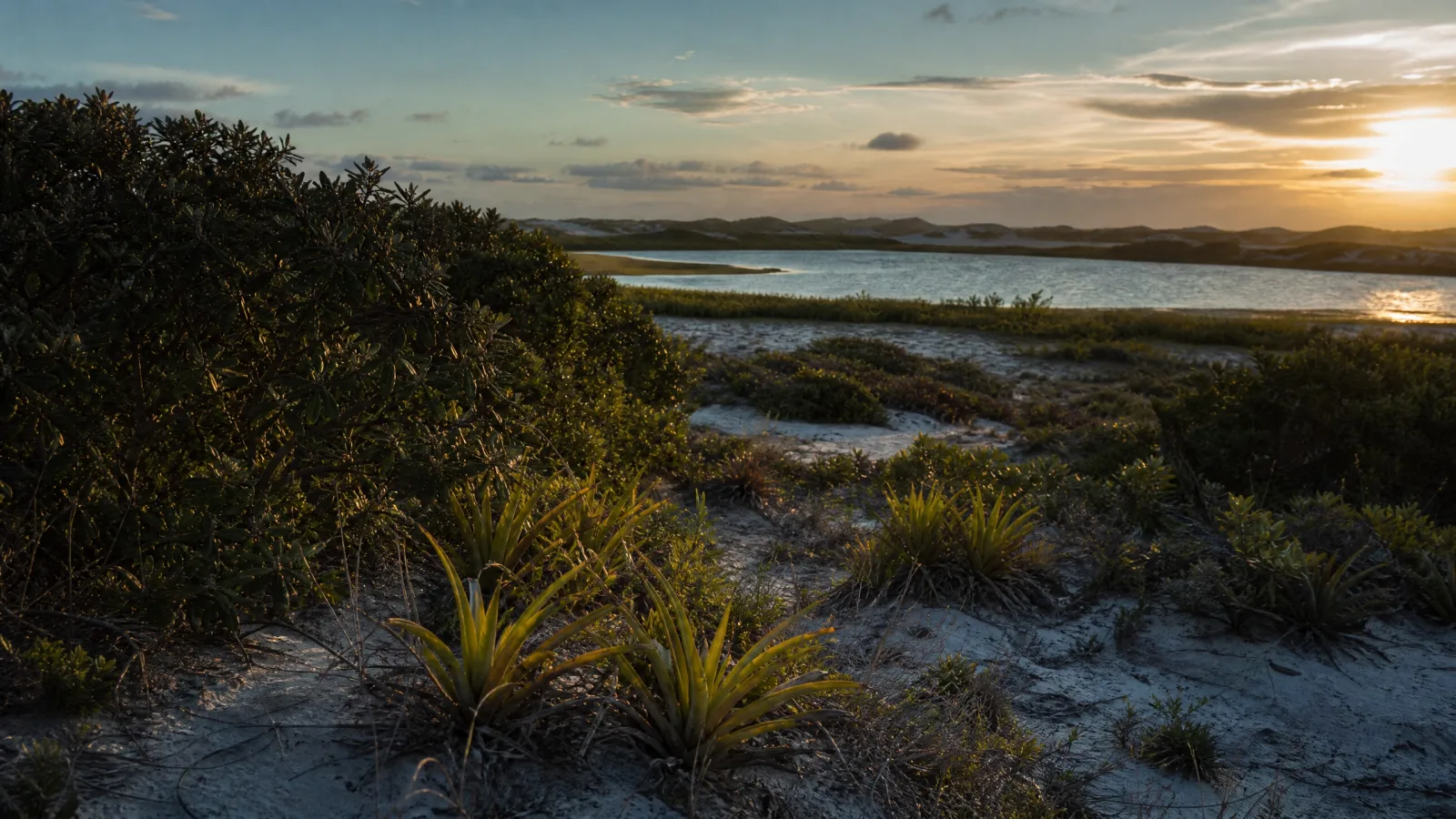
Between sea and forest, sand is not emptiness: it is a moving surface where wind shapes relief and every plant learns to endure. Restinga follows this unstable edge of the Brazilian coast, made of sandy ridges, bars, dunes, depressions, and lagoons. 1 2
The shape of the landscape matters.
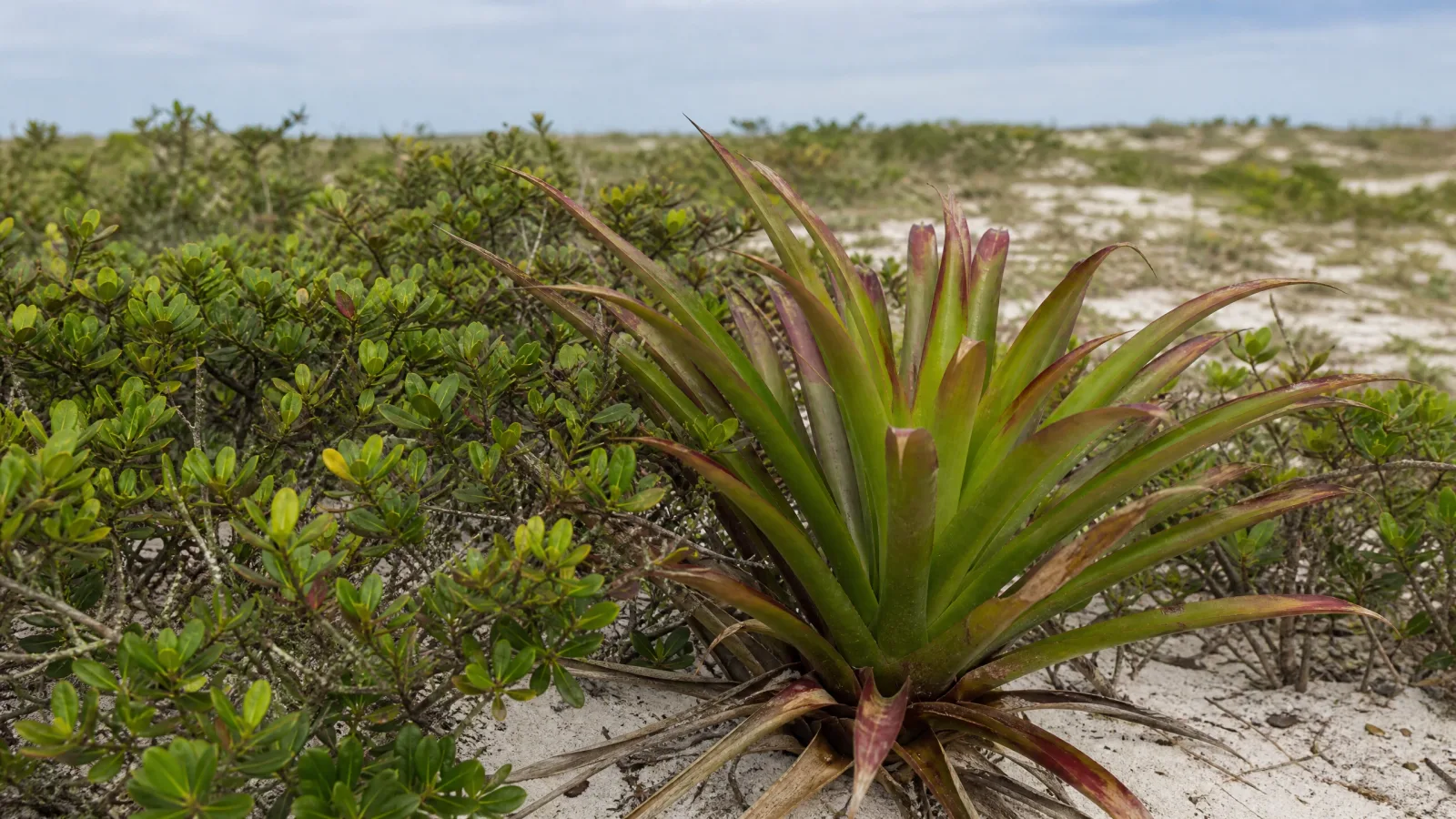
The camera arrives low, almost at leaf height. First, blue broken by grass; then, the twisted shrub, the exposed root, sand passing like smoke. In the background, a lagoon running parallel to the beach. The landscape calls for raking light, the sound of wind, and time for the mosaic to emerge.
I · Recognize
Before becoming a backdrop, it is already life.
Restinga is not a single appearance. Within a few meters, herbaceous communities may give way to shrub thickets and forested stretches; its form changes with the sandy ridge, salinity, groundwater, and flooding regime. Some areas are dry, periodically flooded, or permanently inundated. 2
II · Water and rhythm
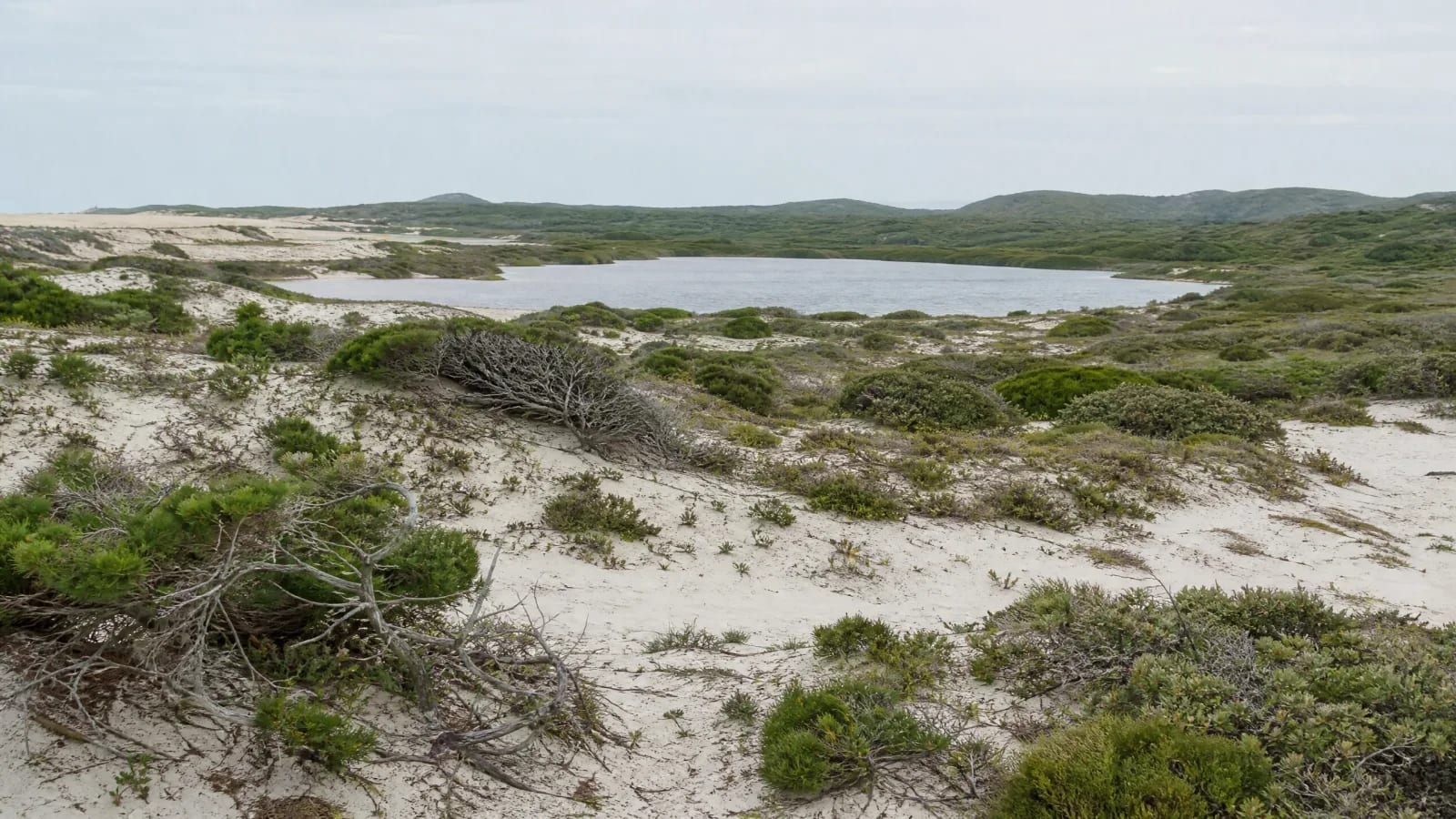
Water may appear in a lagoon’s glimmer or remain hidden beneath porous sand. Groundwater sustains wet depressions, but does not erase the difficulty of living in highly permeable, leached, nutrient-poor soil. Restinga is a continual negotiation between excess, scarcity, and marine influence.
III · Work and territory
No formation exists outside human choices.
In Jurubatiba Restinga National Park, protection meets visitation, research, and a situated subsistence practice: ICMBio reports that 25 families retain authorization to fish artisanally in Carapebus Lagoon. This figure does not represent the entire coast; it shows a local, regulated, specific arrangement. 3 4
A trail can guide without leaving wounds. A project can respect the relief or interrupt drainage. A lagoon can be cared for as living water or absorb the effects of an altered watershed. Choices appear in roads, fences, walkways, permits, enforcement, and the space left for sand to keep moving.
IV · The connection we forget
The territory remains present after the product leaves the scene.
In Jurubatiba, a unit created to conserve dunes, lagoons, and coastal vegetation coexists with authorized artisanal fishing in Carapebus Lagoon. The chain is visible: conservation establishes rules; fishers preserve a livelihood activity; the managing agency monitors use. The question remains open: what conditions make this agreement compatible with the lagoon’s integrity over time? 3 4
Case: Jurubatiba Restinga protects 14,922.39 hectares, 44 kilometers of beaches, and 18 coastal lagoons. Material chain: sand, groundwater, lagoon, fish, work, and rules meet in the same territory. Question: when infrastructure, a visit, or an occupation alters this circulation, who measures the ecological cost before the landscape appears irreversible? 3
V · Precision
Criticism matters only when it respects the evidence.
Restinga’s beauty does not justify a narrative of purity or a denunciation without scale. Urban occupation, unplanned tourism, pollution, illegal sand extraction, and vegetation removal are documented pressures, but they vary by place. Reading the coast requires naming the case, the source, and the limits of the claim. 1 5
To look at this formation is also to learn not to simplify it.
In the end, Restinga does not end at the shoreline. It continues in infiltrating water, in the root that holds the dune, in the lagoon that receives the sky, and in the decision that allows or prevents passage. The coast remains alive when its instability also finds room.