Vegetation of Brazil · plant formation
Savana
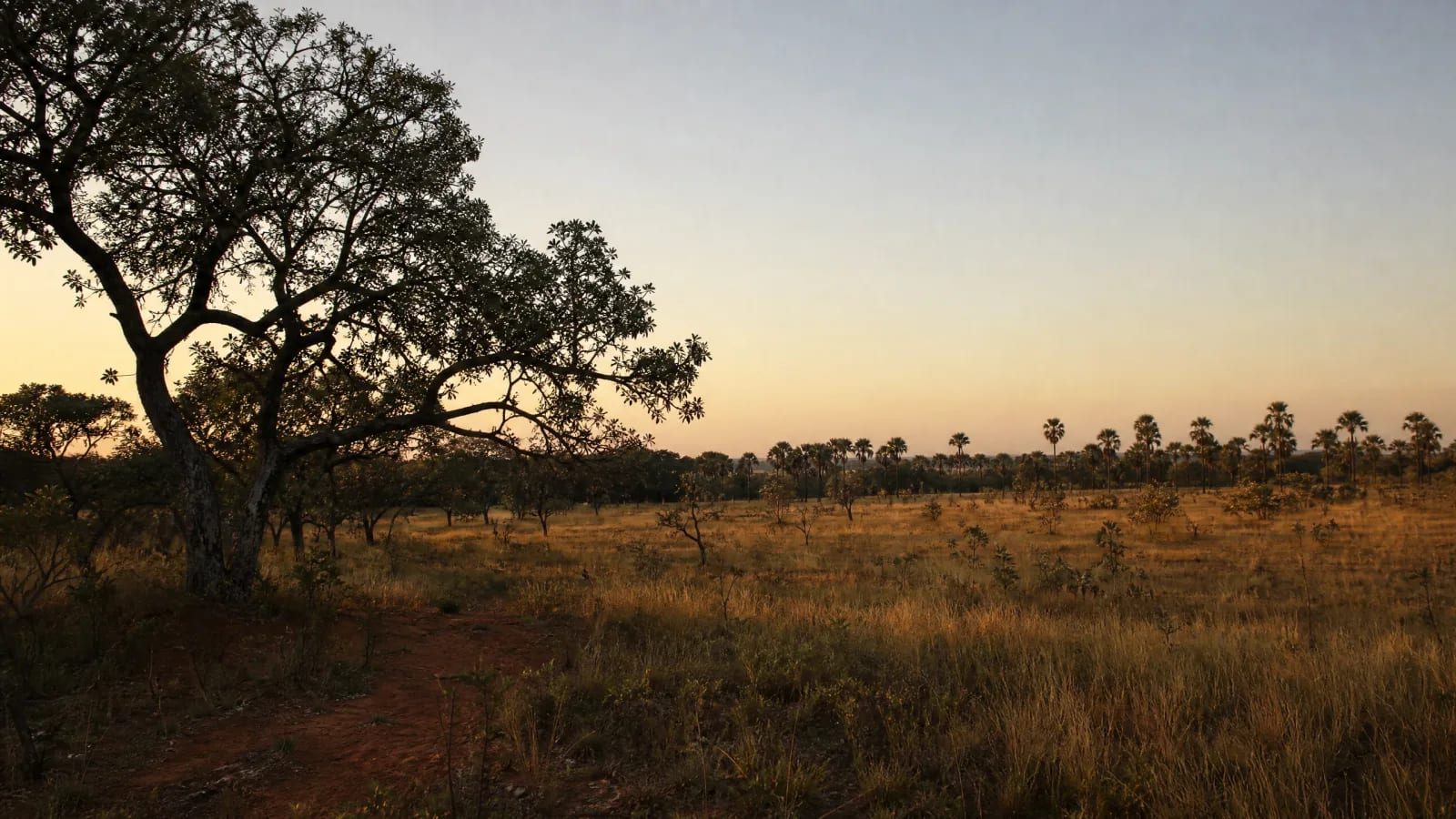
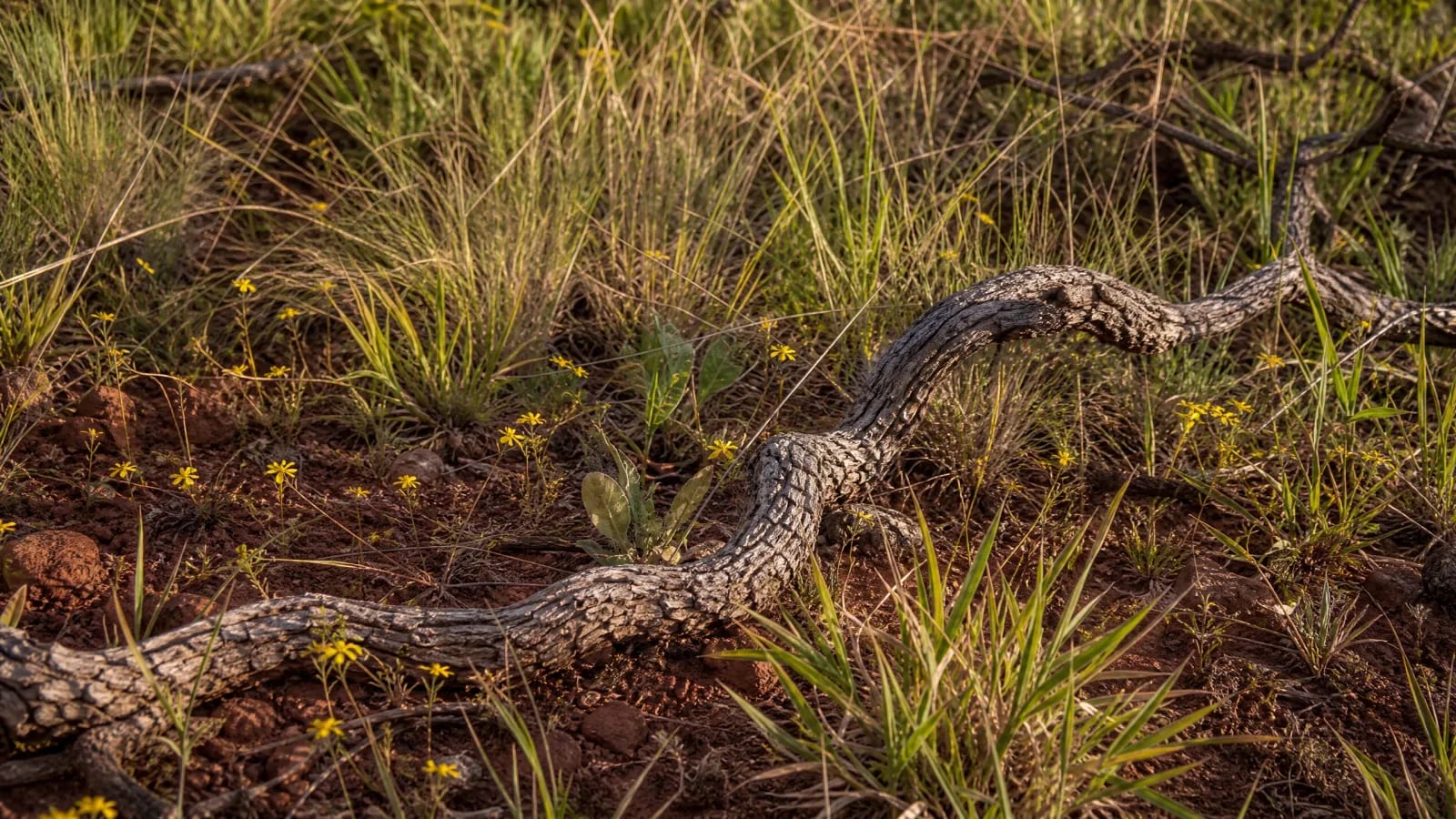
At the beginning of the day, the savanna breathes among scattered trees, grasses that hold the gold of the dry season, and a sky too vast to fit within a frame. Light does not meet emptiness; it meets an open architecture of twisted trunks, short shadows, and flowers waiting for the right moment.
The shape of the landscape matters.
I · Recognition
Before becoming a backdrop, it is already life.
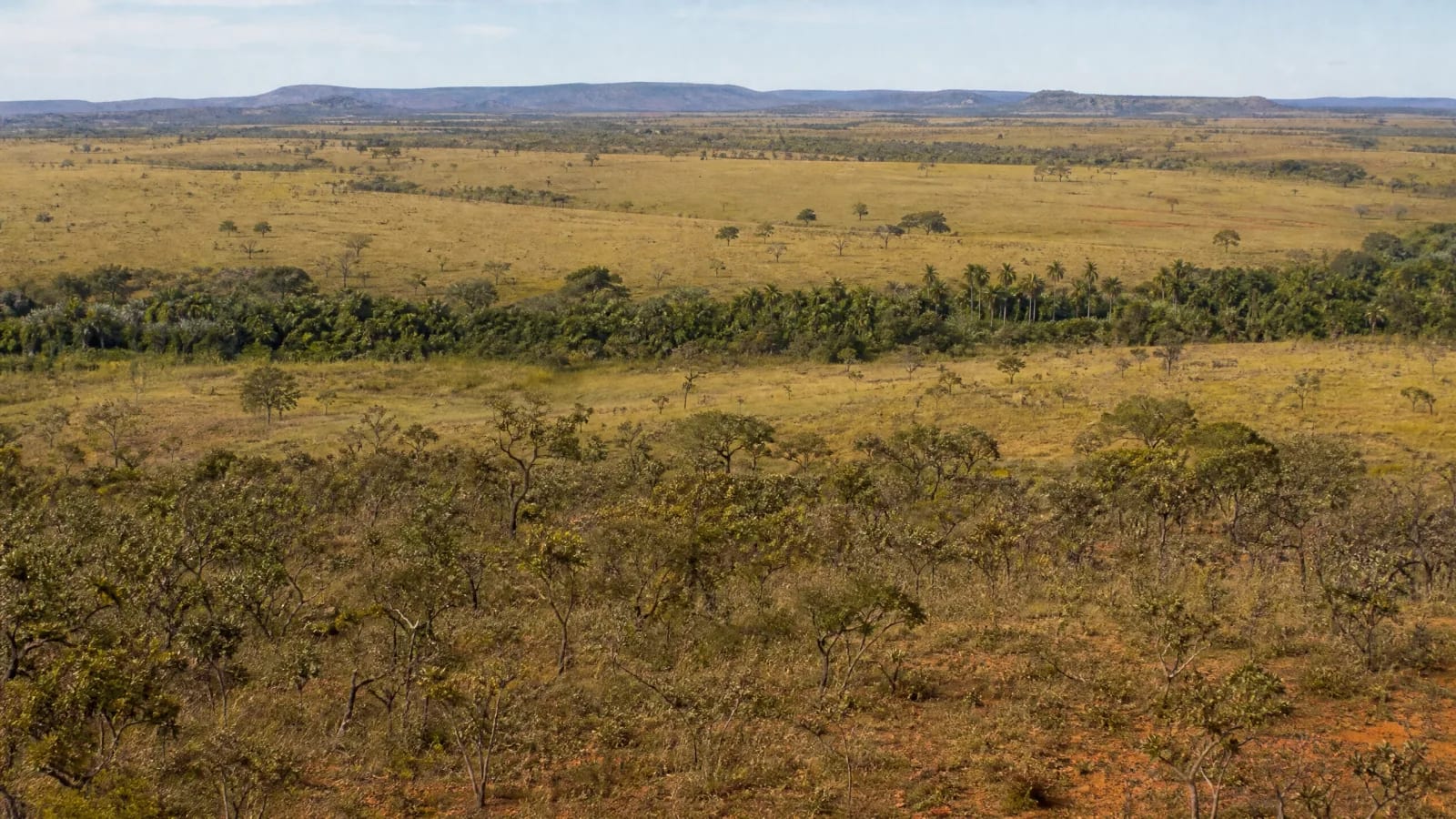
“Cerrado” is not a single appearance. The classification comprises Cerrado stricto sensu, Cerrado Park, Palm Grove, and Vereda: from wooded grassland to concentrated palms, and onward to the buriti palm’s humid corridor. Each physiognomy shifts the gaze and reveals another way of distributing light, roots, and shelter. 1
II · Water and rhythm
Water may lie on the horizon or hide within the relief. Deep, well-drained Oxisols predominate across broad areas, but veredas, lowlands, and sandy soils organize different rhythms. At springs, denser greenery is not a decorative exception: it signals an underground circulation that sustains the surface. 3
III · Work and territory
No formation exists outside human choices.
The savanna offers forage, fruit, seeds, fibers, timber, and space for research, livestock raising, and agriculture. Work unfolds across differences in soil and season: planting, grazing, gathering, or restoring requires reading the place. When native cover remains connected, it continues to be productive landscape, refuge, and water infrastructure all at once.
A road, a firebreak, or a field may be framed as discreet lines; in the territory, they reorganize edges, fire, wind, and animal movement. Choosing conservation does not mean freezing the landscape. It means deciding where production can fit, where regeneration needs time, and which veredas must not be reduced to available strips.
IV · The forgotten connection
The territory remains present after the product leaves the scene.
Between 2003 and 2014, one study estimated that soybean expansion accounted for 22% of vegetation conversion in the Cerrado; the chain can be traced to producing municipalities, buyers, and ports, but the figure does not justify assigning a single cause to all loss. 4 The contradiction is tangible: a commodity crosses the savanna and depends on converted land, while sourcing commitments attempt to separate production from new conversion. What signals, rules, and transparency make this promise verifiable?
Read the edge before the center: the image of an isolated tree alone does not reveal whether there is underground continuity, regeneration, or protection. Compare land-cover maps, fire records, and land use; ask who measures, at what scale, and at what interval. The critical question is not only “how much remains?” but “what can still function together?”
V · Precision
Critique matters only when it respects the evidence.
Savanna cannot be contained by the opposition between intact nature and occupied fields. There is well-situated management, authorized or unauthorized conversion, pressured fragments, and areas under restoration. Relationships vary by municipality, property, soil, and history; any narrative that turns the entire Cerrado into a single case loses precisely its diversity.
To look at this formation is also to learn not to simplify it.
At dusk, the grass returns light in shades of copper, and the veredas darken beneath the buriti palms. The beauty remains, but now carries questions: what water reaches the roots, what fire returns, what commodity crosses the road, what interval allows shoots to emerge? To see the savanna is to follow these passages without closing their meaning too soon.