Brazilian vegetation · plant formation
Areas of ecological tension
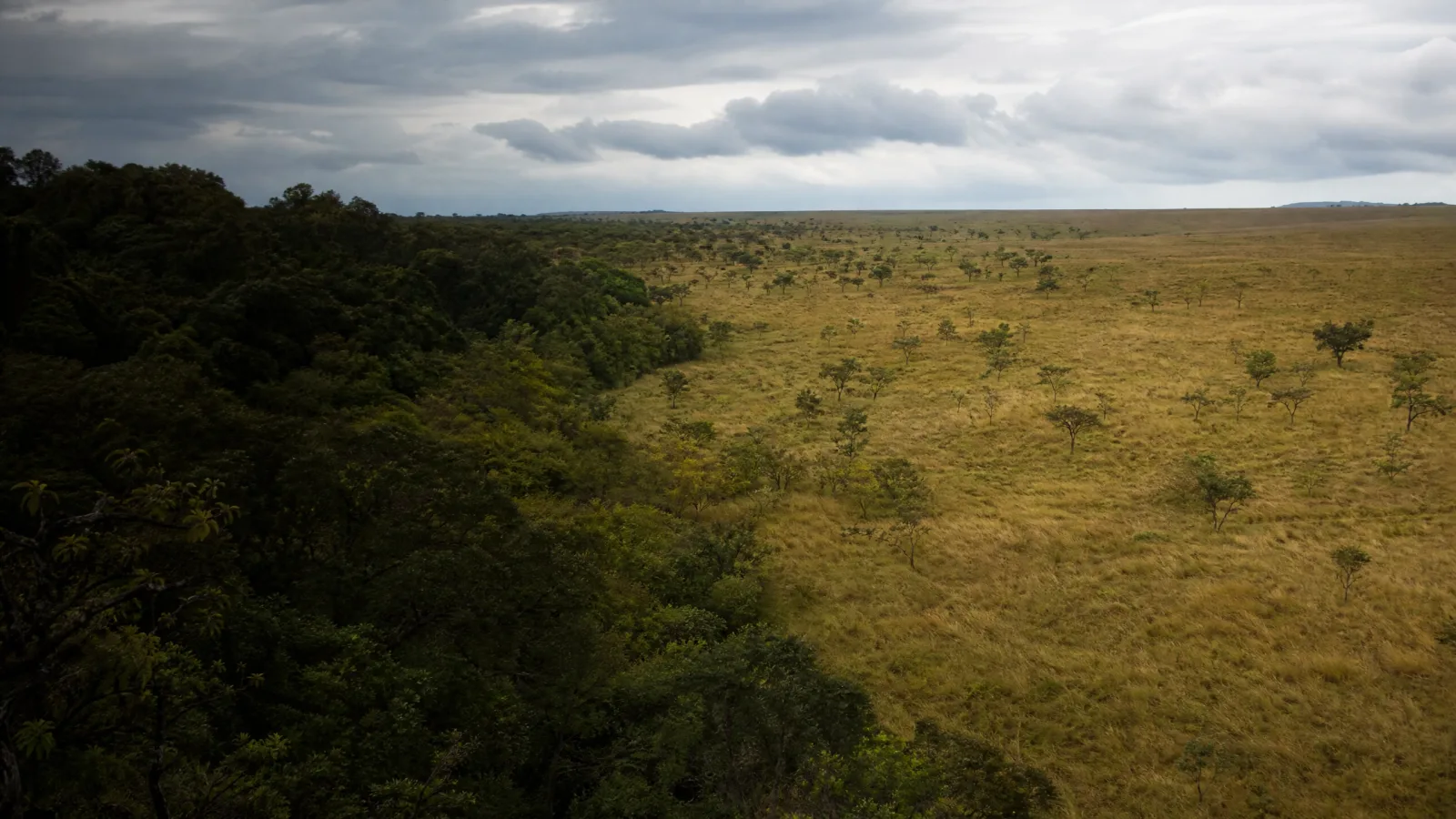
The boundary does not appear as a line. It moves through patches, gradations, and encounters: a forest opening onto savanna, a woodland island interrupting the plateau, a slope where water, stone, and season redraw the landscape. In areas of ecological tension, transition is the scene itself.
The shape of the landscape matters.
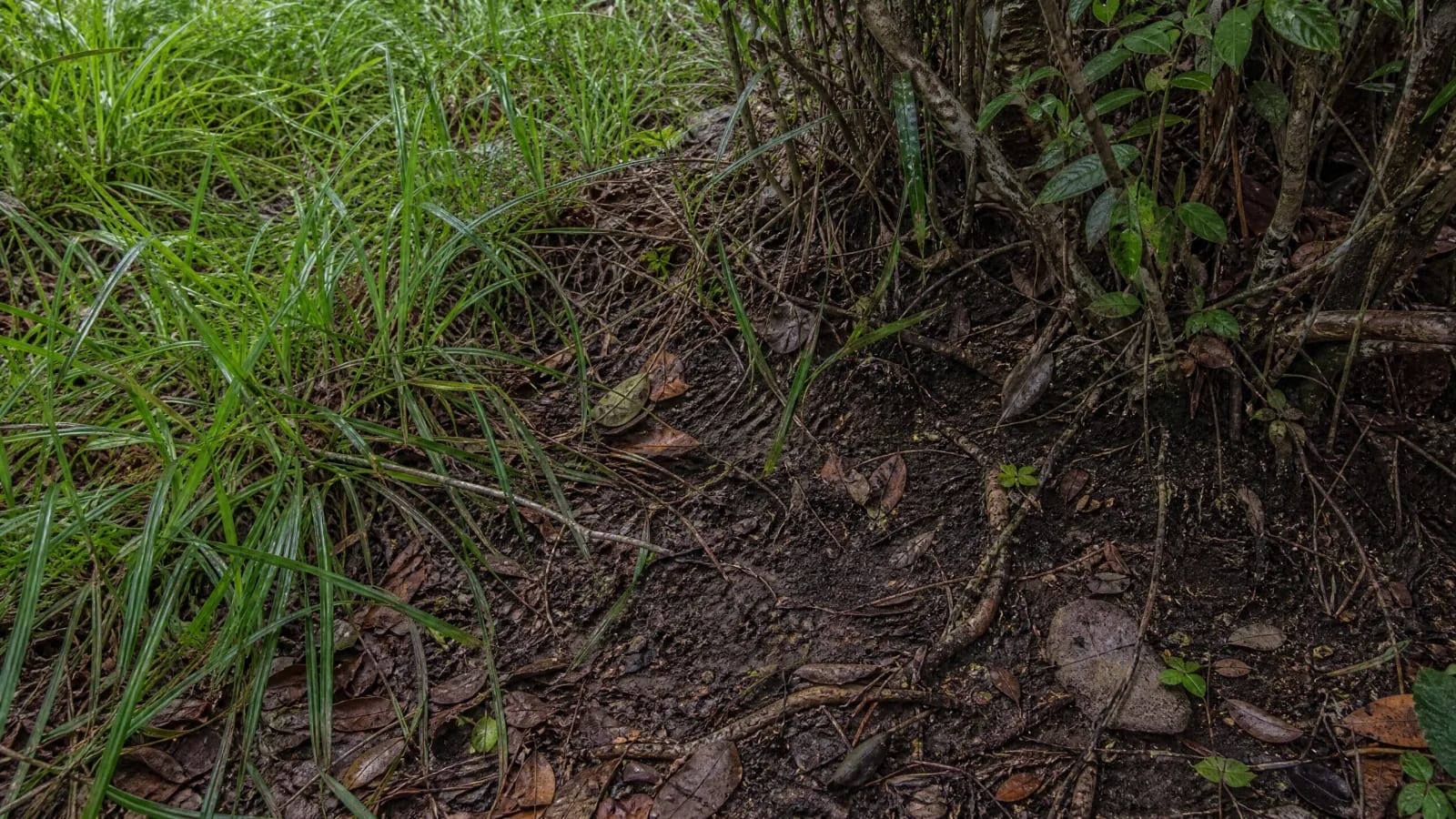
Arrive slowly. The broad gaze finds two or more types of vegetation sharing the same horizon; the lowered gaze finds gravel, ferruginous soil, dark moisture, and roots responding to slight differences in relief. For IBGE, this is a contact category, not a homogeneous biome: boundaries may be gradual, abrupt, or interpenetrating 1.
I · Recognition
Before becoming a backdrop, it is already life.
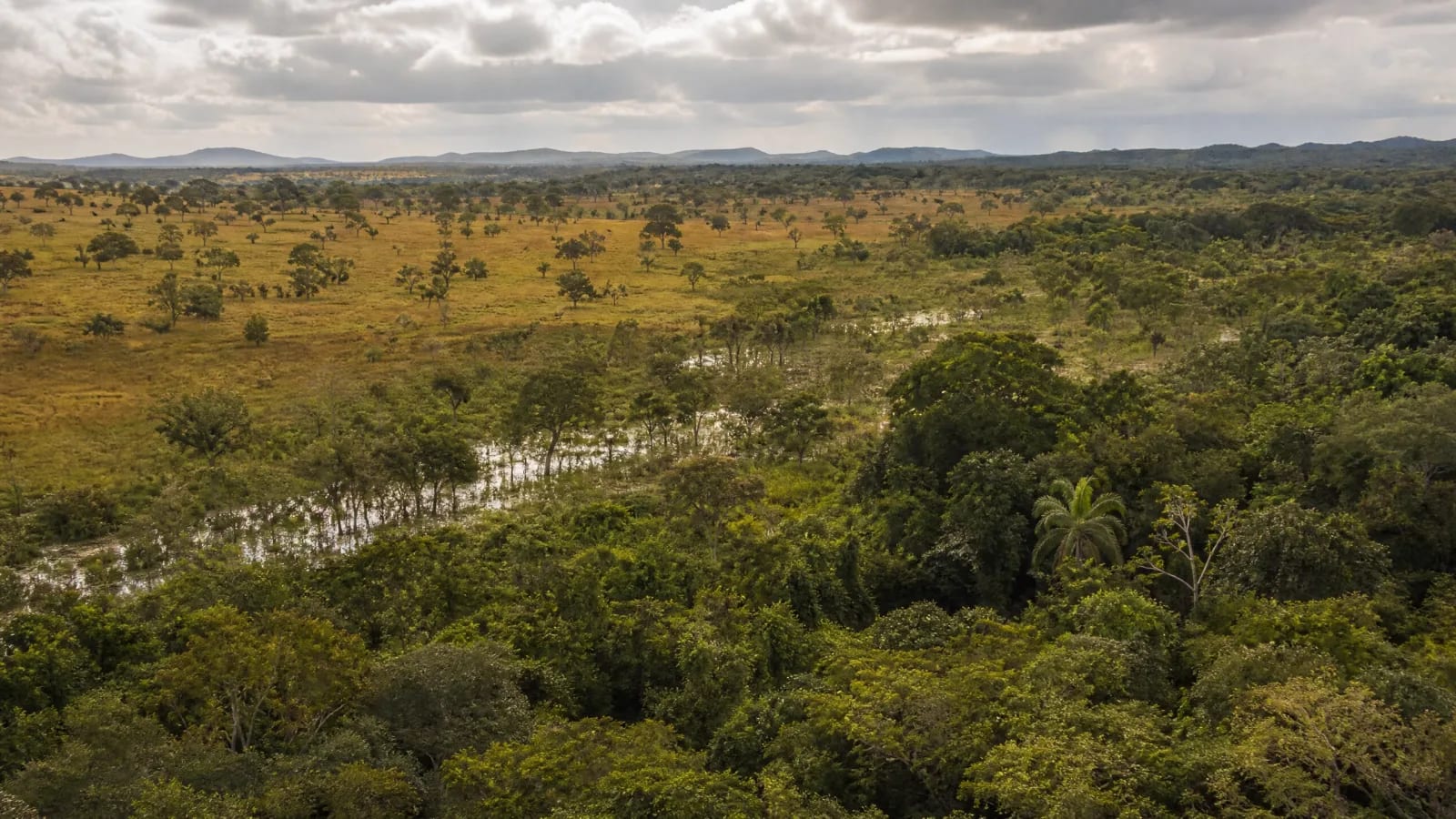
This formation has no single physiognomy. In Tocantins, Amazonian–Cerrado (ecótonos amazônico-cerratenses) bring together seasonal and ombrophilous forests; in Campo Maior, Piauí, patches and woodland islands vary with microrelief, lithology, lateritic soils, and rainfall regime 2 3. The interface harbors diversity precisely because it condenses differences.
II · Water and rhythm
Water works as an invisible architect. A depression may retain moisture; a slope may dry first; a soil layer may change root depth. Thus, the same rainfall does not produce the same vegetation everywhere. In transition zones, the map of green is also a map of drainage, relief, and time.
III · Work and territory
No formation exists outside human choices.
In many of these contacts, the territory is simultaneously shelter and a space of production. Pastures, croplands, roads, firebreaks, research, and conservation appear side by side, but they do not leave equivalent marks. What matters is to observe scale, continuity, and regeneration: one practice may maintain cover, while conversion may separate remnants and alter edges.
Choosing where to conserve requires more than coloring a block on a map. One must recognize local composition, protect springs and slopes, maintain corridors, and diagnose the soil before restoring it. Heterogeneity makes a single formula difficult, but offers a precise clue: good decisions begin in the place itself, not in a landscape imagined as uniform.
IV · The forgotten connection
The territory remains present after the product leaves the scene.
In the Bodoquena Plateau, a forest fragment in an area of ecological tension was studied in a landscape where woodland is surrounded by extensive cattle ranching; the article records a high degree of degradation in this ecotone 4. The chain is concrete—remnant, pasture, edge, and loss of continuity—but it does not justify assigning a single intention to those who use the land. The question remains open: how can we produce and conserve when ecological value lies precisely in the passage between formations?
Read the edge as a system. Compare the dry and rainy seasons; move closer to the patches; follow water across the relief. Then look for the mark of human decision: where was cover interrupted, which connection narrowed, and which area can still regenerate? The image need not accuse in order to make what is at stake visible.
V · Precision
Critique is valid only when it respects the evidence.
“Area of tension” does not mean a zone without identity, nor a mandatory stage preceding another formation. It is a phytoecological description of contact, without a continuous core area dominated by a single region; its appearance arises from the local combination of climate, water, relief, lithology, soil, and disturbances 1. To generalize would erase precisely the information the category provides.
To look at this formation is also to learn not to simplify it.
The crossing ends where the boundary continues. Between woodland and savanna, between the woodland island and the clearing, the landscape does not ask for a sharper border: it asks for enough attention to perceive its relationships. To conserve a transition is to conserve the encounter—and the possibility that it may remain alive.