.webp&w=1920&q=82)
.webp&w=1920&q=82)
.webp&w=1920&q=82)
.webp&w=1920&q=82)
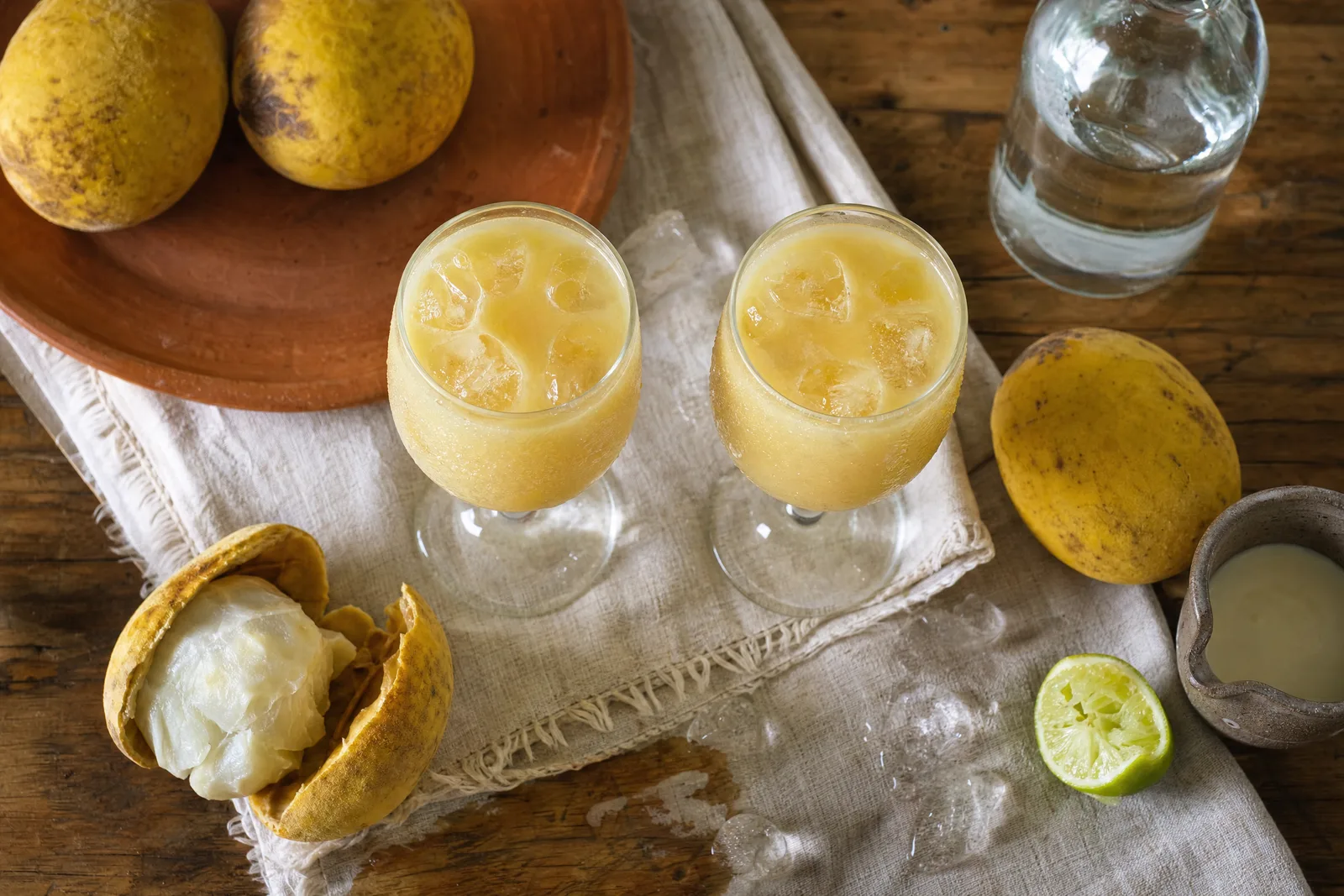
Bacuri — a fragrant Amazonian fruit — pulp turns the batida into a drink of velvety texture and mature fragrance. Served well chilled, it evokes the meeting of a Cerrado fruit, ice, and cachaça — Brazil’s sugarcane spirit — without masking the fruit’s identity.
Behind the flavor
According to Embrapa, the bacuri tree reaches the Cerrado and high plateaus of Piauí. In this batida, the fruit offers a Piauí reading of a Brazilian way of drinking: cachaça provides the structure, while bacuri carries the color, aroma, and memory of a landscape that extends beyond the cattle sertão.
📜 Ingredients
- •bacuri pulp180 g (6½ oz), well chilled🔁 ripe mango pulp — Mango preserves the creaminess, but offers a more tropical, less resinous fragrance than bacuri.
- 🍷white cachaça100 ml (3½ fl oz)
- •condensed milk80 g (3 oz; about 4 tbsp)
- •lime juice15 ml (1 tbsp)
- •ice8 medium cubes
👨🍳 Method
- 1
Chill the bacuri pulp completely; if it is frozen, let it soften for 5 to 10 minutes outside the freezer, only until the blender can process it without adding water.
The pulp should remain cold: the ice is there to give body, not to compensate for a warm base.
- 2
Add the bacuri pulp, white cachaça, condensed milk, lime juice, and ice to the blender. Blend for 20 to 30 seconds, until the batida is smooth, thick, and evenly colored.
Stop as soon as the ice breaks down; overblending dilutes the texture and mutes the fruit’s fragrance.
- 3
Taste and adjust: add 1 or 2 ice cubes for a firmer batida, or 1 more tsp of lime juice if the pulp is very sweet. Serve immediately in chilled glasses.
Do not strain it: the pulp is part of the drink’s creamy experience.
🥃 Pairing
With cachaça
White/silver
Vegetal and citrusy, served chilled, with little wood influence.
It is the most direct choice for making the batida: it preserves bacuri’s fragrance and follows the lime’s brief acidity.
Lightly golden/rested
Smooth, with subtle wood contact and delicate vanilla notes.
It works for those who prefer a rounder batida; it complements the condensed milk without masking the fruit.
Also pairs well with
✈️ A flavor worth the trip
Look for bacuri pulp at markets that sell regional products, or taste the fruit while in Piauí: its aroma is what makes this batida impossible to mistake for a mango or passion fruit version.
💡 Quick tips
- •Use unsweetened pulp to control the sweetness and better recognize the bacuri.
- •Chill the glasses in the freezer for 10 minutes before serving; the batida will hold its texture longer.
- •For a less sweet version, reduce the condensed milk to 60 g (2 oz) before adding more lime.
🤔 Did you know?
Though it is often associated with the Amazon, the bacuri tree has also reached the Cerrado and high plateaus of Piauí. The fruit’s presence in the state helps explain why it fits so naturally into Piauí juices and batidas.
Small discoveries
- Polpa de bacuri · ingredient
- Pulp extracted from bacuri, a fruit with an intense fragrance and a naturally creamy texture.
- Cachaça branca · ingredient
- Young cachaça without pronounced wood aging, with a fresher, more direct profile.
- Batida · cultural expression
- The Brazilian name for an alcoholic drink blended with ice, fruit, and often a creamy or sweetening element.
📚 References
- Embrapa Amazônia Oriental. Ocorrência e distribuição geográfica do bacurizeiro. https://www.embrapa.br/busca-de-publicacoes/-/publicacao/409412/ocorrencia-e-distribuicao-geografica-do-bacurizeiro
- Instituto do Patrimônio Histórico e Artístico Nacional (IPHAN). Modo de Fazer Tradicional da Cajuína Piauiense. https://www.gov.br/iphan/pt-br/patrimonio-cultural/patrimonio-imaterial
Keep discovering