.webp&w=1920&q=82)
.webp&w=1920&q=82)
.webp&w=1920&q=82)
.webp&w=1920&q=82)
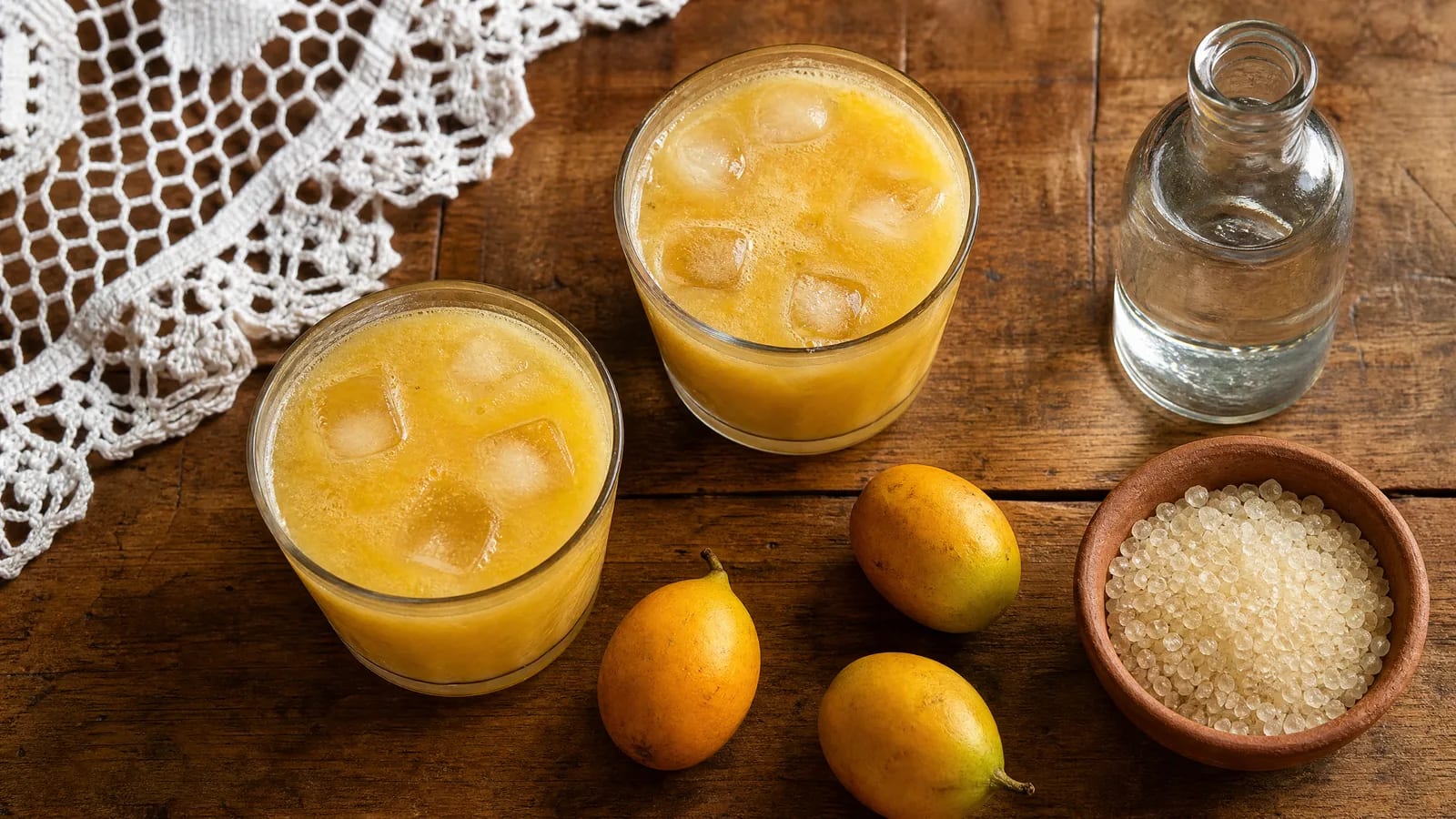
In Alagoas markets and home kitchens, cajá — a sharp yellow tropical plum — meets cachaça — Brazil’s sugarcane spirit — in a short, chilled, straightforward cocktail. It is a fruit drink made to be poured as soon as the blender stops, before the ice yields to the sun.
Behind the flavor
Cajá belongs to the fruit-filled landscape of Alagoas and the Northeast. A study from the Federal University of Alagoas analyzed cajá fruits from the state’s native vegetation and notes their potential for fresh consumption and processing, including juices. In this cocktail, the tart fruit keeps center stage beside cachaça: a simple way to bring to the glass the flavor that moves through Alagoas markets and tables.
📜 Ingredients
- •cajá pulp200 g (7 oz), thoroughly chilled🔁 unsweetened frozen passion fruit pulp — The drink will be more fragrant and less resinous; use the same amount and adjust the sugar only at the end.
- 🍷unaged white cachaça from an alambique100 ml (3.4 fl oz), thoroughly chilled🔁 good-quality white cachaça — A more neutral cachaça lets cajá’s acidity come through more clearly.
- •granulated sugar1 to 2 tablespoons, to taste🔁 simple syrup — Use 15–30 ml (0.5–1 fl oz); it blends into a chilled drink more quickly.
- •ice cubes1 heaping cup, plus more as needed for serving
👨🍳 Method
- 1
If using fresh cajá, wash the fruit, remove the pulp from the pits, and refrigerate it until ready to blend. If using frozen pulp, let it rest for 3–5 minutes, just until you can break it into pieces.
Cajá should be very ripe but free of any fermented smell; its acidity varies from batch to batch.
- 2
Add the cajá pulp, unaged white cachaça from an alambique, 1 tablespoon of granulated sugar, and the ice to the blender jar. Blend for 20–30 seconds, just until thick, pale, and very cold.
Taste before adding more sugar: the goal is tart, fruity, and balanced, not a liquid dessert.
- 3
Adjust the sugar if needed and blend for 5 more seconds. Pour immediately into glasses with fresh ice; for a smoother texture, strain before serving.
If the fresh cajá came from an open-air market, choose fruit from a reliable source and use the pulp the same day.
🥃 Pairing
With cachaça
White/silver cachaça from an alambique
Herbal, citrusy, light, and served chilled.
The leading choice for a cajá cocktail: it follows the fruit’s acidity without competing with its fragrance.
Lightly aged yellow cachaça
Smooth, with restrained wood and faintly sweet notes.
Works for those who prefer a rounder cocktail; use a briefly rested cachaça so the wood does not cover the cajá.
Also pairs well with
✈️ A flavor worth the trip
Look for ripe cajá at an Alagoas open-air market and compare freshly extracted pulp with frozen pulp: fresh fruit is more immediately fragrant, and its acidity is often more vivid.
💡 Quick tips
- •Use thoroughly chilled cachaça: it preserves the texture without forcing you to overblend the ice.
- •Do not let the finished cocktail sit; ice dilutes the fruit and mutes cajá’s fragrance.
- •For a lower-alcohol version, reduce the cachaça to 70 ml (2.4 fl oz) and add 30 ml (1 fl oz) of chilled water; cajá’s flavor will be more pronounced.
- •Serve in moderation: this is an alcoholic beverage.
🤔 Did you know?
Cajá is the fruit of Spondias mombin L. In a study published by UFAL, fruits from Alagoas’ native vegetation were assessed for bioactive compounds and pectins; the study also highlights their use in juices and other processing.
Small discoveries
- Polpa de cajá · ingredient
- Pulp from cajá, Spondias mombin L., a fruit with tart flavor, tropical aroma, and yellow color.
- Cachaça branca de alambique · ingredient
- A Brazilian distillate made from fresh sugarcane juice, without pronounced aging in wood.
- Feira livre · cultural expression
- A traditional direct-sale setting where fruit, pulp, and other foods move among producers, vendors, and residents.
📚 References
- Universidade Federal de Alagoas (UFAL). Santos, E. F. et al. “Quantificação de compostos bioativos em frutos de umbu (Spondias tuberosa Arr. Câm.) e cajá (Spondias mombin L.) nativos de Alagoas”. Revista Ciência Agrícola, 2018. https://doi.org/10.28998/rca.v16i1.3484
- Embrapa Agroindústria Tropical. Moura, C. L. A. de; Pinto, G. A. S.; Figueiredo, R. W. de. “Processamento e utilização da polpa de cajá (Spondias mombin L.)”, 2011. https://www.alice.cnptia.embrapa.br/alice/handle/doc/942997
- Embrapa. “Tecnologias aumentam produção de cajá no Nordeste em até cinco vezes”, 2022. https://www.embrapa.br/en/busca-de-noticias/-/noticia/69355100/tecnologias-aumentam-producao-de-caja-no-nordeste-em-ate-cinco-vezes
Keep discovering