.webp&w=1920&q=82)
.webp&w=1920&q=82)
.webp&w=1920&q=82)
.webp&w=1920&q=82)
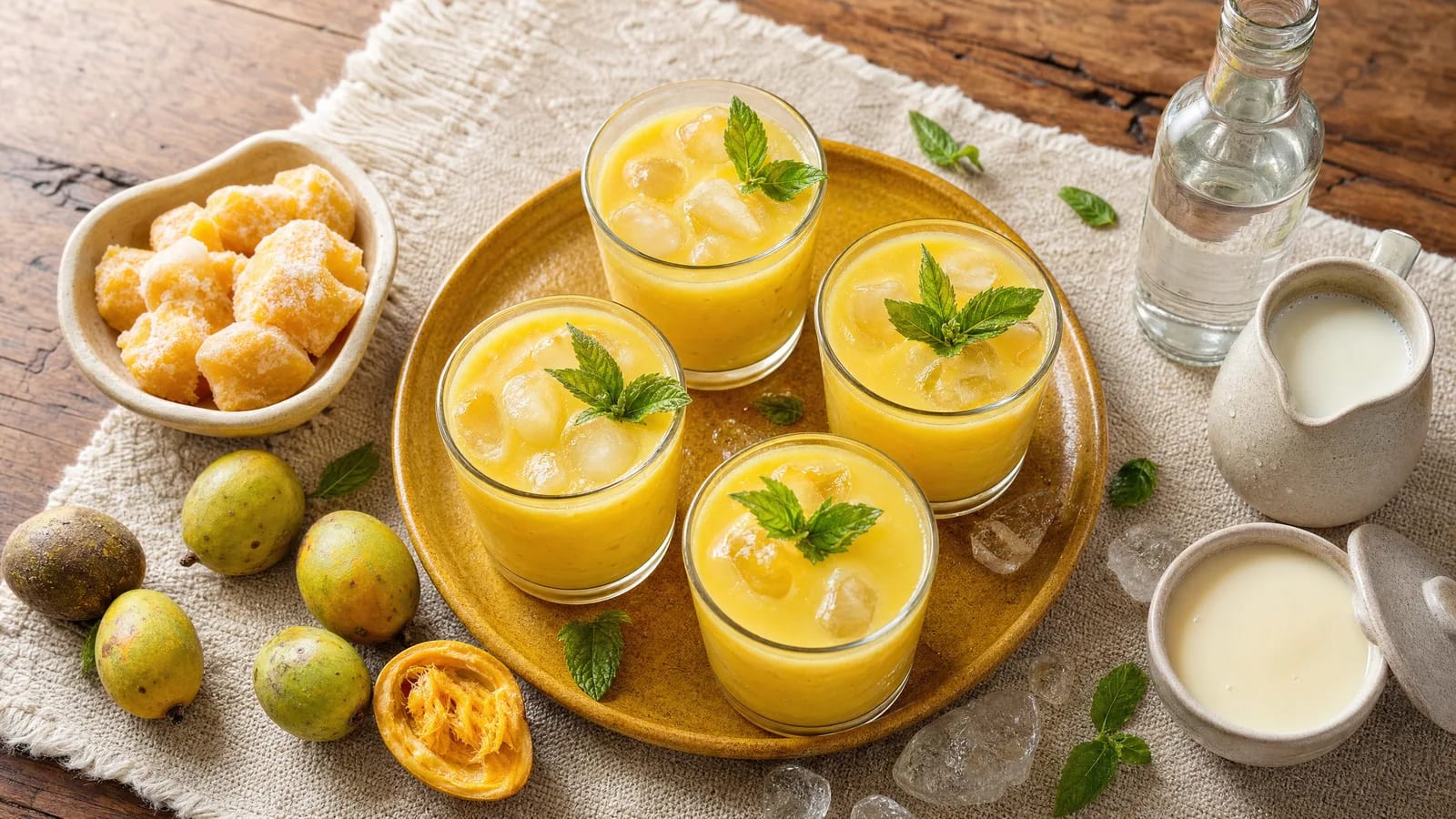
This Northeastern batida combines pulp of cajá — a sharp yellow tropical plum — with condensed milk, chilled milk, and white cachaça — Brazil’s sugarcane spirit. In Pernambuco, it has a particular bond with the Mata Sul, where the cajá tree is common among sugarcane fields, secondary scrublands, and fragments of forest.
Behind the flavor
Cajá belongs to the fruiting landscape of Pernambuco’s Mata Sul: Embrapa records the cajá tree in every municipality in the region, as well as the fruit’s presence in local markets, fruit pulps, and shops. In this batida, its acidity meets cachaça from a land whose history was profoundly shaped by sugarcane. This is not exclusive to Pernambuco, but rather a fitting encounter between a fruit deeply present in the state and the spirit-making tradition that runs through the Zona da Mata.
📜 Ingredients
- •frozen cajá pulp200 g (7 oz)🔁 passion fruit pulp — The drink becomes more floral and less resinous; cajá provides this version’s distinctive aroma.
- 🍷white cachaça from Pernambuco200 ml (3/4 cup plus 1 tablespoon)🔁 white cachaça from an alambique in another state — It keeps the alcoholic structure but loses its direct link to Pernambuco’s sugarcane tradition.
- •condensed milk1 can (395 g/14 oz)
- •well-chilled whole milk200 ml (3/4 cup plus 1 tablespoon)
- •ice cubes6 cubes, plus more for serving
- •mint4 small sprigs, for finishing (optional)
👨🍳 Method
- 1
1. Put the frozen cajá pulp, white cachaça from Pernambuco, condensed milk, well-chilled milk, and 6 ice cubes in the blender.
Take the cajá pulp from the freezer only when you are ready to blend: it helps chill the drink and reduces the need for ice.
- 2
2. Blend for 45 seconds to 1 minute, until smooth, frothy, and free of frozen pulp pieces.
Cajá’s natural acidity balances the condensed milk; avoid adding sugar before tasting.
- 3
3. Taste and adjust only the texture. Serve immediately in tall glasses with fresh ice.
For a looser texture, add 1 or 2 tablespoons of chilled milk and pulse only until incorporated.
- 4
4. Finish with mint, if desired. To share its Pernambuco story, mention the sugarcane and engenho tradition that shaped the Zona da Mata.
Batida is most enjoyable very cold; melted ice dilutes both the fruit and cachaça.
🥃 Pairing
With cachaça
White/silver cachaça from a Pernambuco alambique
Herbal, citrusy, and served very cold
It is the primary choice: it follows cajá’s acidity, preserves its aroma, and keeps the batida light despite its creaminess.
Light yellow/rested cachaça from Pernambuco
Smooth, with light wood and restrained sweetness
It works for anyone seeking a rounder batida; the wood should remain subtle so it does not dominate the fruit.
Also pairs well with
✈️ A flavor worth the trip
Seek out cajá pulp from a local producer and licensed white cachaça from Pernambuco. It is a simple way to taste, in the same glass, the fruit that appears beside the Mata Sul’s sugarcane fields and the cane that helped shape the state’s history.
💡 Quick tips
- •Choose unsweetened cajá pulp so the condensed milk alone controls the sweetness.
- •Use white cachaça from a reliable source; heavily wood-aged versions hide the fruit’s perfume.
- •Blend and serve at once. The foam and creamy texture are at their best in the first few minutes.
- •For an alcohol-free version, omit the cachaça and add 80 ml (1/3 cup) more chilled milk.
🤔 Did you know?
Embrapa reports that the cajá tree is very common in every municipality of Pernambuco’s Mata Sul and that cajá ranks among the fruits most sought after at the region’s markets, CEASA wholesale markets, and supermarkets.
Small discoveries
- Cajá · ingredient
- The yellow-orange fruit of the cajá tree, with tart-sweet pulp and a pronounced tropical aroma.
- Cachaça branca pernambucana · ingredient
- A clear or lightly rested sugarcane spirit; its profile tends to be more direct and fruity than that of heavily aged versions.
- Engenho · cultural expression
- An estate historically tied to sugarcane cultivation and the making of sugar and cane spirits; in the Zona da Mata, it helps explain the formation of Pernambuco’s sugar culture.
📚 References
- Embrapa, Agência de Informação Tecnológica — Território Mata Sul Pernambucana, "Cajá": https://www.embrapa.br/web/agencia-de-informacao-tecnologica/territorios/territorio-mata-sul-pernambucana/atividades-economicas/cultivos/fruticultura/caja
- Vó Dulce — "Batida de cajá com cachaça (nordestina)": https://vodulce.com.br/r/drink-batida-cacao-cachaca
- IBGE — Pernambuco: https://www.ibge.gov.br/cidades-e-estados/pe.html
Keep discovering