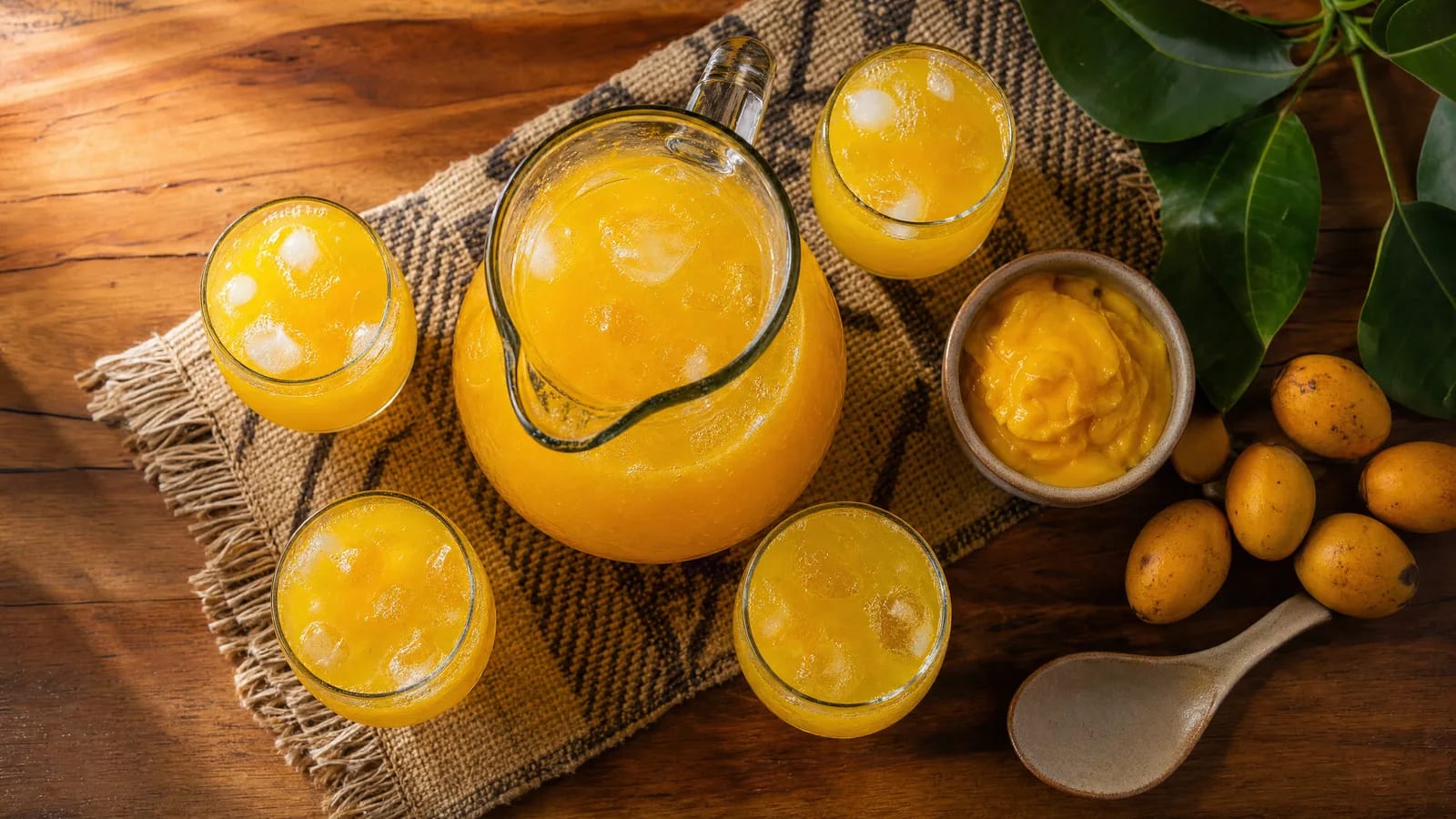
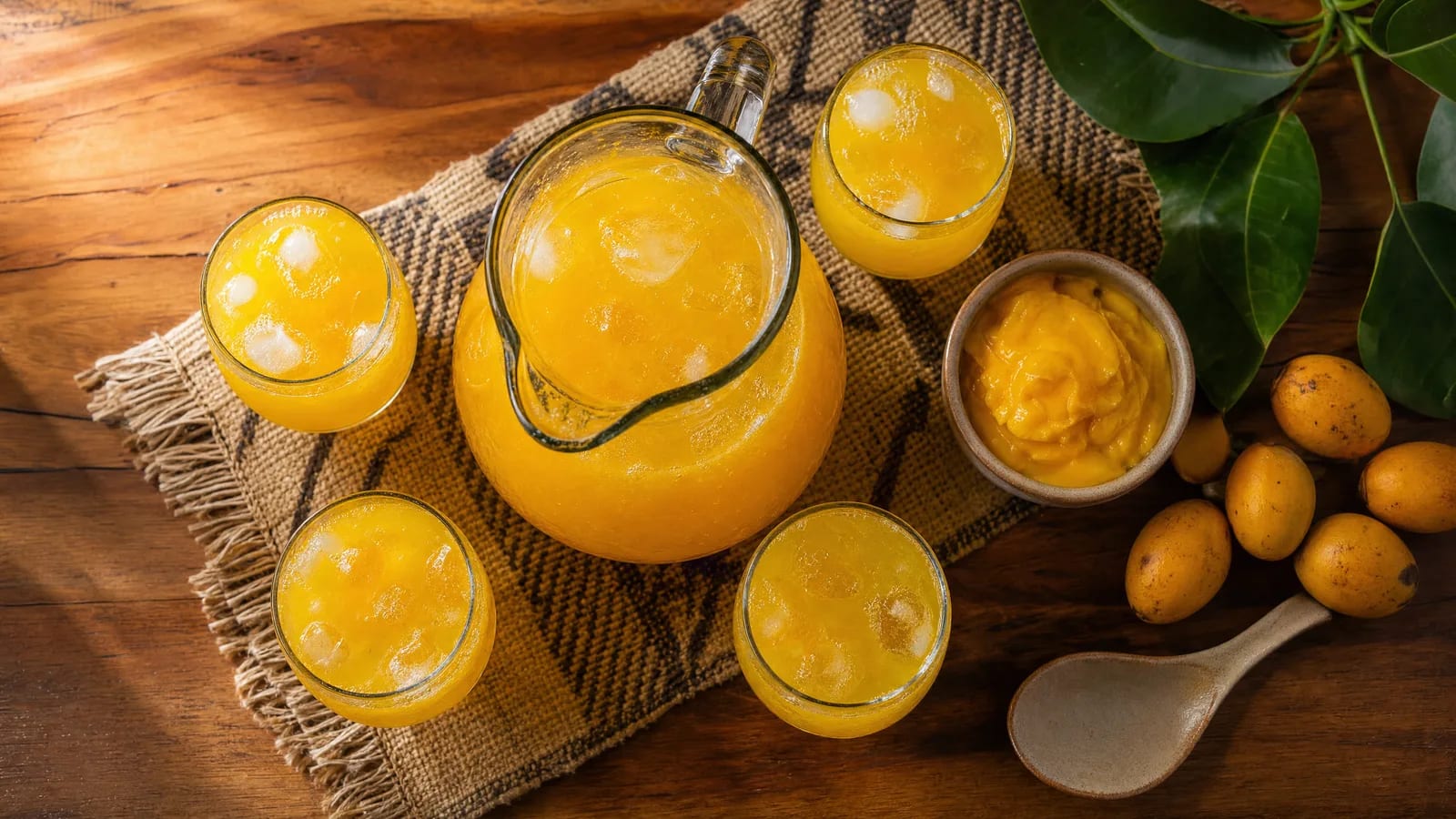
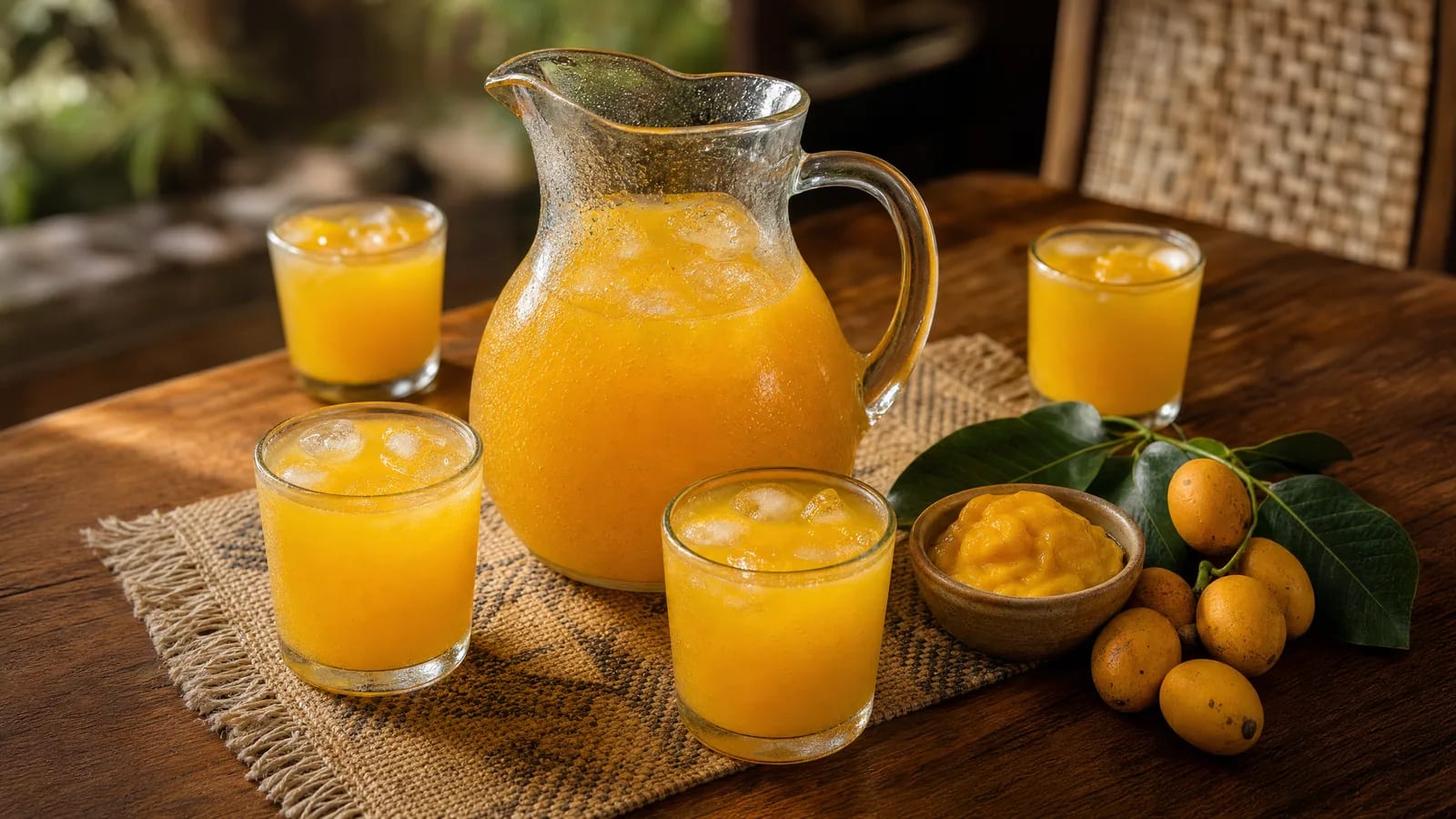
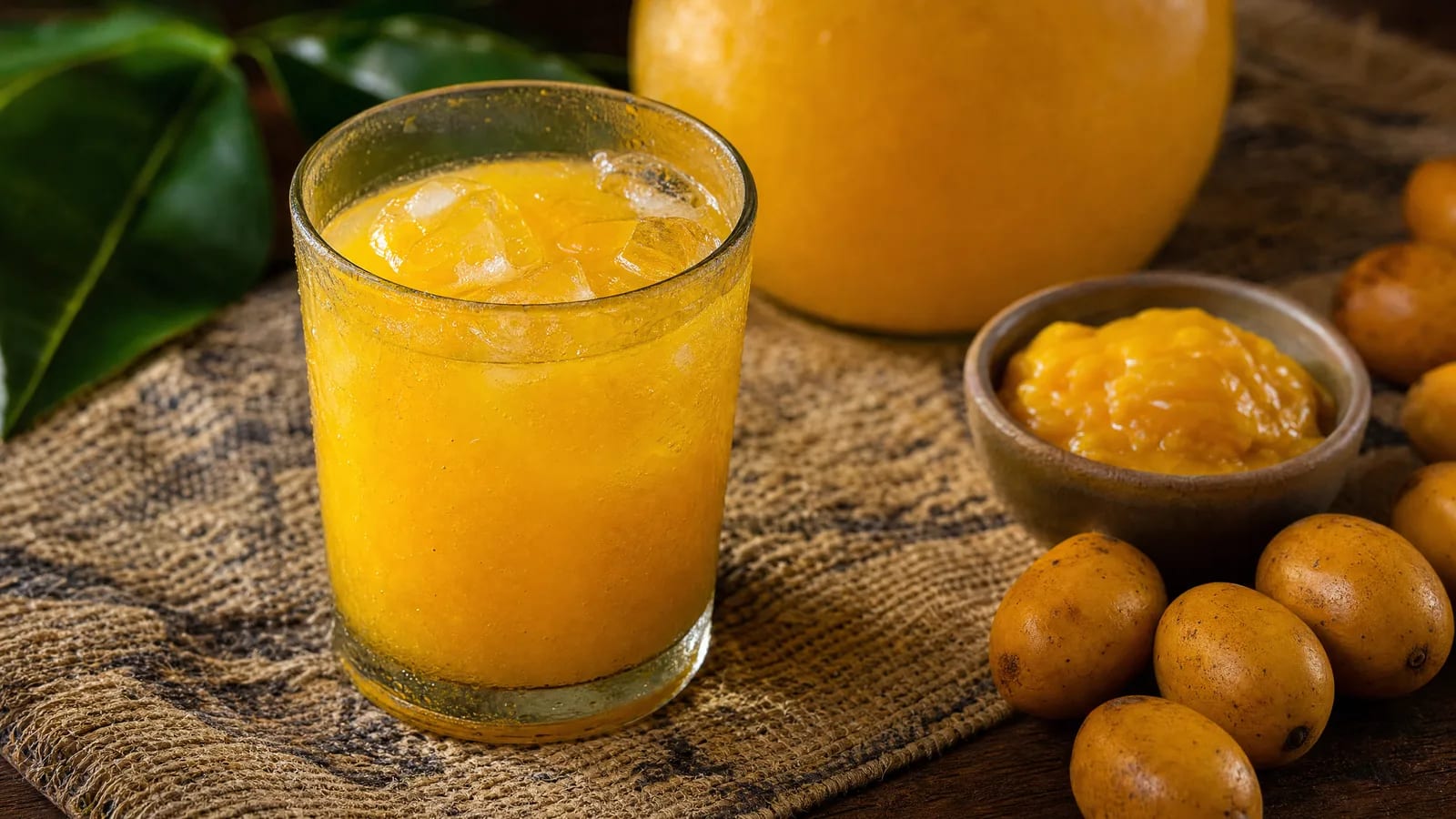
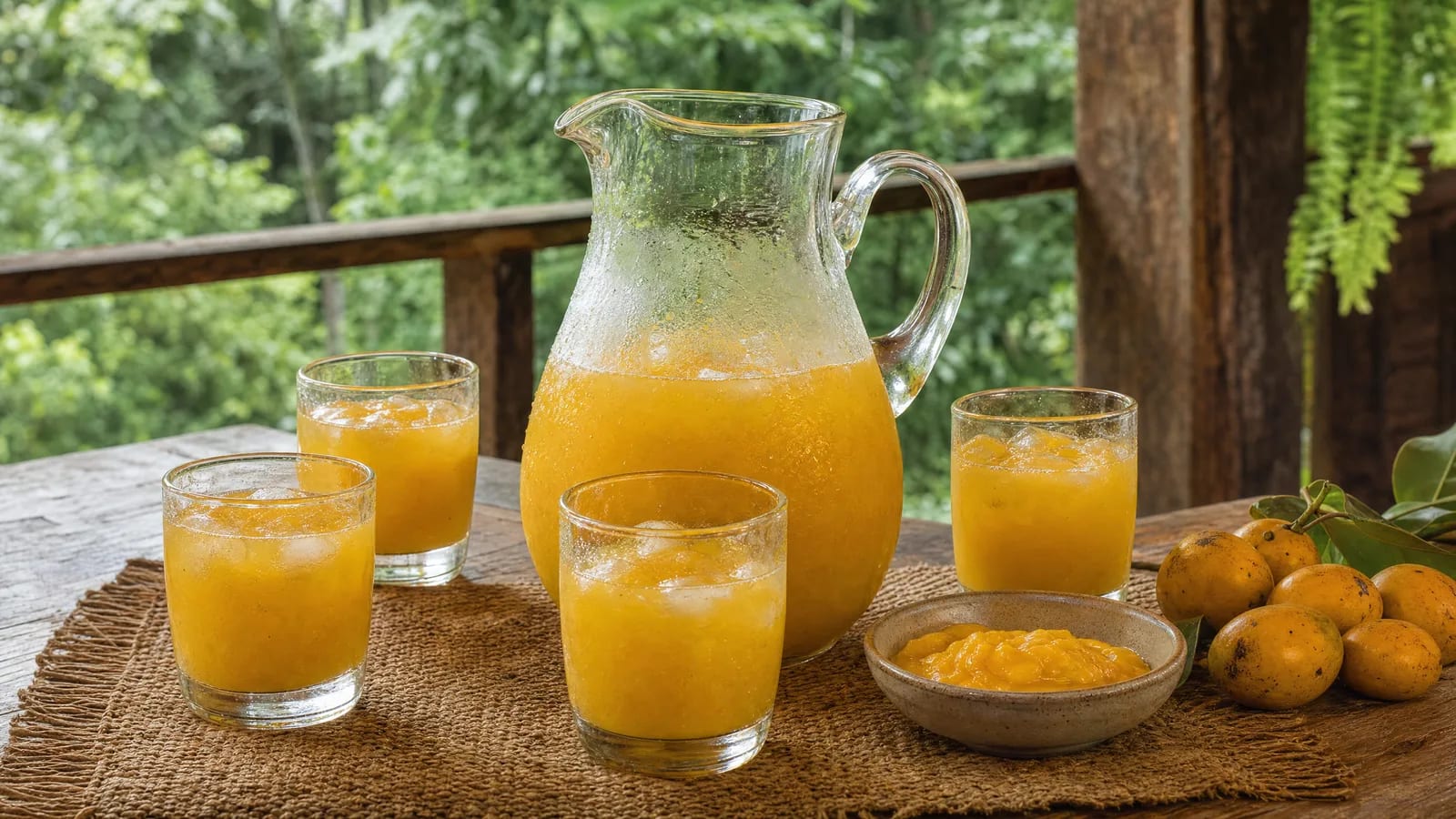
Juice made from the pulp of taperebá, a sharp yellow Amazonian tropical plum also known as cajá, blended with water and sweetened to taste. Refreshing and aromatic, it is one of the most beloved drinks of Acre’s hot afternoons.
Behind the flavor
The taperebá tree grows in backyards and forests throughout northern Brazil, dropping ripe yellow, tart fruit to be gathered and turned into pulp, juice, and ice cream. In Acre, where the heat of the western Amazon calls for cold drinks all day, taperebá juice is an everyday gesture—the fruit Northeastern Brazilians know as cajá, here given an Indigenous name. Drinking a glass means quenching your thirst with the flavor of a tree no one had to plant in rows: it simply belongs to the landscape.
📜 Ingredients
- •Taperebá (cajá) pulp200 g (7 oz; or about 10 ripe fruits)🔁 Ambarella or passion fruit pulp — It preserves the tropical tartness, but Amazonian taperebá has a more fragrant, delicate aroma.
- •Chilled water1 liter (4 cups)
- •Sugarto taste
- •Iceto taste
👨🍳 Method
- 1
If using fresh fruit, wash it and cook it briefly in a little water for 5 min to loosen the pulp from the pit; mash and strain.
the cajá pit is large and fibrous; straining makes for a smooth juice
- 2
Blend the pulp with half the chilled water for about 1 min.
- 3
Strain through a fine-mesh strainer to remove fibers, if you prefer a cleaner texture.
for a fuller-bodied juice, you may skip the strainer
- 4
Add the remaining water, sweeten to taste, and mix well.
- 5
Serve immediately over plenty of ice.
taperebá loses aroma if it sits too long; it is best very fresh
🥃 Pairing
With cachaça
Young clear pot-still cachaça
Herbal, citrusy, and chilled
Cajá is the classic base for Amazonian batidas, blended cachaça cocktails: a young, well-chilled clear cachaça turns the juice into a batida without battling the tropical acidity, preserving its freshness. Good clear cachaças come from Paraty, Rio de Janeiro.
Also pairs well with
✈️ A flavor worth the trip
A flavor worth the journey: taperebá is cajá given an Indigenous name on the banks of Acre’s rivers, fragrant in a way no supermarket fruit can match.
💡 Quick tips
- •Tartness varies widely from fruit to fruit: sweeten only at the end, tasting as you go.
- •For a creamy version, blend with a little condensed milk.
- •The same pulp, blended with chilled clear cachaça—Brazil’s sugarcane spirit—becomes the classic cajá batida.
🤔 Did you know?
Taperebá is the Indigenous Tupi name for cajá in the Amazon—the same fruit, Spondias mombin, that northeastern Brazil calls cajá—showing how language reveals the two roots of Acre’s cooking.
Small discoveries
- Taperebá · ingredient
- A small, tart, yellow fruit from an Amazonian tree, Spondias mombin, known in northeastern Brazil as cajá.
📚 References
- EMBRAPA — fruteiras nativas amazônicas (Spondias)
- IBGE — produção de frutas na região Norte
- UFAC — estudos regionais sobre cultura alimentar do Acre
Keep discovering