Brazilian biomes · a crossing
Cerrado
Before feeding the country, it teaches you to look slowly.
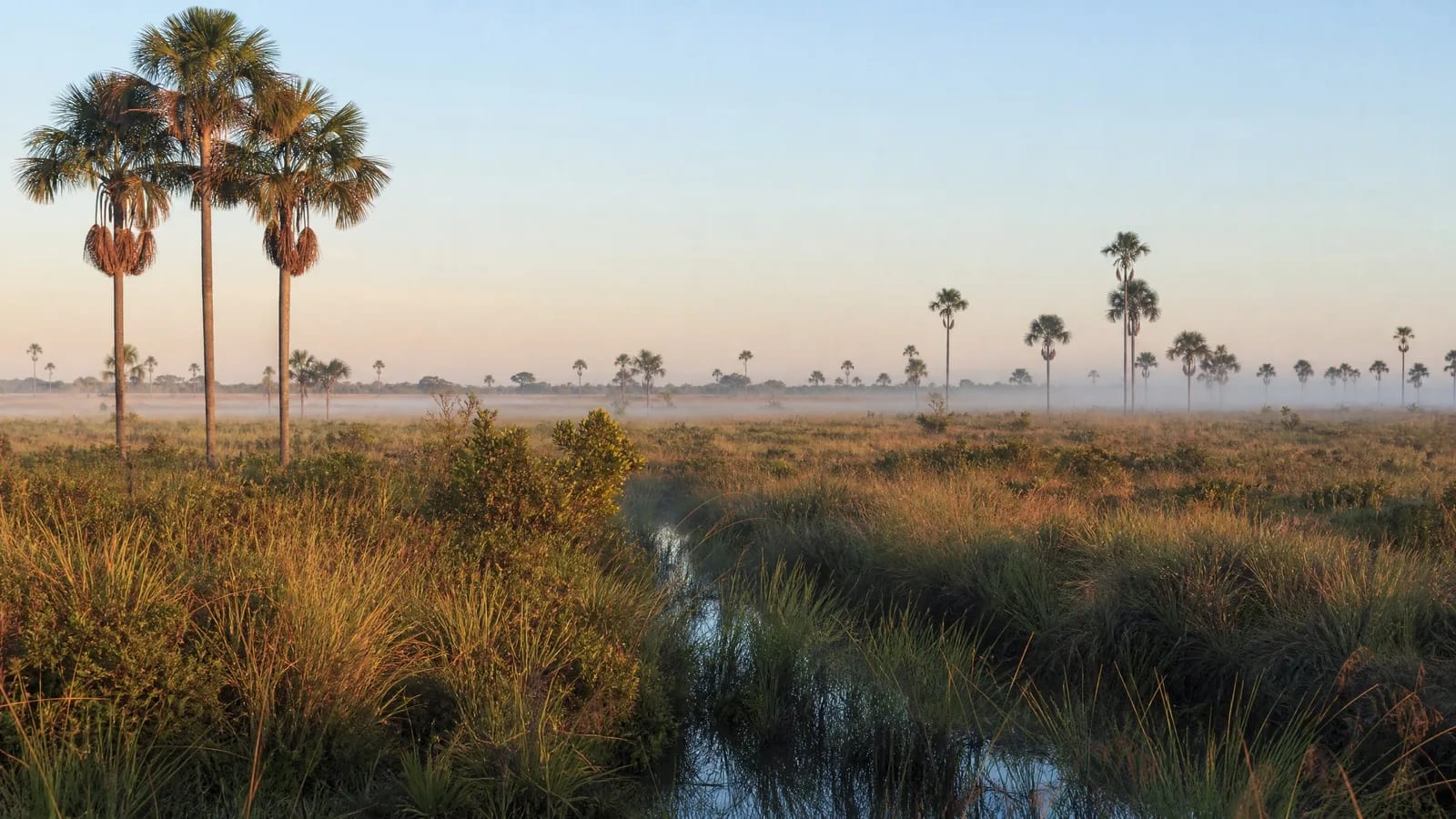
Don't start with the number. Start with the horizon — and by the water that, often, lies where the eyes still cannot reach.
A landscape that draws you in.There is not a single Cerrado. There are open fields, forests, plateaus, streams, veredas, backyards, small farms, towns and paths that change with the rains and the dry season.
I · A biome in many forms
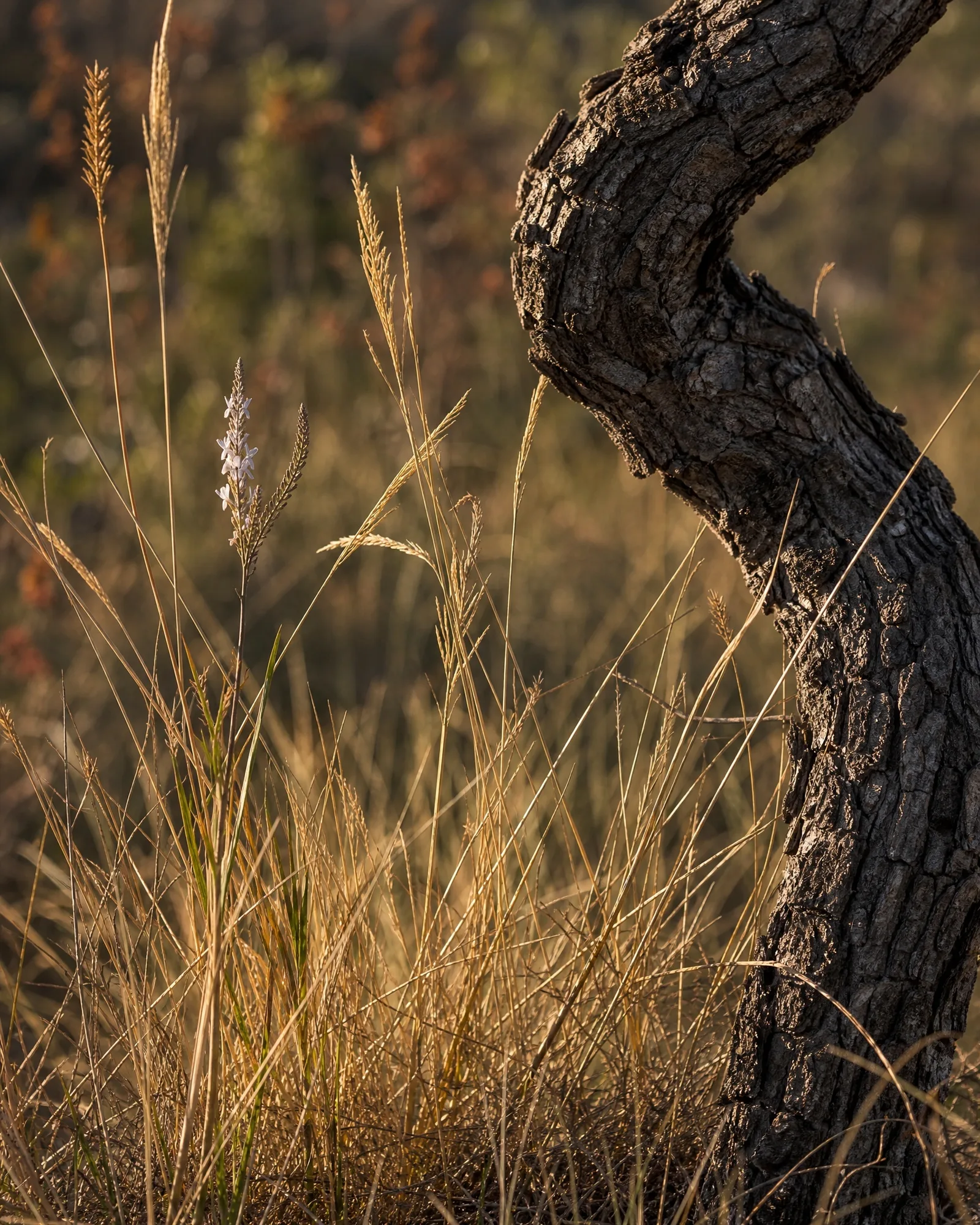
The open landscape is also full of life.
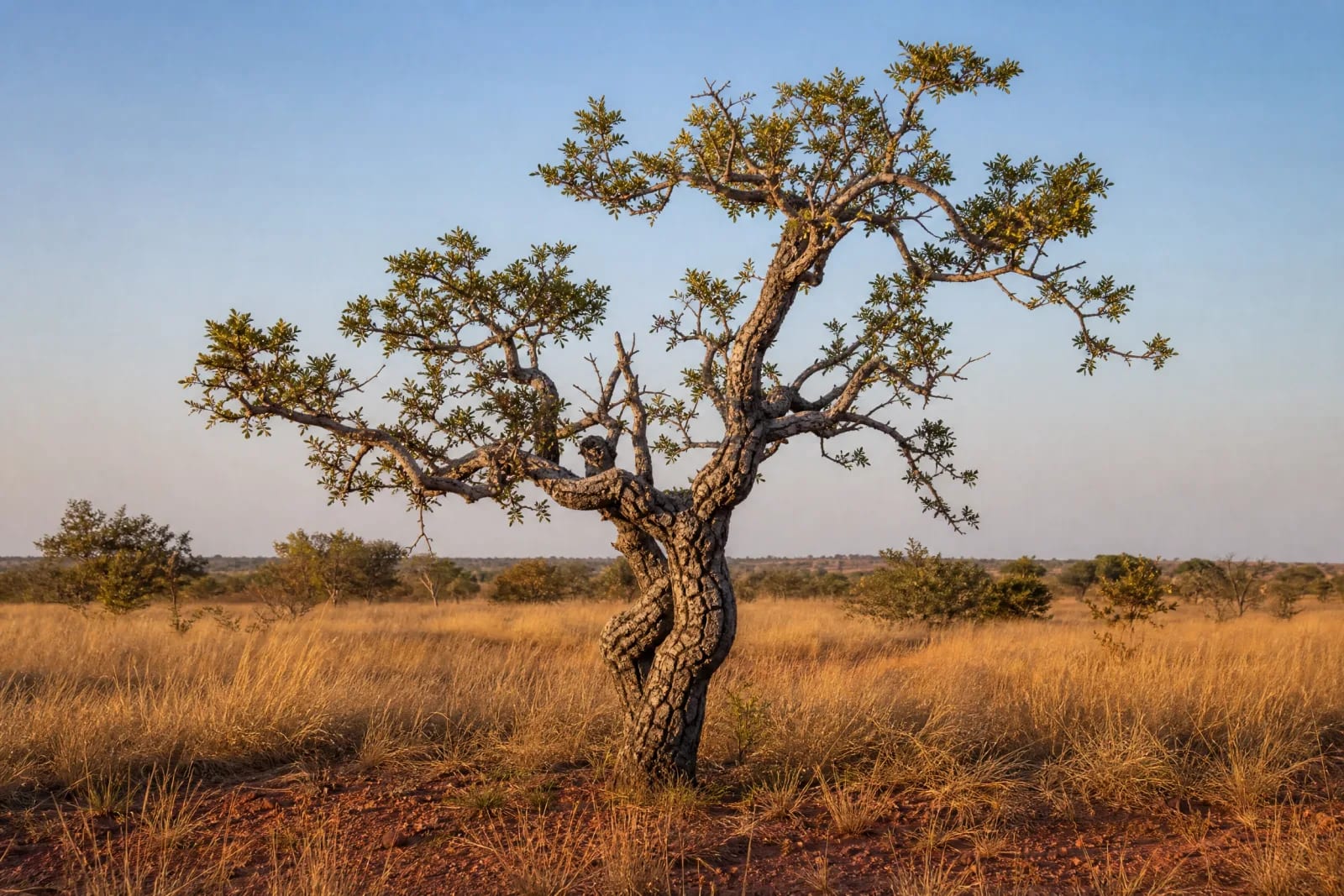
At first glance, the Cerrado seems an economy of gestures: low trees, grass, exposed ground, sky. But that impression is misleading. Embrapa recognizes forest, savanna and grassland formations, manifested as dozens of physiognomies. Each combines soil, moisture, fire, shade and species in its own way.1
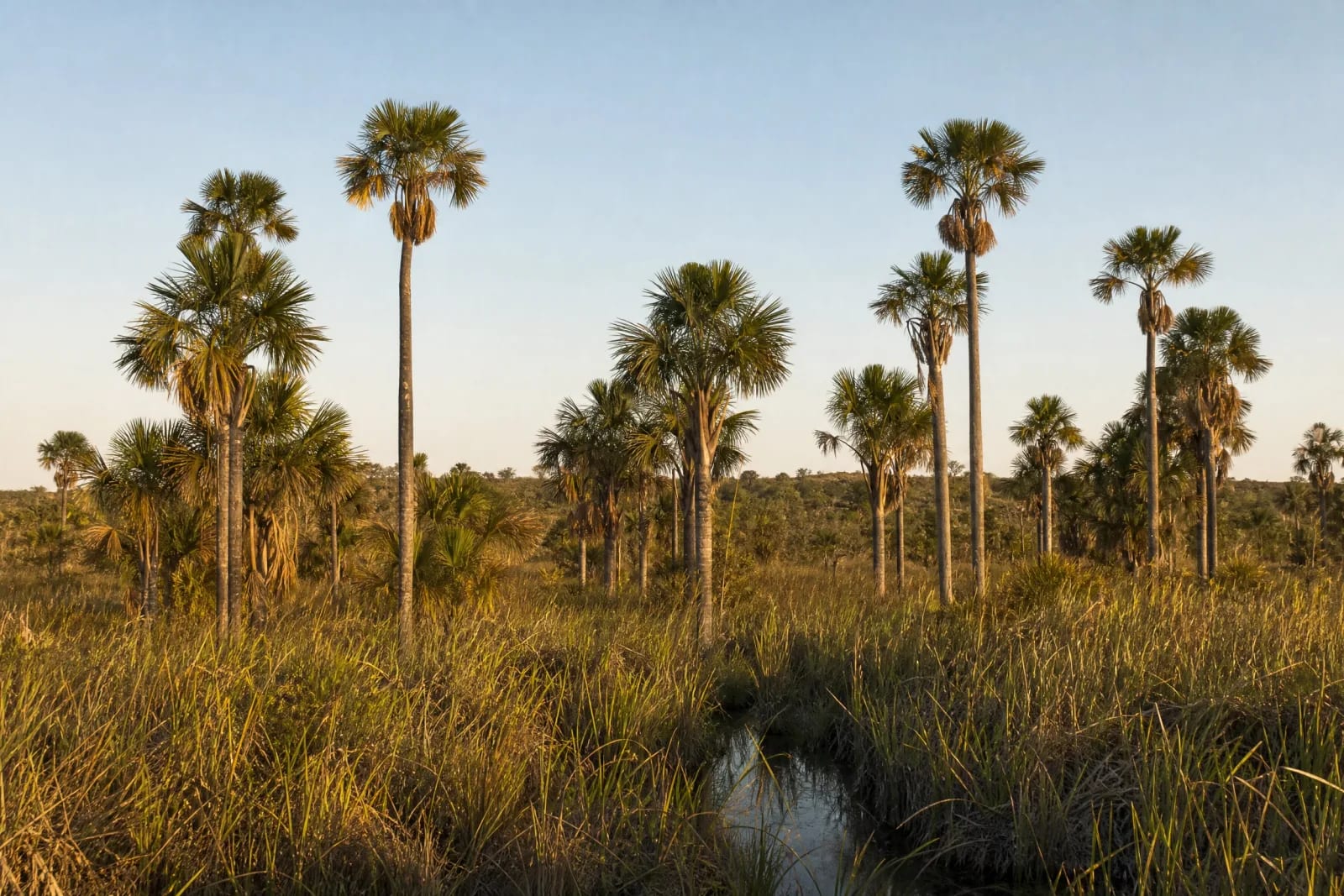
That's why a walk can go from an open field to a denser Cerrado, find a forest following the course of a river and, suddenly, reach a vereda. The biome is not empty between two forests. It has its own form.
ICMBio compiles estimates of thousands of plant species and a great diversity of birds, fish, amphibians, reptiles and mammals. These are living numbers: they change with taxonomy, research and the scope of each survey.2
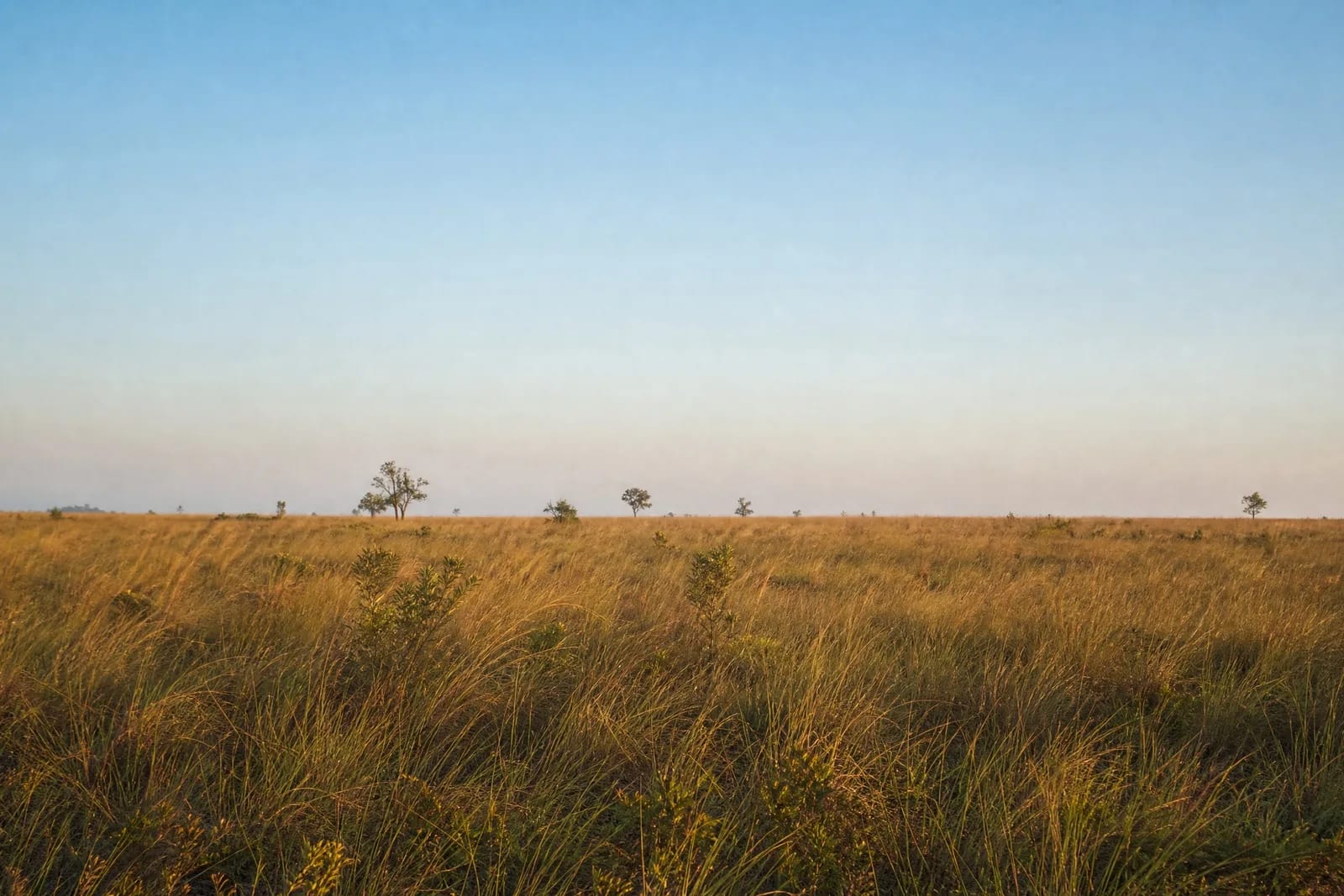
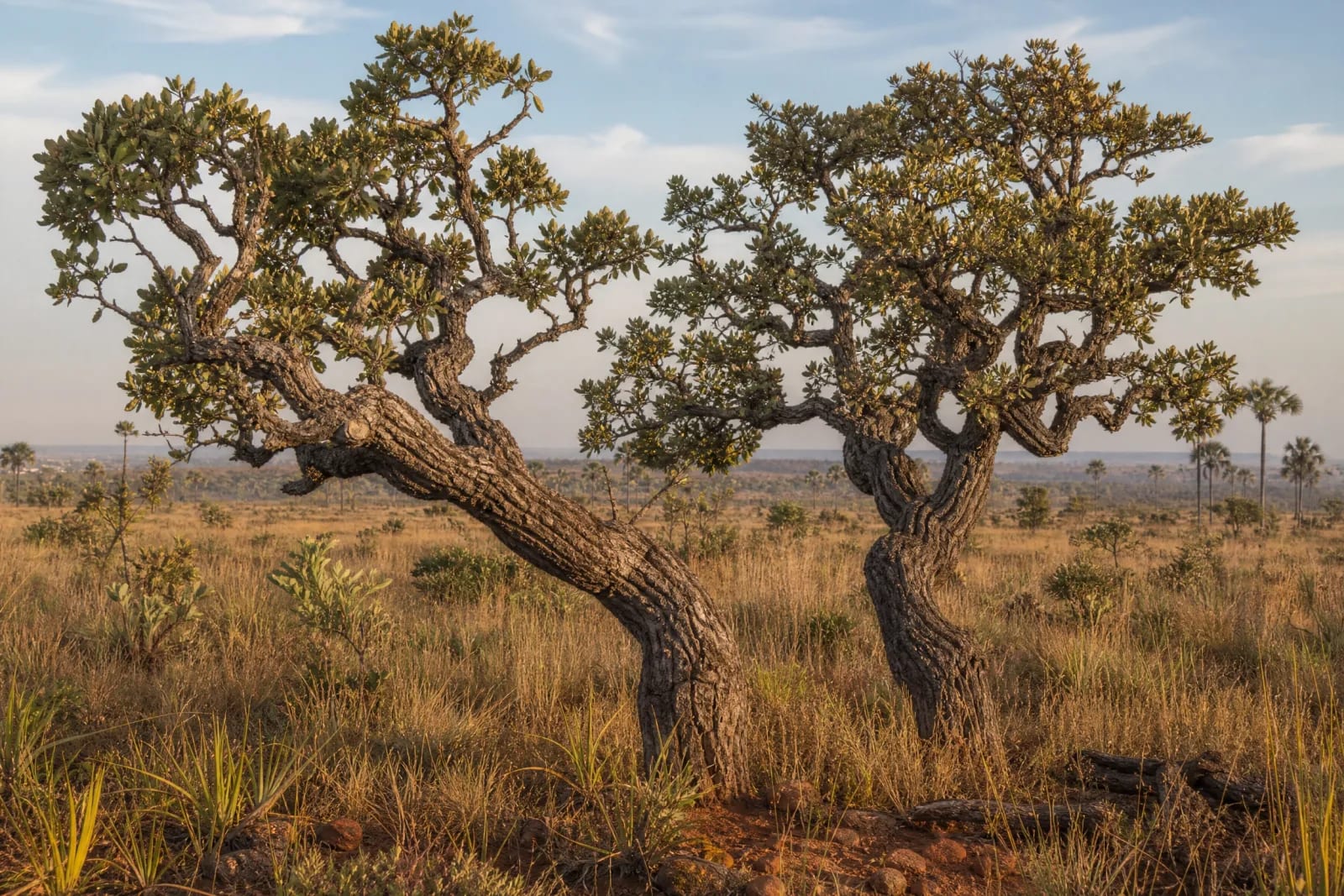
Ten scenes to look at the Cerrado before explaining it.
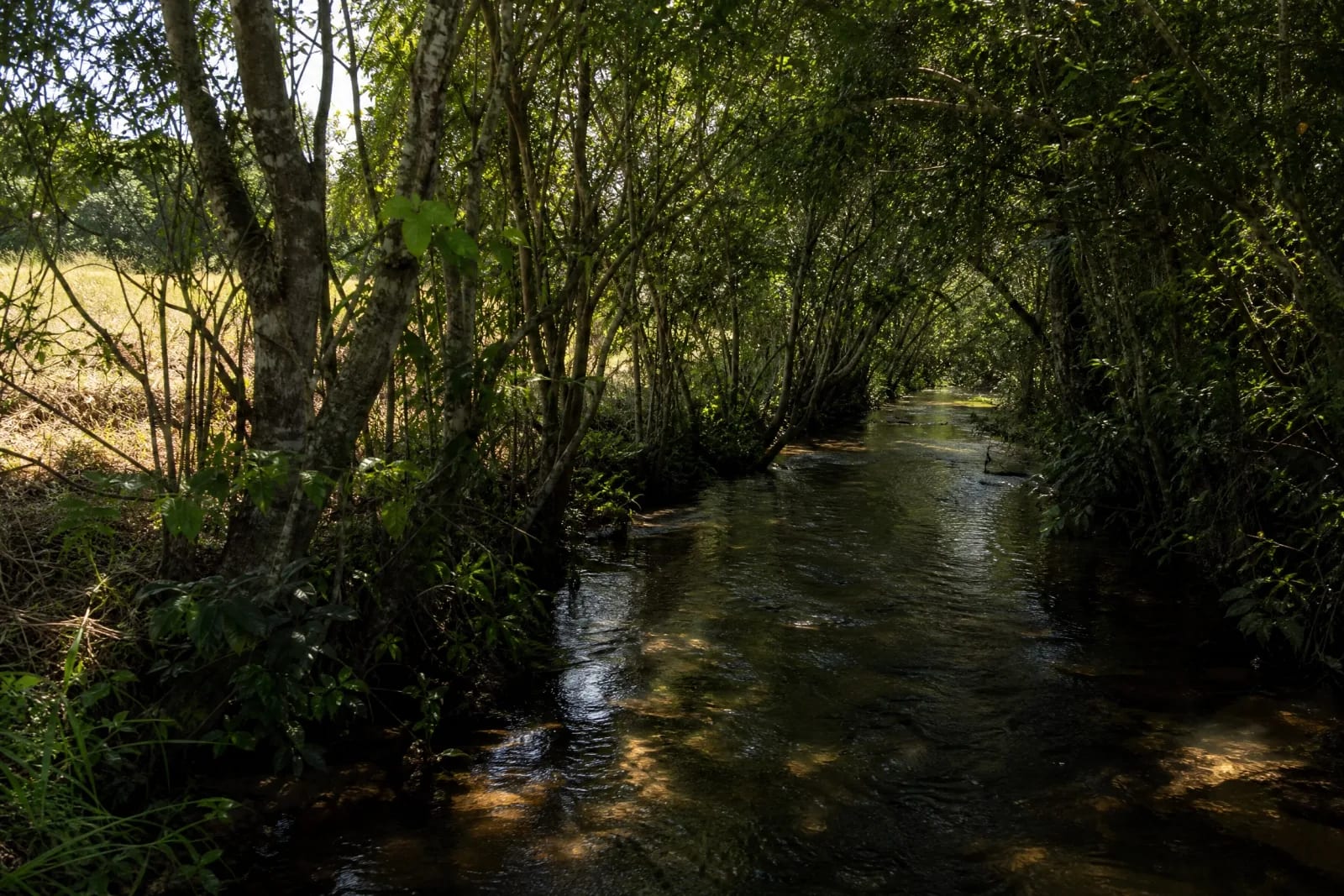
A journey in images
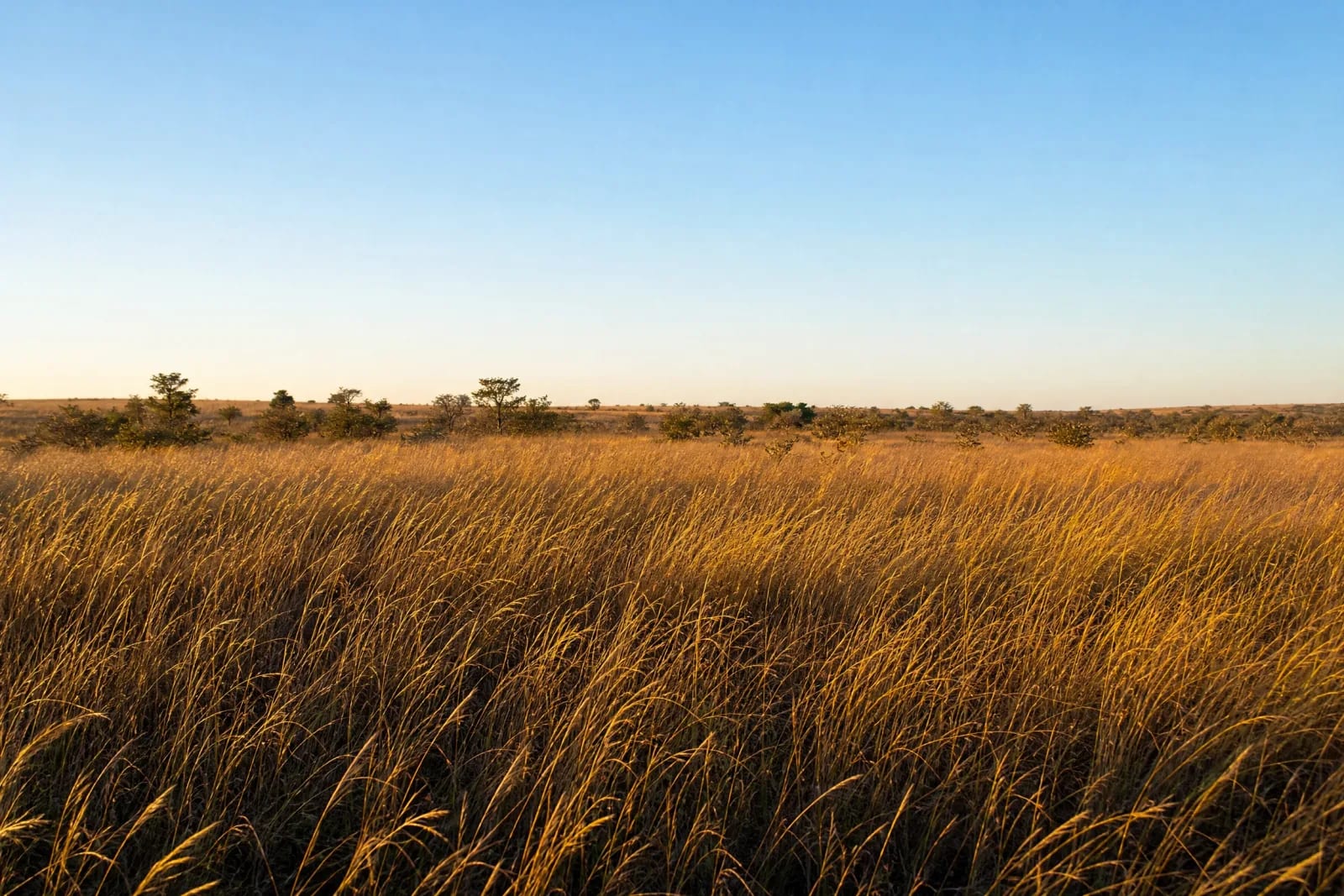
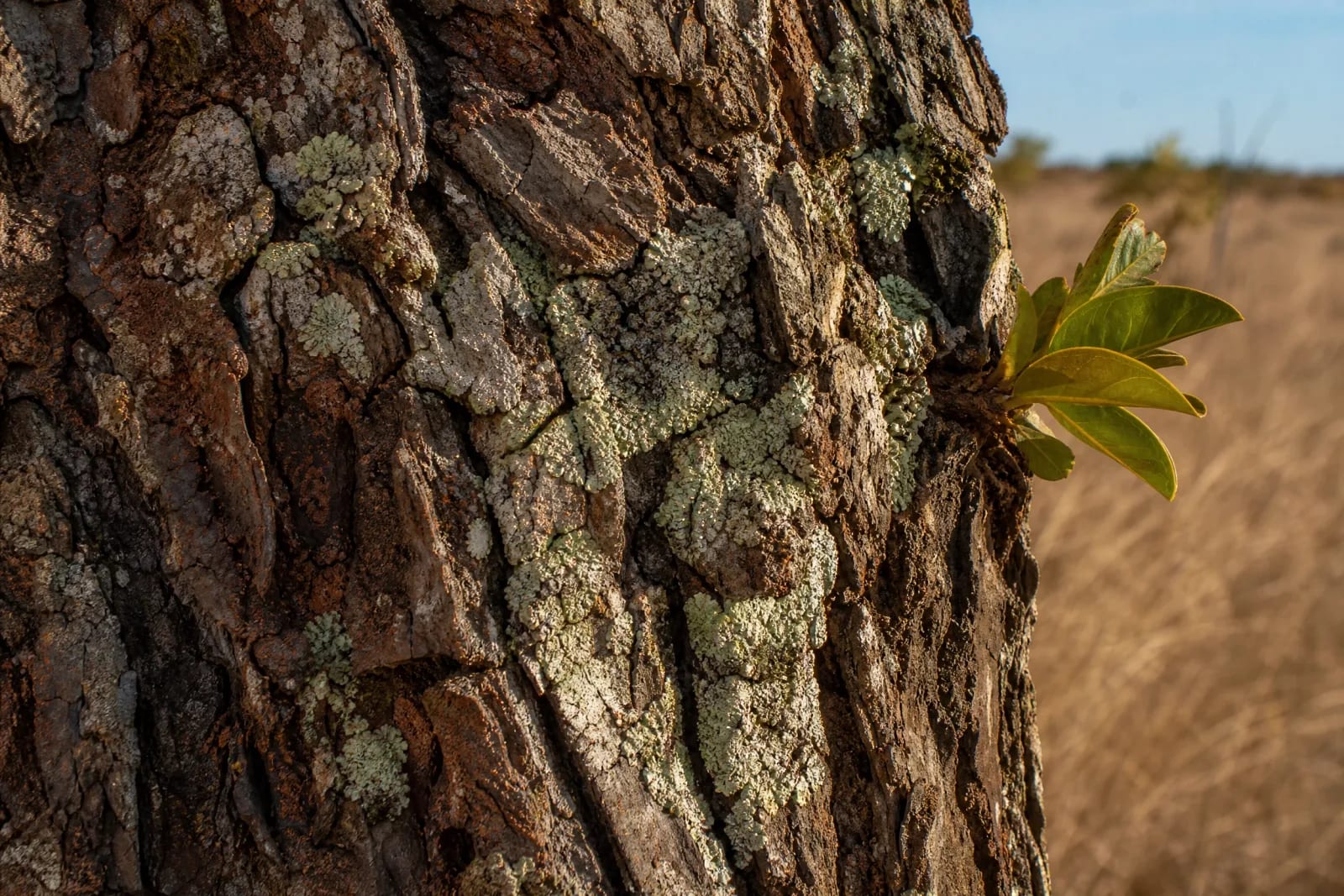
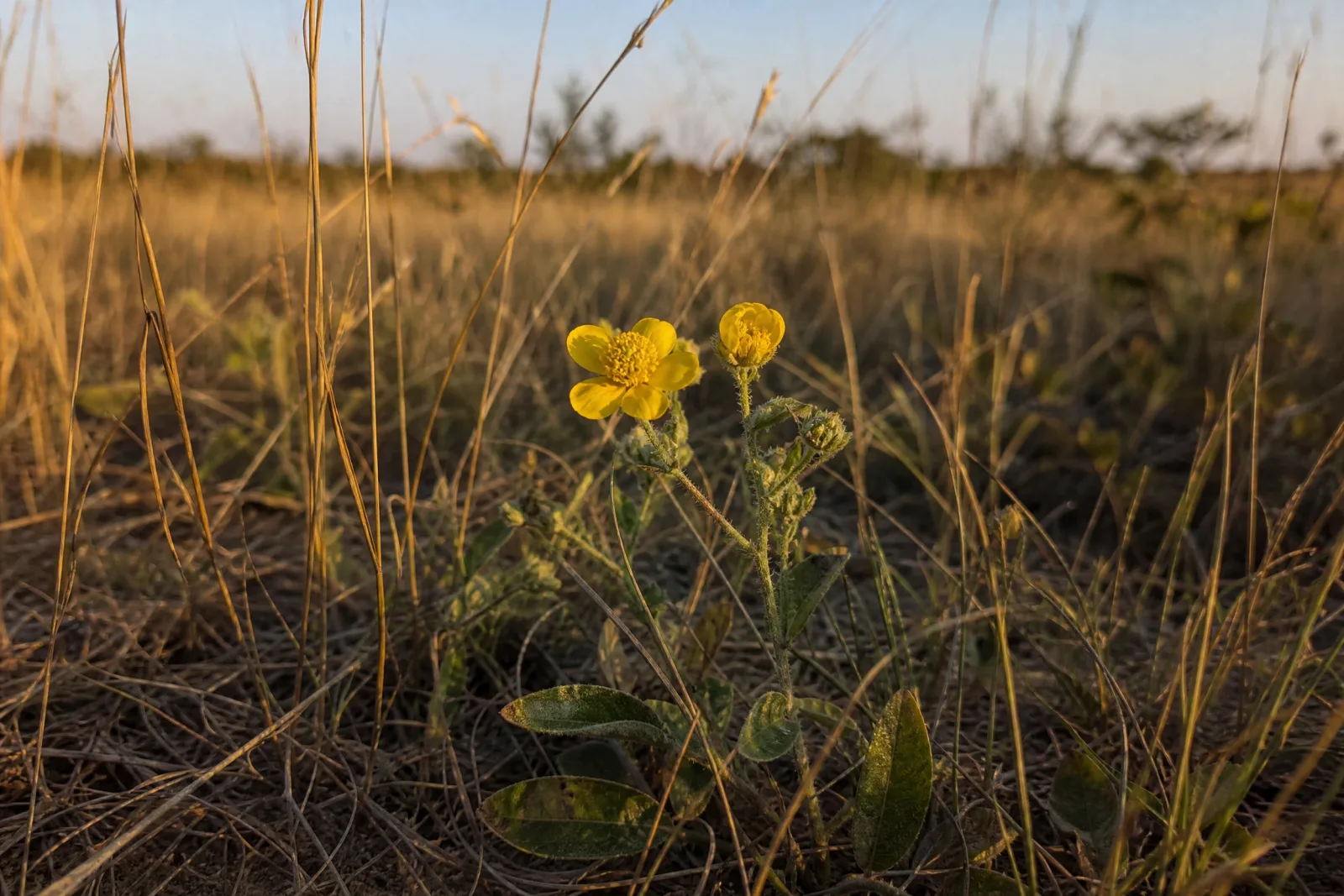
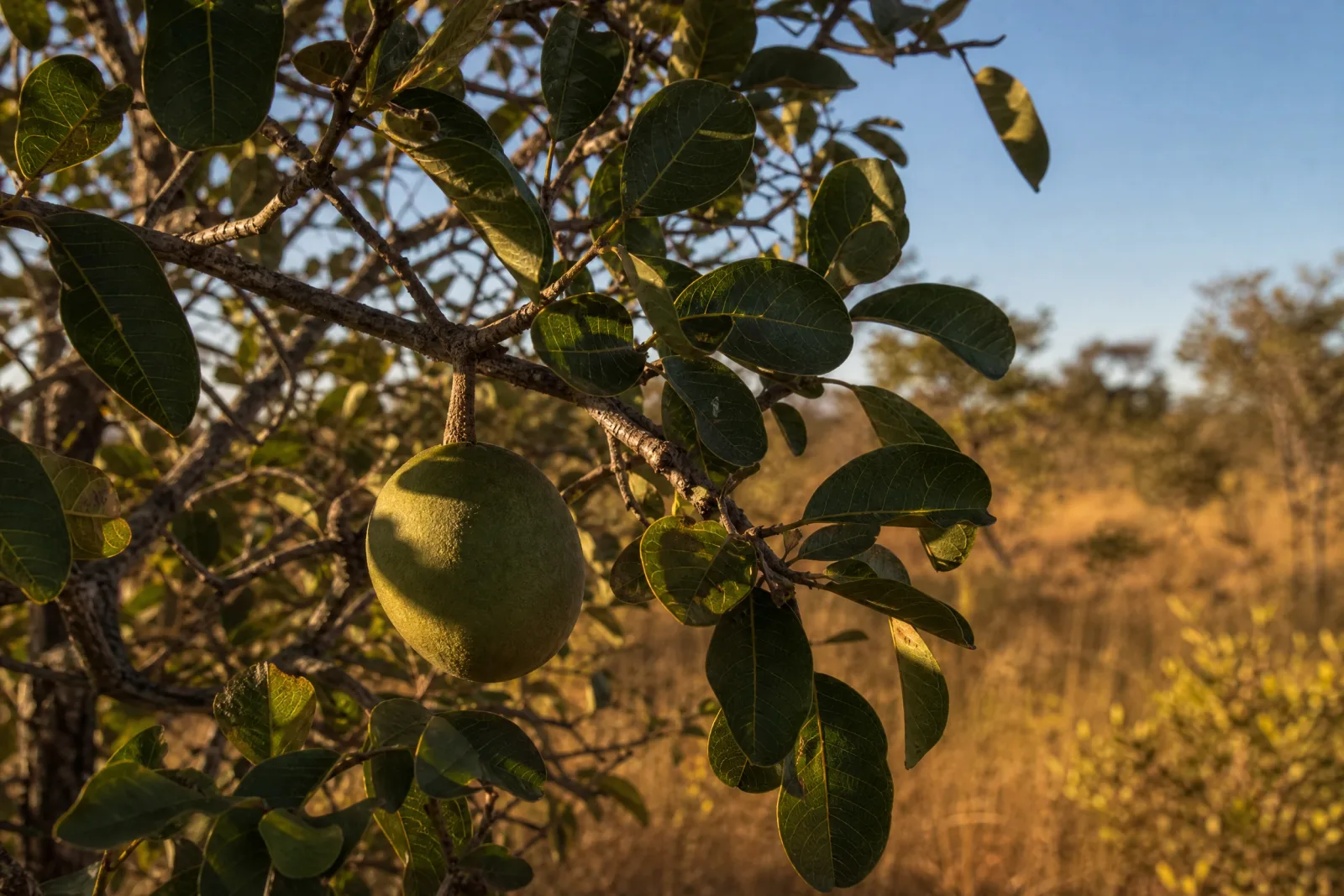
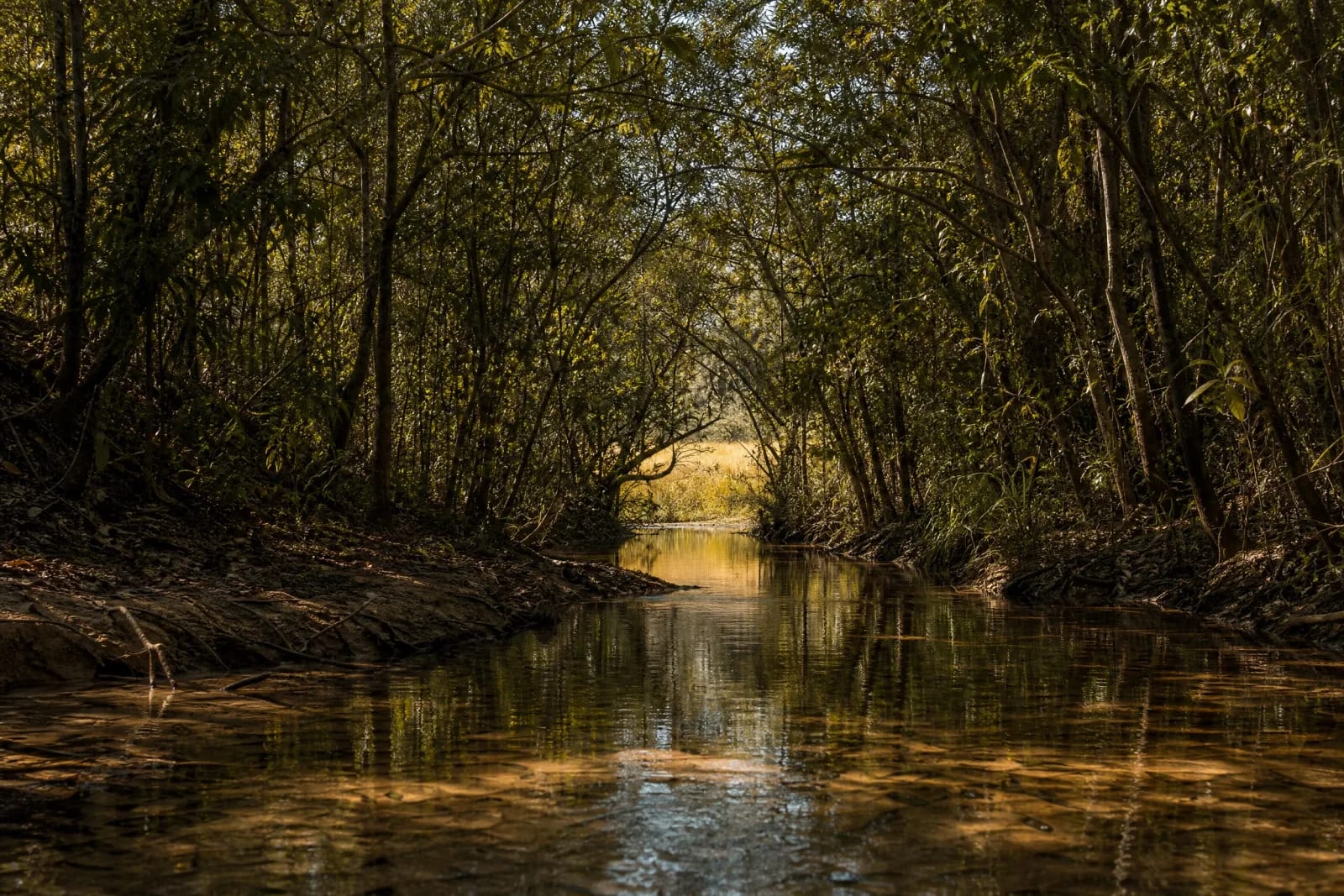
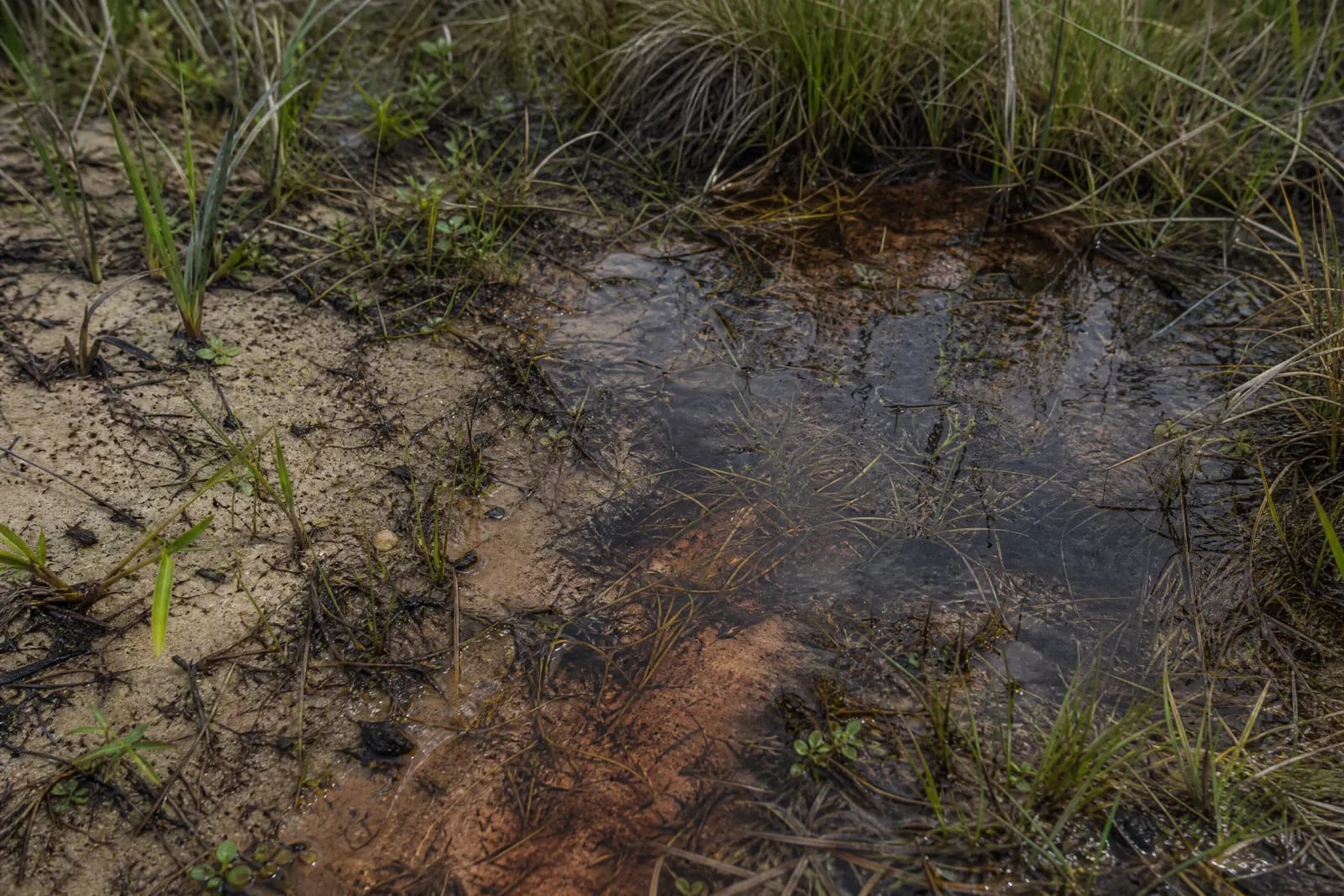
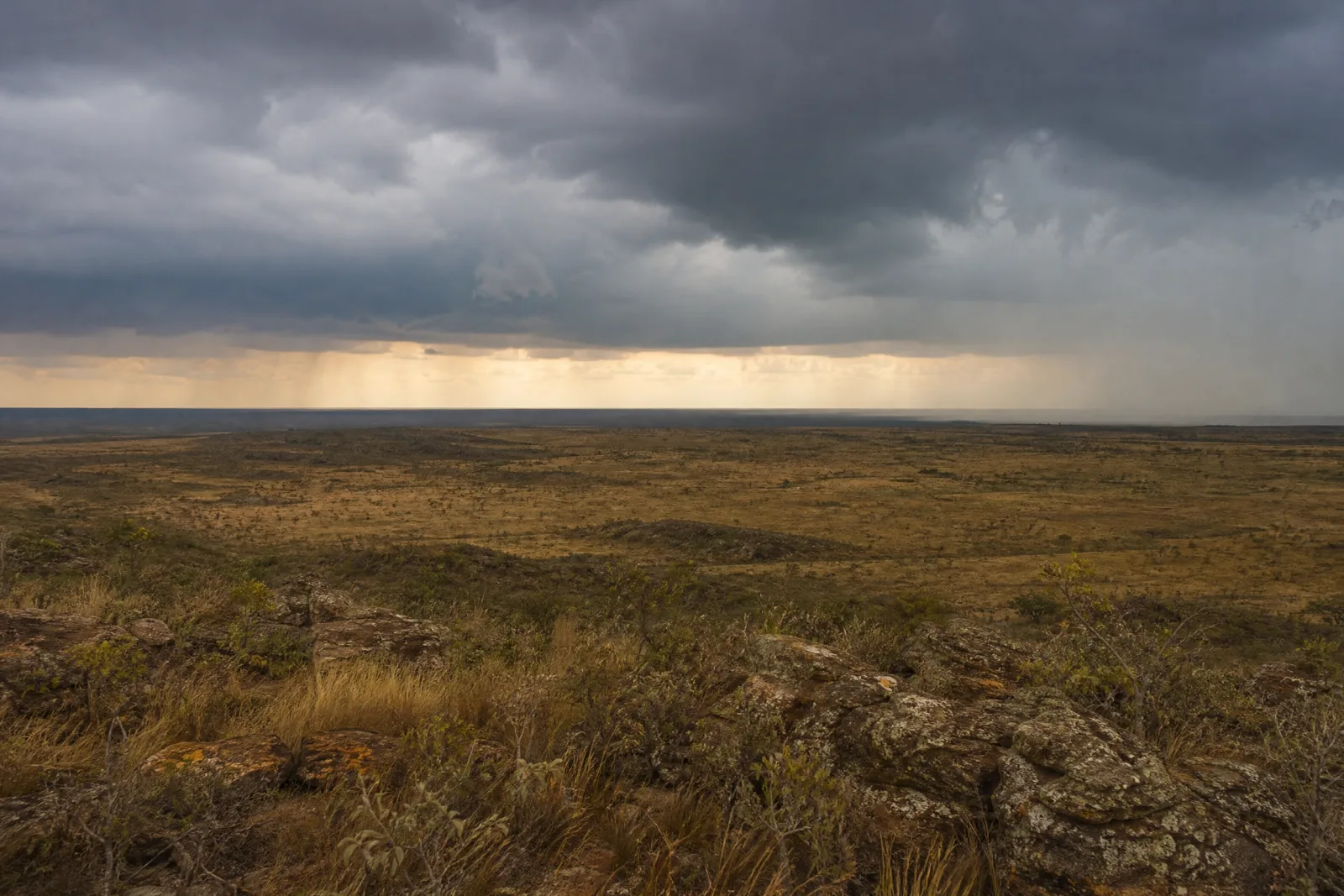
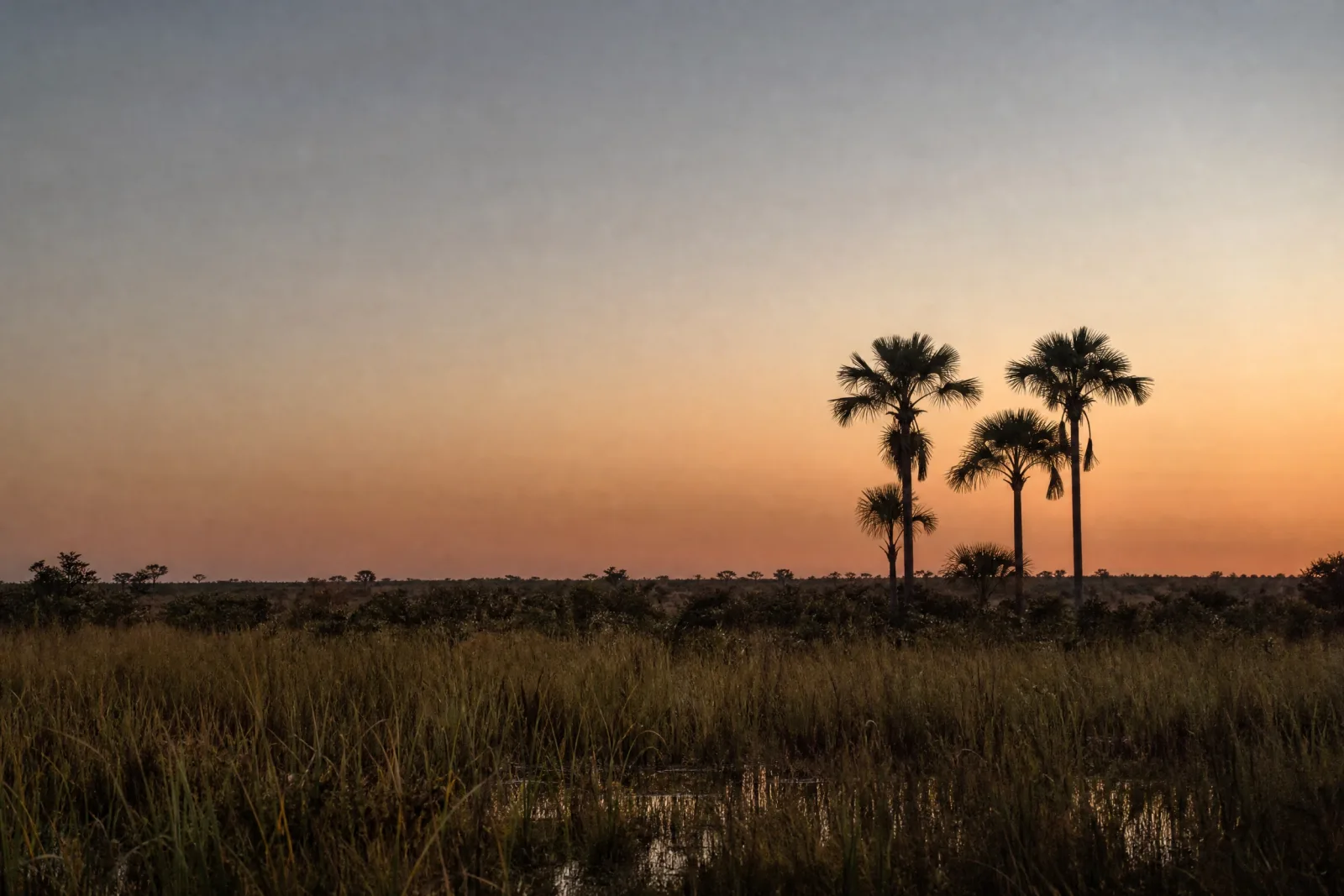
II · The water that runs through
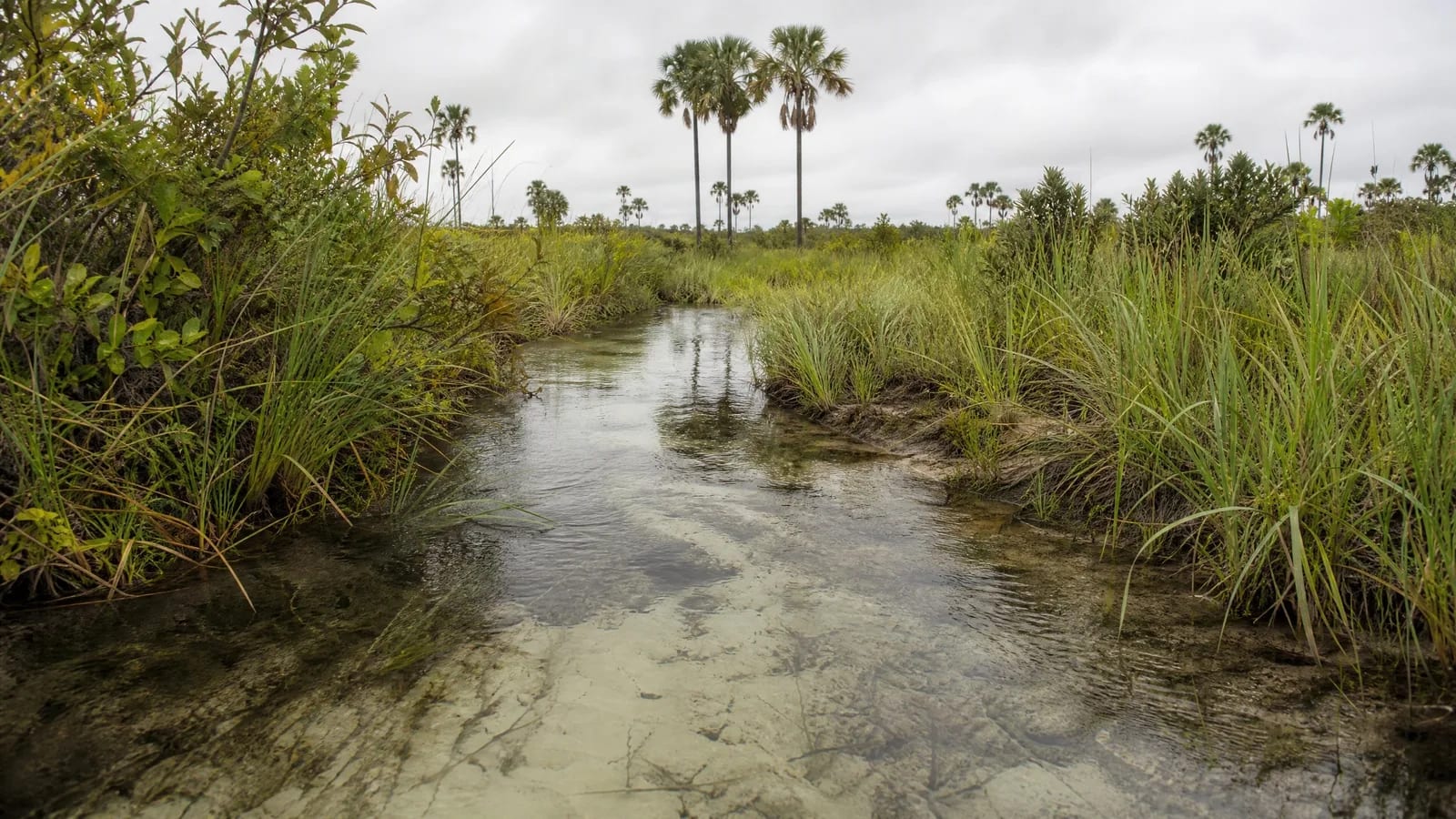
A vereda is not a mere ornament of the landscape.
It is a conversation between soil, rain, buriti, grass, spring and watercourse.
The Cerrado harbors springs that feed large continental hydrographic systems. Its wetlands — veredas, wet savannas, flooded forests and gallery forests — store, filter and release water at different rhythms throughout the year.2 3
Calling the biome the 'cradle of waters' is a familiar image. What it tries to say, in plain language, is more concrete: the conservation of soil, vegetation and wetlands helps maintain processes that support rivers far beyond a single landscape.
III · Work, food and knowledge
After the landscape comes what it sustains.
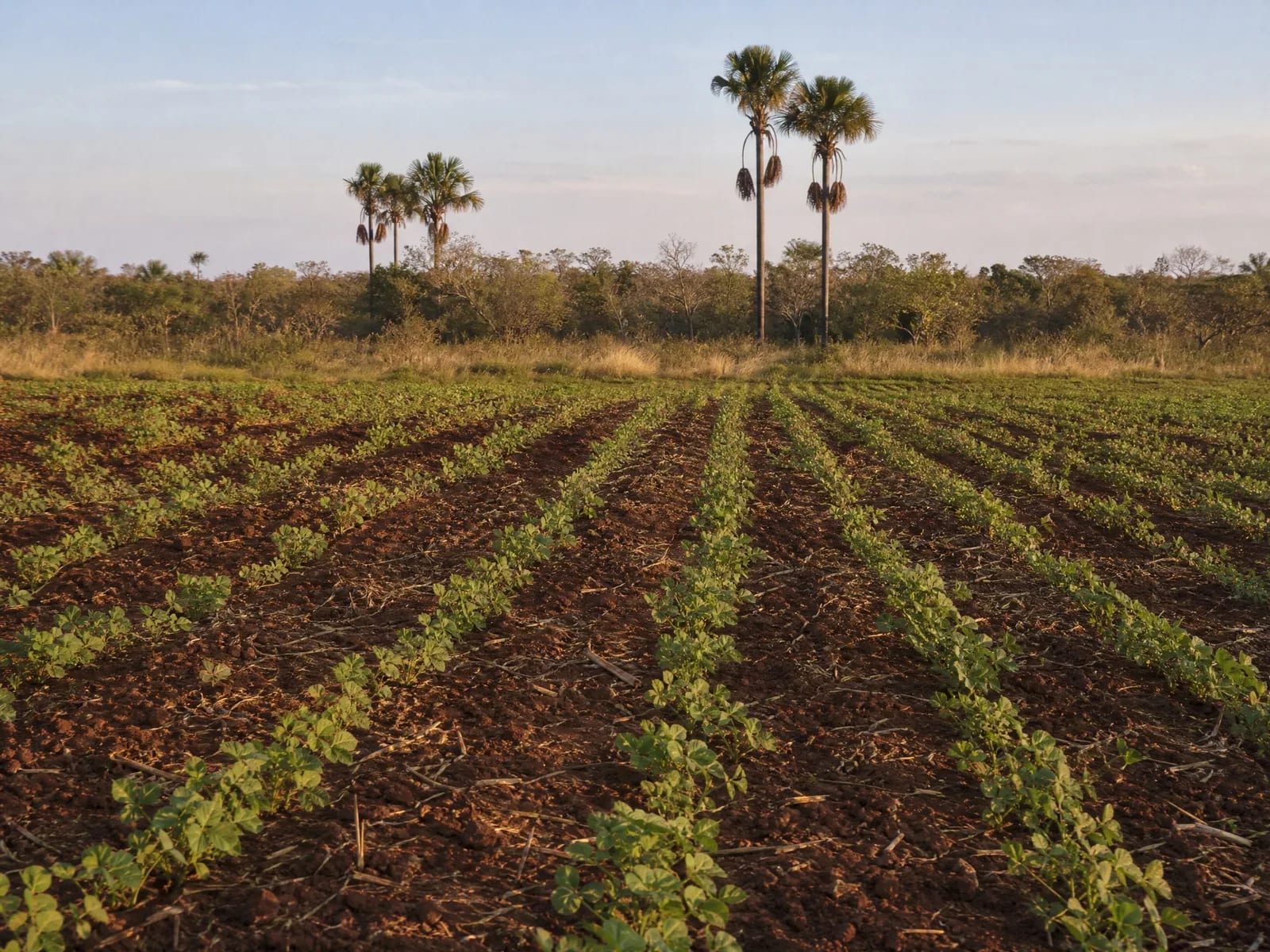
The Cerrado is one of Brazil's major productive territories. But this capacity wasn't born ready: it combines people, research, roads, credit, markets, management experiences and decades of soil science. In 2015, an Embrapa estimate attributed 41% of the value of Brazilian crop production to the biome, within its methodological scope.4
Talking about this does not diminish the beauty that came before. It gives it another layer. The same horizon that harbors veredas also participates in the production of grains, meat, coffee, fruit, fiber and energy — at very different scales and systems.
Grains, coffee, fruits, milk, meat and regional value chains.
Cotton, planted timber and industrial raw materials.
Soil amendment, genetics, management, monitoring and rural extension.
Local knowledge, family farming and use of native species.
IV · Producing is also choosing
There is no single way to produce food from the land.
The serious question is not whether the Cerrado should produce. It's how to increase production, income and food security without treating water, soil and native vegetation as leftovers.
Degraded pastures can become productive again and reduce pressure to clear new areas.
Crop-livestock-forest integration systems bring together practices that depend on planning and monitoring.
Satellites and open databases help monitor cover, land use, fire and water.5
Remnant areas, springs and recharge zones are not external obstacles to the system: they are part of its support.
The ABC Plan recorded national expansion of low-emission technologies. These results do not allow the conclusion that all production in the Cerrado is sustainable; they show pathways and limits that need to be verified in each context.6
Restore
Degraded pastures can become productive again and reduce pressure to clear new areas.
Integrate
Crop-livestock-forest integration systems bring together practices that depend on planning and monitoring.
Monitor
Satellites and open databases help monitor cover, land use, fire and water.5
Conserve
Remnant areas, springs and recharge zones are not external obstacles to the system: they are part of its support.
V · When the conversation comes from afar
A European rule began to ask questions about what we produce here.
The European Union created a regulation to reduce its contribution to deforestation associated with certain supply chains. Soy, cattle, coffee, cocoa, palm oil, timber, rubber and some derivatives need to meet specific conditions to circulate in that market.7
In simple terms, the requirement asks for information on origin, plot location, risk and legality. The product must be presented as deforestation-free according to the regulation's own definitions. Application for larger companies is scheduled for late 2026; for some micro and small enterprises, 2027.8
What the regulation seeks to know
Where did it come from? The supply chain must report origin and geolocation. Was there deforestation after 2020? This is the temporal cutoff used by the rule. Is there risk? The operator needs to gather information, assess and mitigate when necessary.
VI · What the discussion must not forget
The regulation speaks of forest. The Cerrado is broader than that word.
A savanna can be rich, native, essential for water and still not fully fit into the legal category used to protect it.
The European criterion focuses on deforestation of forests. Therefore, savanna and grassland formations that do not meet the technical definition may fall outside its direct protection, although their conversion also has consequences for biodiversity, carbon and water cycles.9
This does not absolve conversion in Brazil, nor does it make the European requirement useless. It shows an important limitation: a policy can be strict in its field and still see only part of the territory it intends to influence.
VII · Two ideas to think about distance
For a long time, Latin America has tried to understand why some economies write the rules and others must adapt to them.
This question did not begin with the EUDR. It runs through an intellectual tradition that sought to explain the inequalities of international trade without reducing countries and people to fixed roles. Two authors help open the conversation, as long as they are used as lenses — not as ready-made labels.
Prebisch observed a world economy in which industrialized regions and exporters of primary products did not capture productivity and technology gains in the same way. His question was: how to promote development without accepting the international division of labor as destiny?11
Cardoso and Faletto also looked inward: state, social groups, alliances and foreign capital. For them, dependency could coexist with growth — but on trajectories conditioned by unequal internal and external relations.12
These ideas do not "explain" the EUDR on their own. They help formulate questions: who defines the criteria? who has the resources to adapt? who participates in the decision? who bears the cost?
Center and periphery
Prebisch observed a world economy in which industrialized regions and exporters of primary products did not capture productivity and technology gains in the same way. His question was: how to promote development without accepting the international division of labor as destiny?11
Dependency and development
Cardoso and Faletto also looked inward: state, social groups, alliances and foreign capital. For them, dependency could coexist with growth — but on trajectories conditioned by unequal internal and external relations.12
VIII · The history of those who ask
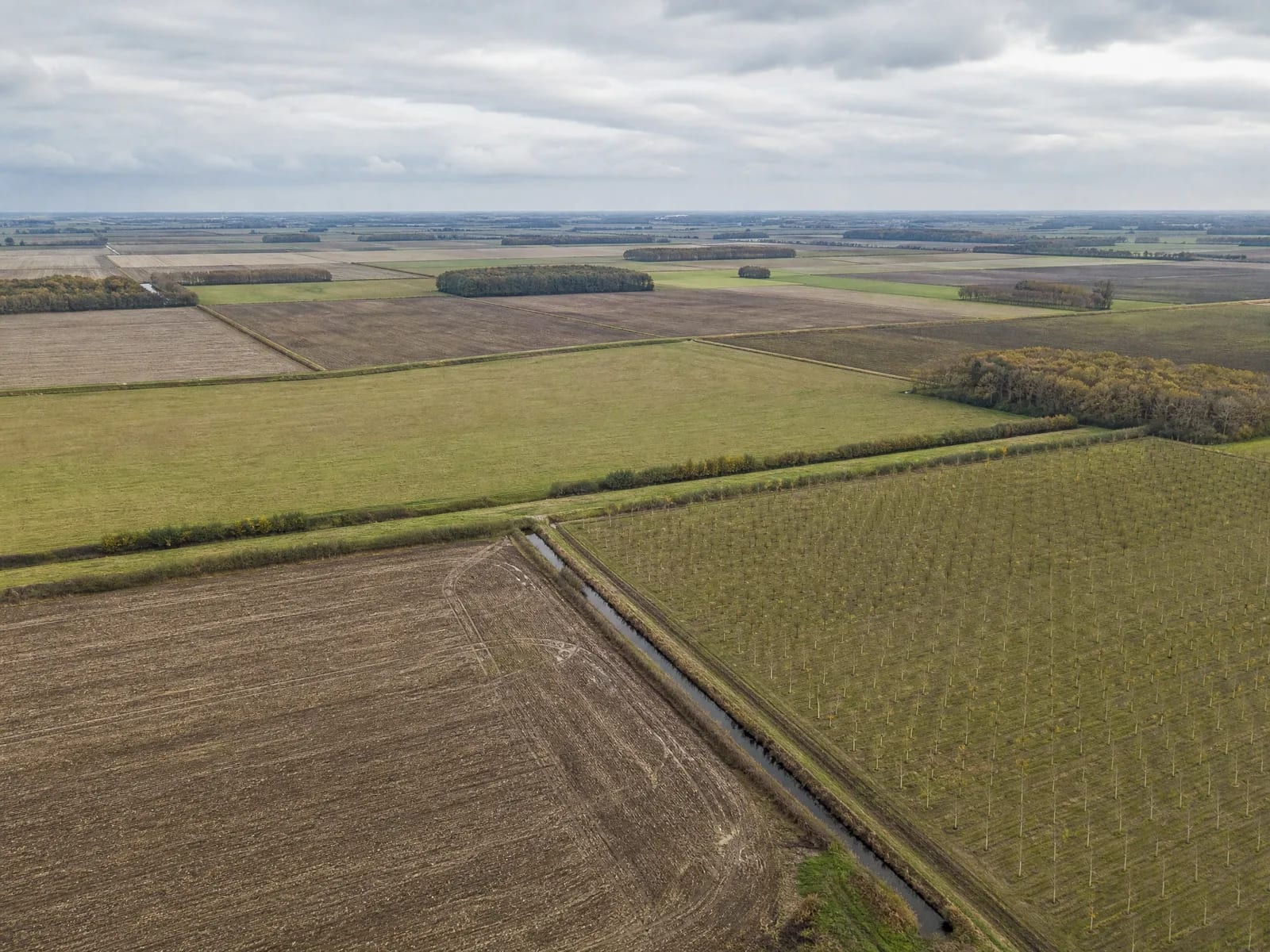
Europe also profoundly transformed its own landscapes.
It is not true that the continent eliminated all of its forests. The story is more complex — and more uncomfortable. Over long periods, human uses reduced and fragmented forest cover in many European regions. Since the mid-20th century, part of the forest area has grown again through regeneration, agricultural land abandonment, planting and management.13
But recovering area is not the same as restoring, everywhere, the composition, age, continuity and biodiversity of former forests. A tree cover statistic alone does not tell the ecological history of a landscape.14
There is a real environmental concern behind the European rules. The bloc's consumption is also linked to global deforestation chains, and reducing that participation is a legitimate responsibility. The problem begins when the external requirement seems to ignore the history of those who demand it, the diversity of those who are subject to it and the unequal cost of compliance.
The Cerrado doesn't have to choose between being beautiful and being productive.
It needs better choices: science, enforcement, restoration, income, community participation, transparency and recognition of its own ways of life. It also needs buyers, financiers and regulators to share responsibilities — instead of just shifting requirements to the other side of the ocean.
Conserving is not accepting tutelage. Producing is not accepting devastation. Between these two false choices, there is a real territory: people, water, work, memory and future.
📚 References
- 1.Embrapa Cerrados — Biome Cerrado.
- 2.ICMBio — Cerrado.
- 3.Durigan et al. (2022) — Cerrado wetlands.
- 4.Embrapa — Cerrado: pillar of Brazilian agriculture.
- 5.MapBiomas Brasil.
- 6.MAPA — History of the ABC Plan.
- 7.Regulamento (UE) 2023/1115.
- 8.Comissão Europeia — Regulation on Deforestation-free Products.
- 9.CEBRI — Expected effects in Brazil of the European regulation.
- 10.Ipea (2025) — Effects of the European anti-deforestation law on Brazilian exports.
- 11.Prebisch — The economic development of Latin America and some of its main problems.
- 12.Cardoso and Faletto — Dependency and development in Latin America.
- 13.European Forest Institute (2022) — Forest resources in the European Union.
- 14.European Environment Agency — Land use.