.webp&w=1920&q=82)
.webp&w=1920&q=82)
.webp&w=1920&q=82)
.webp&w=1920&q=82)
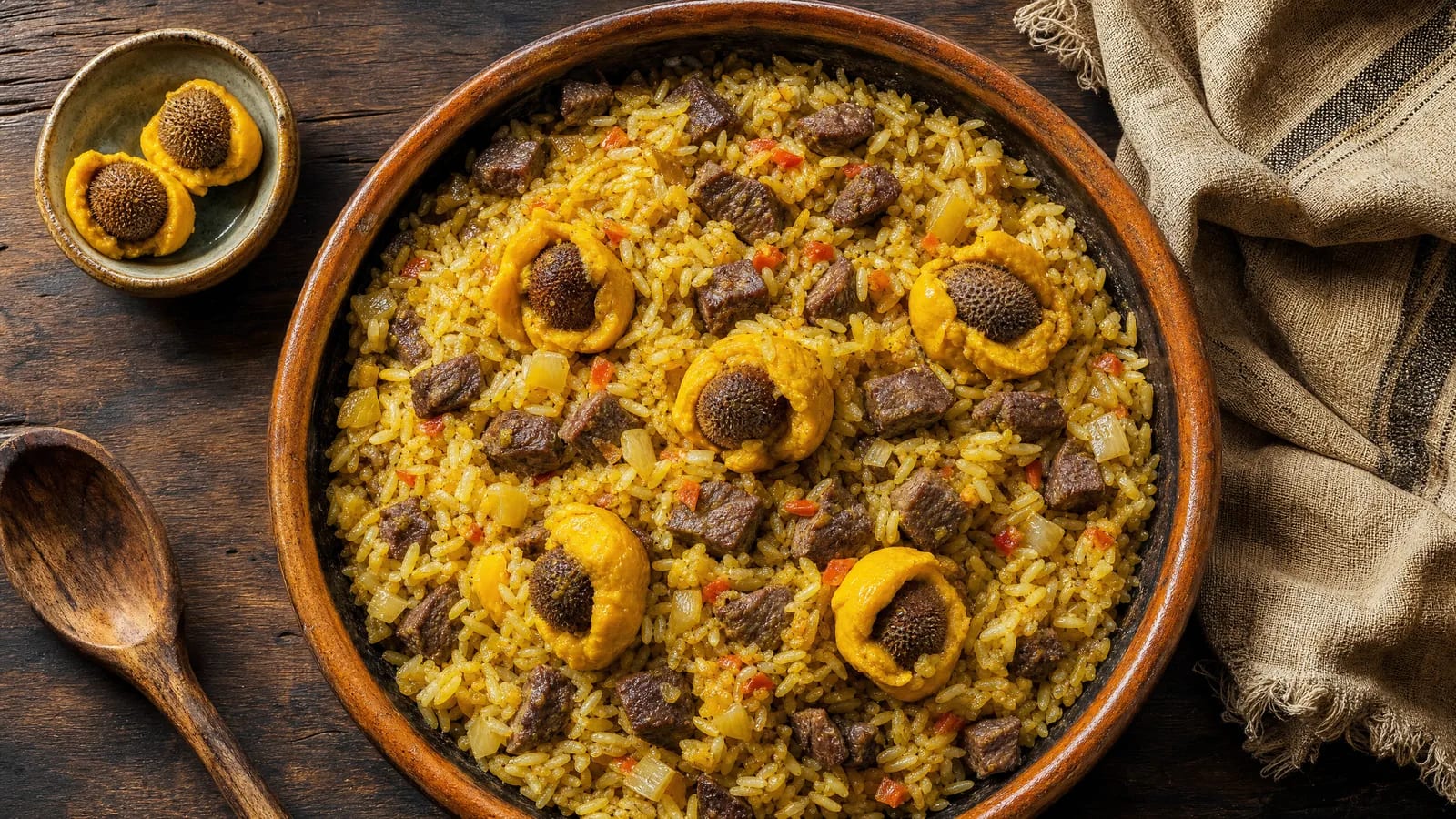
Maria-Isabel takes on a Tocantins accent with pequi: rice sautéed in the bottom of the pan with carne-de-sol, fresh seasonings, and the yellow fruit that heralds the Brazilian savanna’s season.
Behind the flavor
Maria-Isabel is one-pot food from the sertão — Brazil’s semi-arid backlands — heritage Tocantins received when it was still northern Goiás, also shaped by routes and migrations from the Northeast. In the version with pequi, carne-de-sol meets a fruit that gives identity to Tocantins’ Brazilian savanna. The result is not an invented fusion, but the domestic language of a region where rice, preserved meat, and pequi have recognized one another for generations.
📜 Ingredients
- 🥩carne-de-sol, cut into small cubes400 g (14 oz)
- •uncooked white rice2 cups
- •preserved pequi, with pulp around the stone6 pieces🔁 roasted kabocha squash, cubed — The swap adds color and softness but does not replicate pequi’s singular aroma.
- •pequi oil or vegetable oil3 tablespoons
- •chopped onion1 medium onion
- •chopped garlic3 cloves
- 🌶️chopped pimenta-de-cheiro2 peppers, seeded
- •dried fine herbs1 teaspoon
- •hot water4 cups, or enough to cover the rice by about 1 cm (3/8 in)
- •chopped parsley and scallions1/3 cup
- •black pepperto taste
- •saltonly if needed, after tasting
👨🍳 Method
- 1
Taste a cube of carne-de-sol. If it is very salty, soak it in cold water in the refrigerator for 20 to 30 minutes; drain and pat dry. If it is moderately salty, simply rinse it quickly and dry it.
Carne-de-sol varies from cure to cure; brief desalting preserves its flavor without turning the dish into characterless meat.
- 2
Drain the preserved pequi and set it aside whole. Do not cut or bite into the stone: in traditional pequi from the Brazilian savanna, the pulp is carefully scraped from around very fine spines.
Keep the stones visible on the plate so everyone at the table remembers to eat them carefully.
- 3
Heat the pequi oil over medium heat for 1 minute. Add the carne-de-sol and fry for 6 to 8 minutes, stirring until its sides brown and toasted bits form on the bottom of the pan. Remove the meat and set aside.
The fat left by the meat helps build the rice’s flavor; do not wash the pan.
- 4
In the same pan, sauté the onion for 3 minutes, until softened. Add the garlic, pimenta-de-cheiro, and fine herbs; stir for 30 seconds, until fragrant. Add the uncooked white rice and stir for 2 minutes, coating every grain in the aromatic fat.
Sautéing the rice before adding water makes the grains more flavorful and helps them hold their structure.
- 5
Return the carne-de-sol to the pan, distribute the pequi, and pour in hot water until it stands 1 cm (3/8 in) above the rice. Once it comes to a boil, lower the heat, cover partially, and cook for 18 to 22 minutes, until the rice is tender and nearly all the liquid has been absorbed.
Do not stir during cooking; if the rice is still firm, add a little hot water and cook for another 3 to 5 minutes.
- 6
Turn off the heat, stir in half the chopped parsley and scallions, cover, and let the Arroz Maria-Isabel rest for 8 minutes. Fluff with a fork, finish with the remaining herbs, taste, and only then adjust the salt and black pepper.
Serve with fried plantains and green salad, a pairing recorded in a G1 Tocantins recipe.
🥃 Pairing
With cachaça
Aged/wood-matured
Cachaça matured in oak, medium-bodied, with notes of caramel, vanilla, and moderate tannin.
Its structure meets the carne-de-sol and its toasted edges, while the wood finds a counterpart in pequi’s richness.
Intensely aged
Cachaça aged in amburana, with echoes of cinnamon, clove, and vanilla.
The spiced profile expands the rice’s sertão character and accompanies pequi’s expansive aroma.
Also pairs well with
✈️ A flavor worth the trip
Choose preserved pequi with whole stones and deeply yellow pulp. Before cooking for a large table, taste a stone carefully: learning its aroma is learning one of the Brazilian savanna’s most intense grammars.
💡 Quick tips
- •Arroz Maria-Isabel is best with carne-de-sol in small cubes, which brown quickly and distribute throughout the pan.
- •Pequi oil is optional, but a small amount deepens the aroma without overwhelming the dish.
- •If using fresh pequi, cook it first in water for 15 to 20 minutes, until the pulp softens, before adding it to the rice.
🤔 Did you know?
A recipe published by G1 Tocantins records Maria-Isabel with pequi as a dish served in the state and notes that, between August and November, the fruit becomes a striking presence in regional cooking.
Small discoveries
- Carne-de-sol · ingredient
- Beef subjected to salting and brief drying, with concentrated flavor and a gentler cure than charque.
- Pequi · ingredient
- The yellow fruit of the pequi tree, with oily pulp and an intense fragrance, clinging to a traditionally spiny stone.
- Refogar · technique
- To cook briefly in a little fat over moderate heat before adding water or stock.
- Cerrado · cultural expression
- The Brazilian savanna, whose pantry of fruits — including pequi — profoundly shapes cooking in Tocantins.
📚 References
- G1 Tocantins / TV Anhanguera. Aprenda a fazer um delicioso arroz Maria Isabel com pequi; fruta típica no Tocantins (2017). https://g1.globo.com/to/tocantins/noticia/aprenda-a-fazer-um-delicioso-arroz-maria-isabel-com-pequi-fruta-tipica-no-tocantins.ghtml
- Embrapa Cerrados. GOBRS 103: pequi sem caroço: cultivar de elevada produtividade para o Cerrado (2022). https://www.embrapa.br/en/busca-de-publicacoes/-/publicacao/1148115/gobrs-103-pequi-sem-caroco-cultivar-de-elevada-produtividade-para-o-cerrado
- Câmara Cascudo, Luís da. História da Alimentação no Brasil. Global Editora.
Keep discovering