.webp&w=1920&q=82)
.webp&w=1920&q=82)
.webp&w=1920&q=82)
.webp&w=1920&q=82)
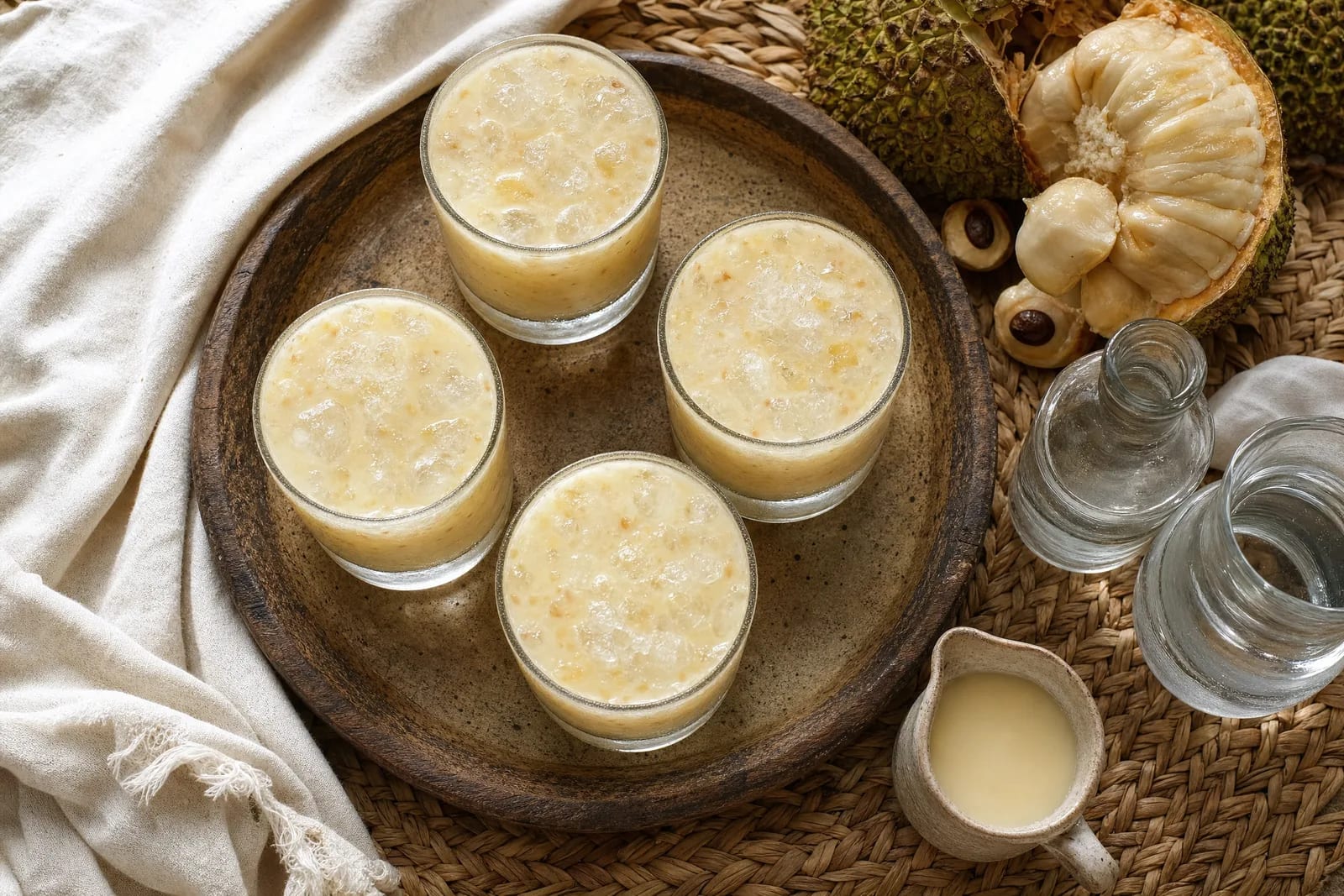
Born from a recipe attributed to Estação Ciência Mato do Açude in Jataí, this batida—a blended cachaça cocktail—brings together araticum pulp, cachaça, water, and condensed milk. In a chilled glass, the flavor of ripe fruit opens a small path into the Cerrado.
Behind the flavor
Araticum is a fruit native to the Cerrado, Brazil’s savanna, and grows in Goiás; turned into a batida, it brings regional pantry staples into the realm of cocktails. The version documented by Mapa da Cachaça is attributed to Estação Ciência Mato do Açude in Jataí, in southwestern Goiás, linking a celebratory drink to the landscape of seasonal fruits in Central Brazil. Embrapa also lists araticum among the native species of the Cerrados and documents the culinary uses of these fruits.
📜 Ingredients
- 🍷white cachaça2 cups / 480 ml (2 cups)
- •condensed milk1 200 ml (7 fl oz) package
- •chilled filtered water2 cups / 480 ml (2 cups)
- •araticum pulp1 cup / about 240 ml (1 cup)🔁 sugar apple pulp — Sugar apple offers a similar creaminess, but its aroma is milder and less distinctive of the Cerrado.
- •iceto taste, for serving
👨🍳 Method
- 1
If using fresh araticum, scoop out the ripe pulp with a spoon, discard the peel and seeds, and measure 1 cup. If using frozen pulp, thaw it only enough to release it from the package; it should remain very cold.
Do not add the seeds to the blender: they compromise the batida’s silky texture.
- 2
Place the araticum pulp, white cachaça, condensed milk, and chilled filtered water in a blender. Blend for 45 seconds to 1 minute, until smooth, thick, and uniform.
Taste before serving: the traditional recipe is sweet, and the condensed milk already provides the sweetness.
- 3
Add ice to the glasses and pour in the batida immediately. Serve very cold, preferably just after blending, to preserve the fruit’s perfume.
Avoid blending the ice for too long: it dilutes the drink and dulls the creaminess of the araticum.
🥃 Pairing
With cachaça
White/silver cachaça
Herbal, clean, citrusy, and without pronounced wood aging.
It is the most faithful choice for this preparation: it preserves araticum’s perfume and keeps the batida light, cold, and fruity.
Lightly aged yellow cachaça
Mellow, with a subtle wood note and a soft texture.
It suits those seeking a rounder finish; use it sparingly, as pronounced wood can obscure the fruit.
Also pairs well with
✈️ A flavor worth the trip
Look for araticum pulp at markets and shops specializing in Cerrado products. Choosing this fruit means discovering a sweetness with a singular perfume, harvested in the brief rhythm of the season and hard to mistake for any ordinary fruit.
💡 Quick tips
- •Use araticum pulp from an identifiable supplier, and keep it frozen until it is time to make the drink.
- •Chill the cachaça and water before blending; this will reduce the amount of ice needed in the glass.
- •For an even finer texture, strain the batida after blending, without pressing the remaining pulp.
- •Serve in moderation: the creaminess makes the alcohol content less noticeable.
🤔 Did you know?
Araticum is also called marolo or bruto and belongs to the Annonaceae family, the same family as the sugar apple. The publication that documents this batida lists Goiás among the areas where the fruit occurs and attributes the recipe to Estação Ciência Mato do Açude in Jataí.
Small discoveries
- Araticum · ingredient
- A native fruit of the Cerrado, with soft, fragrant, naturally creamy pulp; it may also be called marolo or bruto.
- Cachaça branca · ingredient
- Cachaça without pronounced wood aging, with a more direct, fruity profile.
- Cerrado · cultural expression
- A biome of Central Brazil whose diversity of fruits, including araticum, pequi, baru, and cagaita, forms one of the most distinctive pantries in Goiás cooking.
- Polpa de araticum · technique
- The soft part of the fruit, separated from the peel and seeds before it goes into the blender.
📚 References
- Mapa da Cachaça. “Batida de araticum com cachaça”. Receita atribuída à Estação Ciência Mato do Açude, Jataí–GO. https://mapadacachaca.com.br/receitas-com-cachaca/batida-de-araticum-com-cachaca/
- EMBRAPA CERRADOS; SILVA, J. A. da; SILVA, D. B. da; JUNQUEIRA, N. T. V.; ANDRADE, L. R. M. Frutas nativas dos cerrados. 1994. https://www.embrapa.br/busca-de-publicacoes/-/publicacao/549892/frutas-nativas-dos-cerrados
Keep discovering